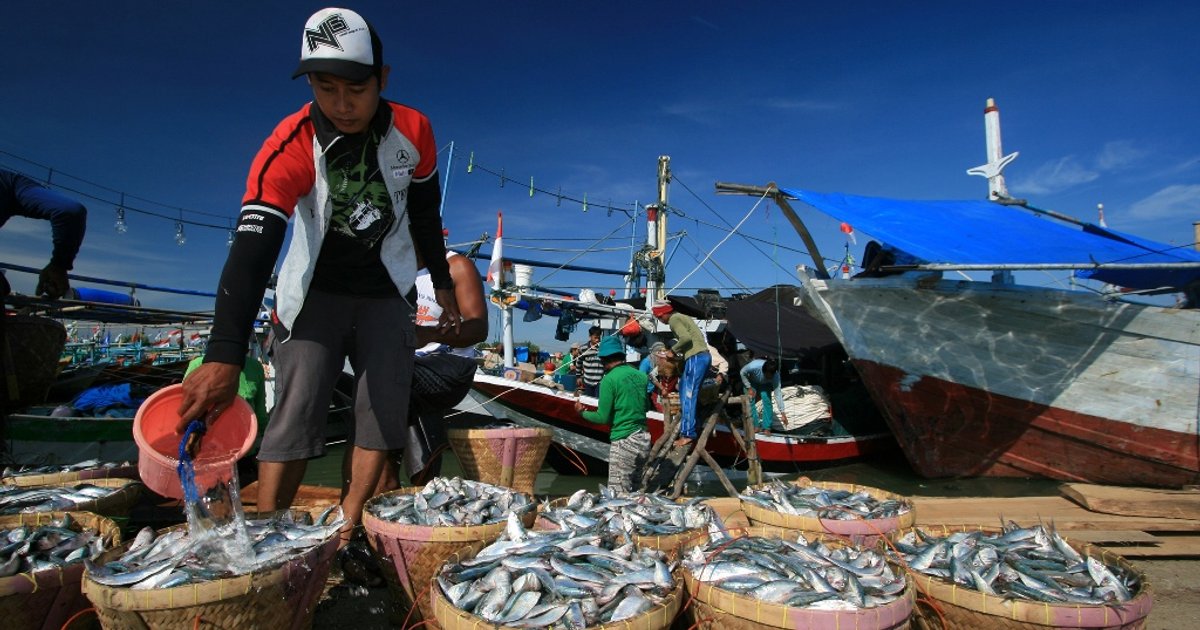
Indonesian Minister of Maritime Affairs and Fisheries, Sakti Wahyu Trenggono, announced that Indonesia expects to produce 10.57 million tons of fish during the period from April to December 2026. These projections are part of efforts to ensure the availability of animal protein for the community, especially in light of global geopolitical pressures.
During a working meeting with the Agriculture Committee in the Indonesian Parliament, Trenggono clarified that this production is divided between 5.42 million tons of captured fish and 5.15 million tons of farmed fish. He also confirmed that the Ministry of Maritime Affairs and Fisheries guarantees fish availability in the market until June 2026.
Details of the Announcement
The Indonesian government is striving to enhance its fish production amid climatic and geopolitical challenges facing the world. Data has shown that the marine and fisheries sector has experienced continuous growth from 2020 to 2025, with a growth rate of 3.8%.
Trenggono emphasized the importance of monitoring the situation in eight major cities to ensure fish availability, as reports indicate that the current situation is considered safe until mid-2026.
Background & Context
Historically, the fishing sector in Indonesia is one of the cornerstones of the national economy, with many residents relying on it as a primary source of protein. With increasing climatic challenges such as the El Niño phenomenon, it has become essential to enhance production strategies to ensure the sustainability of this sector.
Like many other countries, Indonesia faces negative impacts from climate change, necessitating effective measures to protect the marine environment and ensure the sustainability of fish resources.
Impact & Consequences
The forecasts for fish production in Indonesia indicate the country's ability to confront global challenges. However, rising evaporation rates due to climate change may lead to increased salinity in waters, threatening the health of the marine ecosystem.
The Minister of Maritime Affairs and Fisheries is working to enhance food security strategies by developing aquaculture techniques and improving the quality of seeds and feed, contributing to reducing risks associated with climate change.
Regional Significance
Indonesia is one of the largest fish-producing countries in the world, making it an important partner for Arab countries in the field of food security. Arab nations can benefit from Indonesian experiences in enhancing fish production and developing aquaculture techniques.
Given the challenges facing the Arab region, such as water scarcity and climate change, Indonesia can serve as a model for sustainable management of marine resources.