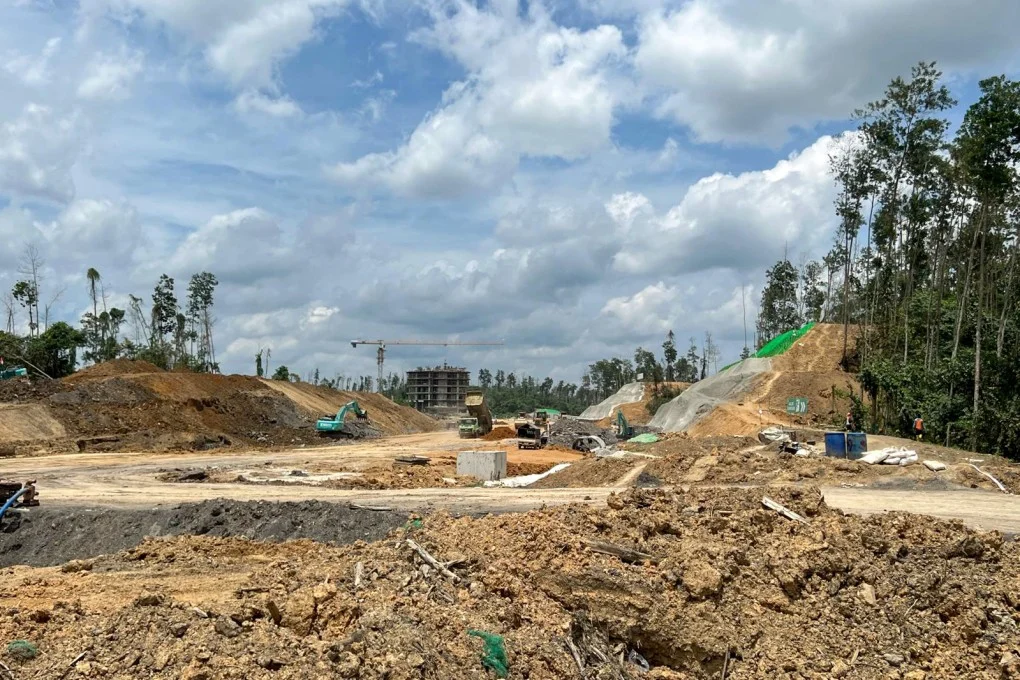
Indonesia is set to launch an ambitious project to relocate its capital from Jakarta, which suffers from congestion and pollution, to a new city known as Ibu Kota Nusantara. This city is situated in the heart of Borneo's forests, with the transition expected to begin by 2028.
The journey to the new city involves a long trek through dense forests, where visitors face challenges such as unstable roads and damaged bridges. These conditions reflect the logistical hurdles that the Indonesian government may encounter in constructing a new city from scratch in a remote area.
Details of the Project
Ibu Kota Nusantara, or Nusantara as it is locally known, is a massive project aimed at alleviating pressure on Jakarta, which faces serious environmental issues such as rising sea levels and deteriorating infrastructure. The Indonesian government hopes this move will improve the quality of life for citizens and provide a more sustainable environment.
The plans for the new city include the establishment of modern facilities, including government offices, schools, hospitals, and extensive green spaces. The city is also expected to attract both local and international investments, boosting the Indonesian economy.
Background & Context
Historically, Indonesia has relied on Jakarta as its capital since gaining independence in 1945. However, rapid population growth and unplanned urban expansion have exacerbated environmental and social problems. In recent years, the government has begun to consider alternative options, leading to the idea of creating a new capital.
This initiative is part of a broader vision to enhance sustainable development in Indonesia, as the government seeks to balance economic growth with environmental protection. The project also reflects a global trend towards rethinking how major cities are managed in the face of environmental challenges.
Impact & Consequences
This project could have far-reaching effects on Indonesia, as it is expected to create new job opportunities and improve infrastructure. However, there are concerns about the environmental impact of building a new city in a forested area, which could lead to biodiversity loss and destruction of natural habitats.
Moreover, the transition to a new capital may raise questions about how to fairly distribute resources among different regions in Indonesia, especially given the existing economic and social gaps.
Regional Significance
Indonesia's experience in relocating its capital serves as a model that many Arab countries facing similar challenges could benefit from. Arab nations can draw lessons from this project in urban planning and sustainable development.
Additionally, Chinese investments in the Nusantara project may open new avenues for cooperation between Arab countries and Indonesia, particularly in infrastructure and economic development.
In conclusion, the Ibu Kota Nusantara project represents a bold step towards a more sustainable future for Indonesia, but it also presents significant challenges that require careful planning and international collaboration.