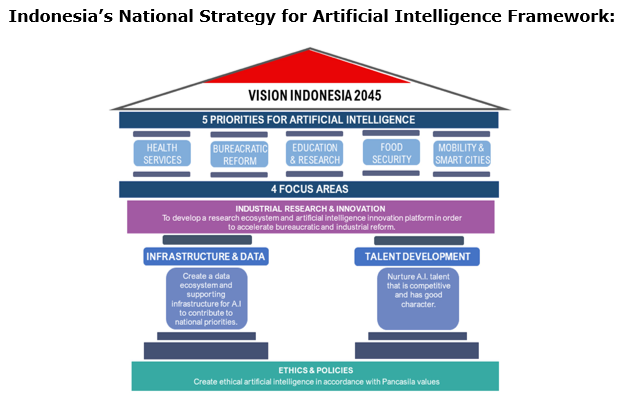
The Indonesian government has announced new guidelines aimed at regulating the use of artificial intelligence in the education sector. This initiative seeks to ensure positive benefits for the educational process while avoiding potential risks. Amid rapid technological advancements, Indonesia aims to enhance the use of artificial intelligence in a way that contributes to improving the quality of education.
The new guidelines include a set of standards and directives designed to guide educational institutions and teachers on how to effectively and safely use this technology. The guidelines also emphasize the importance of training teachers and students to use artificial intelligence in a manner that enhances their skills and helps them achieve their educational goals.
Details of the Initiative
These guidelines come at a time when the world is witnessing a notable increase in the use of artificial intelligence across various fields, including education. This step represents part of the Indonesian government's efforts to adopt modern technology and achieve progress in the national education system. It is expected that these guidelines will contribute to improving the learning experience for students and provide innovative educational tools.
Through these guidelines, the Indonesian government aims to strike a balance between the benefits of artificial intelligence and the potential risks that may arise from its use. Concerns related to privacy and security pose significant challenges, necessitating the establishment of clear controls for the use of this technology.
Background & Context
Historically, Indonesia has undergone significant transformations in its education system, with many technological innovations introduced in recent years. As reliance on technology in education increases, it has become essential to establish clear guidelines to regulate this usage. Studies have shown that the use of artificial intelligence can enhance the quality of education, but it must be implemented thoughtfully.
In recent years, many countries have adopted similar strategies, with nations such as the United States and Canada issuing guidelines to regulate the use of artificial intelligence in education. This reflects a global trend towards integrating technology into the educational process, contributing to the development of students' skills and improving their academic outcomes.
Impact & Consequences
The launch of these guidelines is expected to have a significant impact on the education system in Indonesia. They will help guide teachers and students towards using artificial intelligence in a way that enhances the effectiveness of the educational process. Additionally, they will contribute to reducing the risks associated with using this technology, such as security threats and privacy concerns.
Moreover, this step may open doors to further innovations in the field of education, contributing to improving the quality of education in Indonesia. It could also serve as a model for other countries seeking to integrate technology into their educational systems.
Regional Significance
This initiative from Indonesia is also important for Arab countries, which could benefit from Indonesian experiences in regulating the use of artificial intelligence in education. Given the challenges facing education systems in the Arab world, the Indonesian guidelines could serve as an inspiration for developing similar strategies in Arab nations.
Furthermore, enhancing the use of technology in education can contribute to achieving the developmental goals of Arab countries, helping to improve the quality of education and develop the skills of Arab youth.