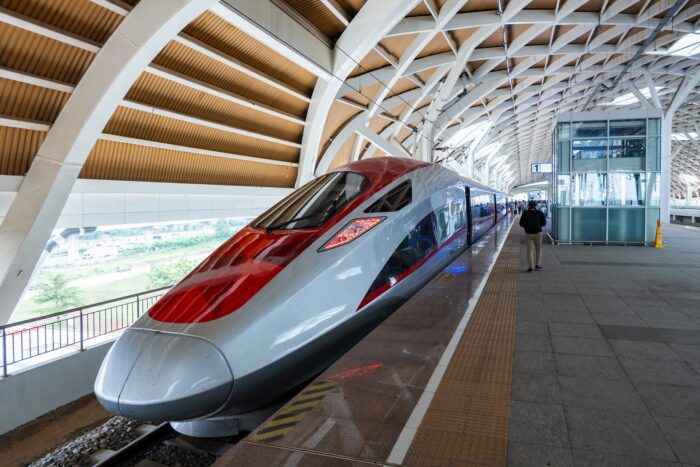
The Indonesian government has expressed its readiness to intervene to resolve the debt crisis related to the Whoosh high-speed train project linking Jakarta and Bandung. This decision is part of the government's efforts to ensure the sustainability of the project, which has demonstrated a positive impact on the Indonesian economy since its launch.
In statements made by the head of the Public Company Supervisory Agency, Doni Oskaria, he emphasized that addressing the financial issues related to the Whoosh project requires a focus on the train's operational continuity. He pointed out that placing the debt burden solely on the train operator would not be sufficient to cover the financial costs.
Details of the Government's Intervention
Doni Oskaria clarified that the government is seeking suitable financial solutions, stressing the necessity of government intervention in this matter. He confirmed that imposing financial burdens solely on the train operator would not suffice, necessitating government involvement to ensure the project's sustainability.
Furthermore, Dani Oskaria noted that the details of the government intervention would be announced after coordination with Finance Minister Burabaya Yudhi Sadyo. Meanwhile, Rusan Ruslani, the CEO of the agency responsible for managing investments, revealed that a decision to restructure the debt has been made, awaiting an official announcement.
Background & Context
The Whoosh train project is part of Indonesia's efforts to develop modern transportation infrastructure and boost the economy. Launched in collaboration with China, the project aims to accelerate transportation between major cities. However, the project has faced financial challenges that have led to a debt accumulation, prompting government intervention.
Historically, Indonesia has witnessed several large infrastructure projects, but financial challenges have always been an obstacle to achieving the desired goals. Therefore, the government's intervention in the Whoosh project represents a significant step towards ensuring the continuity of these projects.
Impact & Consequences
The debt crisis of the Whoosh project carries significant implications for the Indonesian economy. The continued operation of the train enhances trade and tourism movement, contributing to the overall economic improvement. Additionally, the government intervention reflects the government's commitment to enhancing public transportation and supporting projects that benefit the community.
It is expected that resolving the debt crisis will strengthen trust between the government and investors, potentially attracting new investments in future infrastructure projects. Moreover, the success of the Whoosh project may encourage other countries in the region to adopt similar projects.
Regional Significance
Indonesia's experience in handling infrastructure projects serves as an important lesson for Arab countries seeking to develop their infrastructure. The financial challenges faced by major projects are not unique, and Arab nations can benefit from Indonesian experiences in managing financial crises.
Furthermore, successes like the Whoosh project may open new avenues for cooperation between Arab countries and Indonesia in transportation and investment sectors, thereby enhancing economic relations between the two parties.