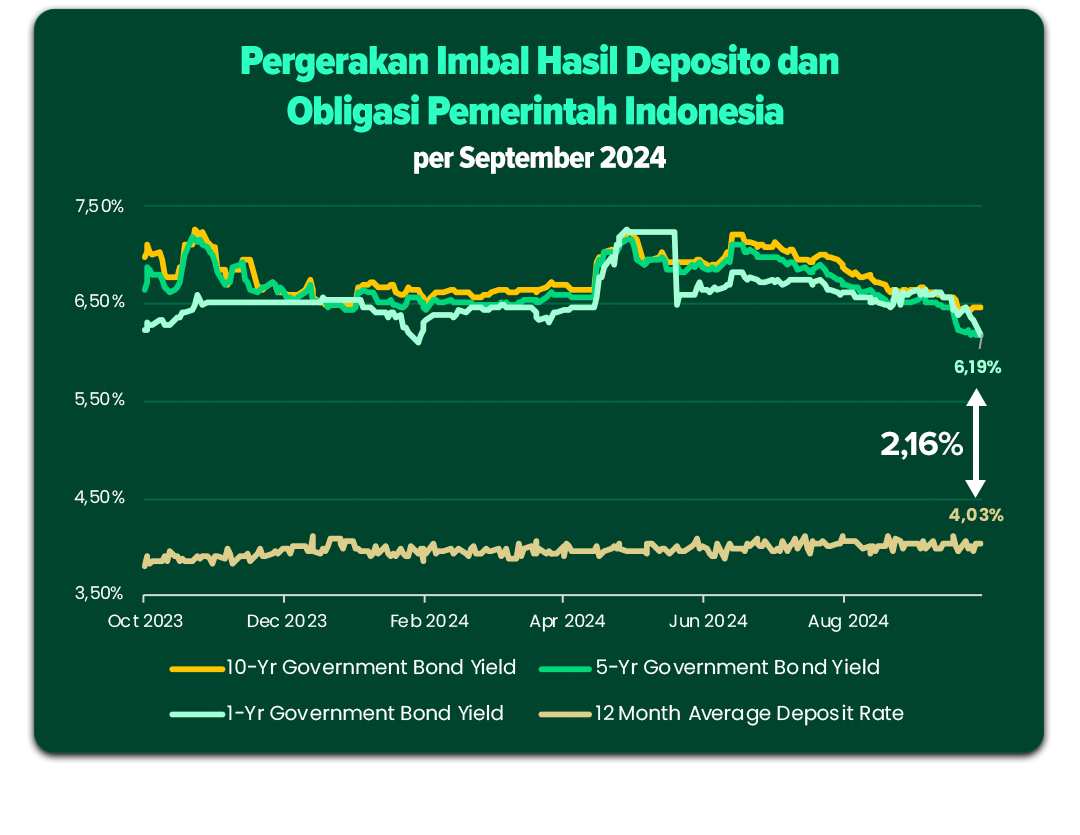
The Indonesian government raised 40 trillion rupiah from an auction of nine types of government bonds on April 28, 2026. The auction attracted significant interest from investors, with total bids reaching 74.95 trillion rupiah.
The bonds of type FR0109 topped the list of the most attractive bonds, collecting 15.75 trillion rupiah from total bids of 34.74 trillion rupiah. The average weighted yield for these bonds was 6.63518%, with a maturity date of March 15, 2031.
Details of the Auction
Following this, the bond FR0107 raised 5.15 trillion rupiah from bids totaling 7.05 trillion rupiah, with an average weighted yield of 6.74984% and a maturity date of August 15, 2045. Additionally, 4.4 trillion rupiah was raised from the bond SPN12270429, which saw bids of 4.56 trillion rupiah, offering an average yield of 5.55% with a maturity on April 29, 2027.
The bond FR0102 collected 3.6 trillion rupiah from bids of 4.2 trillion rupiah, with an average yield of 6.86479% and a maturity date of July 15, 2054. Meanwhile, the bond FR0108 raised 3.25 trillion rupiah from bids of 9.22 trillion rupiah, with an average yield of 6.80995% and a maturity date of April 15, 2036.
Background & Context
Indonesia is considered one of the largest economies in Southeast Asia, and in recent years, it has witnessed significant growth in the government bond market. The government aims to enhance economic stability by attracting both domestic and foreign investments in debt instruments. Flexible fiscal and monetary policies have contributed to the increased interest in government bonds.
Historically, Indonesia has relied heavily on foreign investments, but with the growing political and economic stability, the government has started to bolster the domestic bond market. This auction reflects the increasing confidence of investors in the Indonesian economy.
Impact & Consequences
The success of this auction is a positive indicator of the Indonesian government's ability to raise the necessary funds for financing development and infrastructure projects. It also reflects the stability of the financial market in the country, which may attract more foreign investments.
This success is expected to improve Indonesia's credit rating, making it easier for the country to obtain financing at lower interest rates in the future. Additionally, the increase in yields on bonds may encourage investors to allocate more funds into the Indonesian market.
Regional Significance
Indonesia is an important country in the Southeast Asian region, and its success in attracting investments can serve as a model for Arab countries. Given the economic challenges faced by some Arab nations, they could benefit from Indonesia's experience in enhancing financial markets and attracting investments.
Furthermore, Indonesia's success in raising funds through bonds could lead to increased economic cooperation between Arab countries and Indonesia, strengthening trade and investment relations.