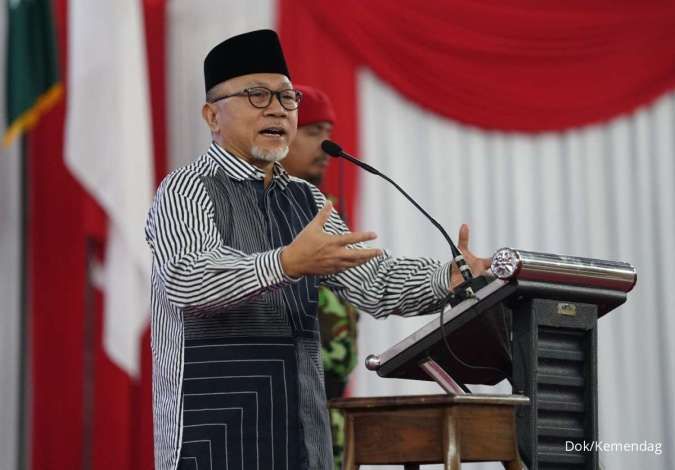
In a controversial development, the Indonesian Coordinating Minister for Food, Zulkifli Hasan, has refuted rumors that spread on social media, alleging he stated that citizens' roles are solely to pay taxes and should not interfere in government affairs. This alleged statement sparked widespread reactions among citizens, prompting the minister to clarify his position.
The rumors began circulating when a photo of the minister was shared on the social media platform X, accompanied by text claiming he emphasized that "ignoring government affairs is a citizen's duty." However, upon verification, it was found that this claim was not based on any official statements from the minister.
Details of the Incident
In the original video published on December 1, 2025, Zulkifli Hasan discussed issues related to environmental policies and the challenges faced by Indonesia, such as flooding in regions like Sumatra and Aceh. At no point in his speech did the minister suggest that citizens should distance themselves from government affairs.
This type of misleading information highlights the importance of fact-checking before news is disseminated. In today's world, where information spreads rapidly, it becomes essential for citizens to be aware of the sources they rely on.
Background & Context
Historically, Indonesia has faced numerous political and social challenges, with ongoing discussions about the role of citizens in government. In recent years, the importance of civic engagement has grown, especially in light of climate change and economic crises. The Indonesian government aims to promote transparency and participation by encouraging citizens to engage in public issues.
These rumors are part of a larger phenomenon concerning media distortion, where social media is used to spread misleading information. In this context, citizens must be more cautious and verify information before believing or sharing it.
Impact & Consequences
Rumors like these can erode trust between the government and citizens. When people feel that the government does not consider their opinions, civic engagement may decline, negatively impacting democracy. It is crucial for the government to enhance communication channels with citizens to ensure they can express their views and concerns.
Furthermore, the spread of misleading information can lead to increased doubts and fears among citizens, which may adversely affect social stability. Therefore, both the government and media must work together to combat this phenomenon.
Regional Significance
This issue is particularly significant for Arab countries, as many face similar challenges related to civic engagement and misinformation. Amid political and economic crises, it becomes essential to raise awareness among citizens about the importance of active participation in government affairs.
Moreover, enhancing transparency and accountability can help build trust between governments and their people, contributing to stability and sustainable development in the region.
In conclusion, it is evident that misleading information can significantly impact public opinion and civic engagement. It is vital to foster a culture of fact-checking and effective communication between the government and citizens to ensure a better future.