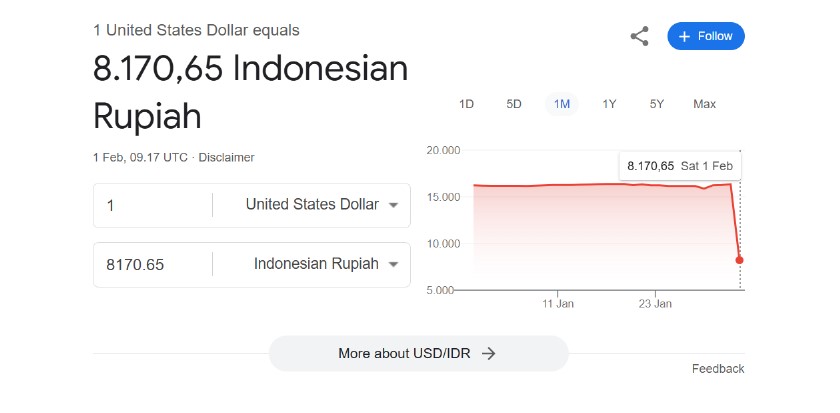
This morning, the Indonesian rupiah experienced a slight increase, reaching 17,211 rupiah per US dollar, indicating an improvement in the country's economic performance. This rise follows the market's closure last Friday at a level of 17,229 rupiah per dollar.
The increase in the value of the rupiah comes at a time when global markets are facing increasing pressures, prompting the Indonesian central bank to take steps to enhance currency stability. Economists have pointed out the importance of coordination among financial institutions to achieve greater stability in the exchange rate.
Details of the Event
According to data released by the central bank, the rupiah has experienced notable fluctuations recently, influenced by changes in global markets and commodity prices. However, the current rise suggests that there are ongoing efforts to maintain currency stability.
Some economists have emphasized the need to strengthen cooperation among various government and financial bodies to ensure the stability of the rupiah, especially in light of the unstable global economic conditions.
Background & Context
Historically, Indonesia has witnessed significant fluctuations in the value of its currency, affected by several factors including global economic crises, changes in oil prices, and monetary policies. In recent years, the Indonesian government has worked to bolster the local economy through a series of economic reforms.
The Indonesian rupiah is considered one of the most volatile currencies in Southeast Asia, making it susceptible to external influences. Nevertheless, the government is striving to achieve greater stability by improving the business environment and boosting investments.
Impact & Consequences
The increase in the value of the rupiah can affect the Indonesian economy in multiple ways. On one hand, it may help reduce the cost of imports, thereby improving the trade balance. On the other hand, it could negatively impact exports, as Indonesian products may become less competitive in global markets.
Furthermore, the stability of the rupiah can enhance foreign investor confidence, potentially leading to increased direct investments in the country. This, in turn, could contribute to long-term economic growth.
Regional Significance
Indonesia is one of the largest economies in Southeast Asia, and any changes in the value of its currency may impact regional markets. For Arab countries, the stability of the rupiah could contribute to enhancing trade between Indonesia and Arab nations, especially in sectors such as oil and commodities.
Moreover, improvements in the Indonesian economy may open new avenues for Arab investments in Indonesia, strengthening economic relations between both sides.
The rise in the value of the Indonesian rupiah reflects the government's efforts to enhance economic stability and underscores the importance of cooperation among financial institutions to achieve positive outcomes in the future.