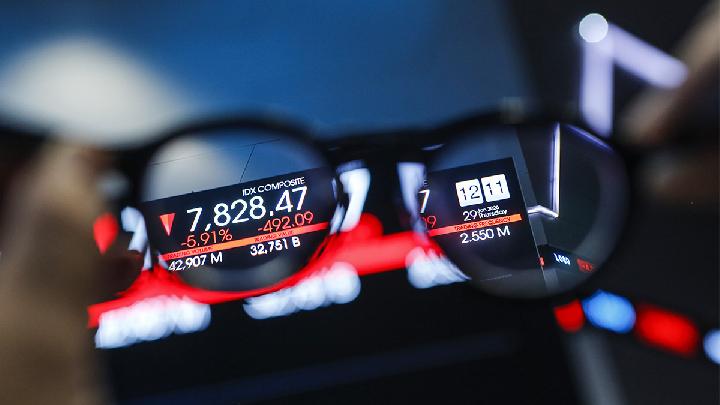
The Indonesian Stock Price Index (IHSG) opened on Monday with a notable increase of 29.02 points, equivalent to 0.41%, reaching a level of 7,158.51 points. This increase reflects an improvement in the performance of the Indonesian financial market, indicating investor optimism at the start of the week.
Meanwhile, the LQ45 index, which includes 45 leading stocks in the market, experienced a slight decline of 2.32 points, reaching 693.08 points. This disparity in performance between the two indices reflects a state of relative instability in some sectors.
Details of the Market Performance
This increase in the IHSG index is a positive indicator of market stability, as investors seek to capitalize on available opportunities amid current economic conditions. Several factors contributed to this rise, including improved performance of major companies and increased confidence in the Indonesian economy.
It is noteworthy that the Indonesian market has experienced significant fluctuations in recent months due to the impacts of the COVID-19 pandemic and global economic changes. However, it seems that the market is beginning to recover, reflecting investors' desire to return to economic activity.
Background & Context
Historically, the IHSG index is one of the main indicators reflecting the performance of the financial market in Indonesia. The country has witnessed significant economic growth in recent years, which has contributed to attracting both foreign and domestic investments. Additionally, the Indonesian government has taken several steps to bolster the economy, including improving the business environment and providing incentives for investors.
The positive performance of the IHSG index is significant as it indicates a recovery phase for the market, which could lead to increased investments in the country. The government's efforts to stabilize the economy are crucial in this context, as they aim to create a conducive environment for business and investment.
Impact & Consequences
The rise in the IHSG index is a sign of market stability, which may encourage further investments in the country. Additionally, this strong performance could enhance foreign investor confidence, contributing to attracting more investments to Indonesia. Furthermore, this positive performance can impact other economic sectors, such as tourism and trade, as the financial market is considered a barometer of overall economic health.
Investors are likely to view the upward trend in the IHSG as a signal to engage more actively in the market, potentially leading to a broader economic recovery. The interplay between the stock market and other sectors will be crucial in determining the overall economic trajectory of Indonesia.
Regional Significance
The performance of the Indonesian stock market holds regional significance, particularly in fostering trade and investment relations with neighboring countries. As the market stabilizes, opportunities for commercial cooperation between Indonesia and Arab countries may arise, enhancing bilateral trade.
In conclusion, the positive trajectory of the IHSG index not only reflects the current state of the Indonesian economy but also sets the stage for future growth and collaboration in the region.