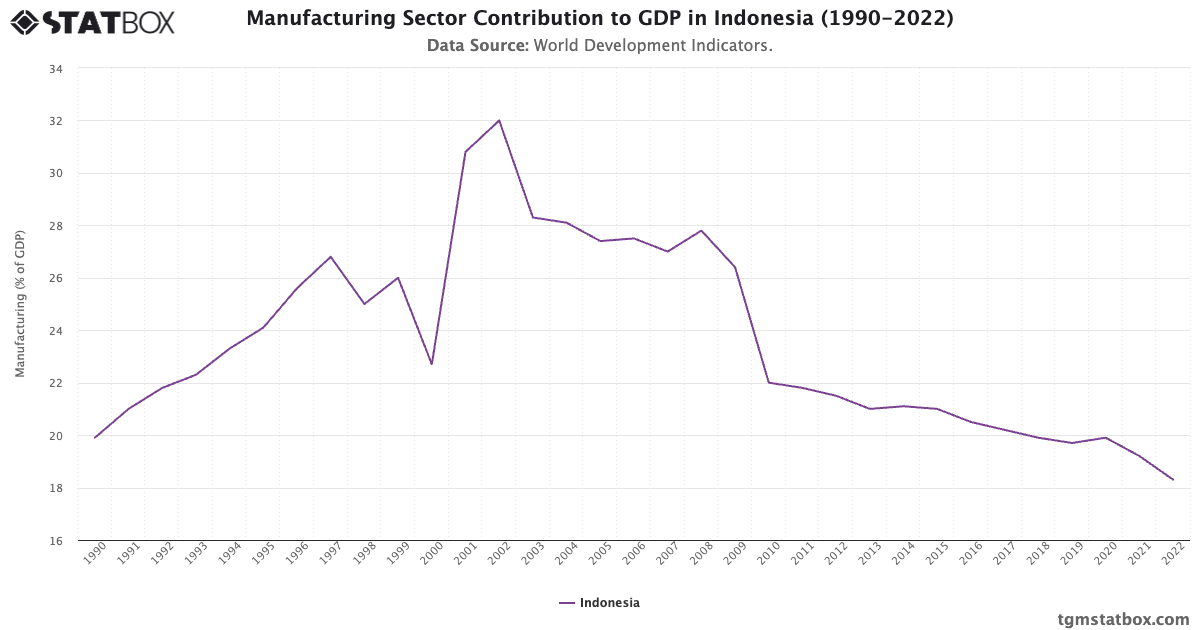
Indonesian Minister of Industry Agus Gumiwang Kartasasmita reported that the manufacturing sector in Indonesia shows remarkable strength, with the Purchasing Managers' Index (PMI) reaching 50.1 in March 2026, indicating continued activity in this sector despite global pressures.
The minister noted in his statements during a press conference in Jakarta that this performance reflects the sector's resilience in facing challenges, as the average PMI during the first quarter of 2026 was 52.6 in January, rising to 53.8 in February, before declining to 50.1 in March. Despite this decline, the index remains above the level of 50, indicating continued growth in industrial activity.
Details of the Event
The minister confirmed that this positive performance is due to the strength of Indonesia's industrial structure, supported by stable domestic demand. He explained that domestic demand continues to be the cornerstone that helps counter significant external pressures.
In a global comparison, Indonesia's PMI showed good competitiveness, with other major countries such as Japan recording a PMI of 51.6, indicating a decline in industrial activity there as well. In the ASEAN region, Indonesia remains among the countries with expanding activity, alongside Thailand, Malaysia, Myanmar, and the Philippines.
Background & Context
Many countries are facing economic challenges due to pressures from inflation and rising energy and raw material costs, exacerbated by geopolitical conflicts, particularly in the Middle East. These conditions have led to disruptions in supply chains, affecting many industrial sectors worldwide.
However, Indonesia has managed to maintain its industrial activity in the expansion zone, which is an achievement worthy of recognition, according to the minister. Data has shown a decline in production and new orders in March due to disruptions in raw material supplies and rising prices.
Impact & Consequences
Analyses indicate that Indonesia's continued presence in the expansion zone reflects the industrial sector's ability to adapt to global challenges. However, the increase in production costs may lead to adjustments in selling prices, which could affect profitability in the future.
A survey of the industrial confidence index in March 2026 revealed that 73.7% of participants believe their businesses are improving, with a high level of optimism about conditions in the next six months, where the optimism rate reached 71.8%.
Regional Significance
Indonesia is considered one of the largest economies in South East Asia, and its performance in the industrial sector reflects potential significant impacts on Arab markets. Amid global challenges, Arab countries may benefit from cooperation with Indonesia in manufacturing and trade.
In conclusion, the manufacturing sector in Indonesia remains a focal point for observers, as it represents one of the key pillars of the national economy and reflects the country's ability to face global challenges.