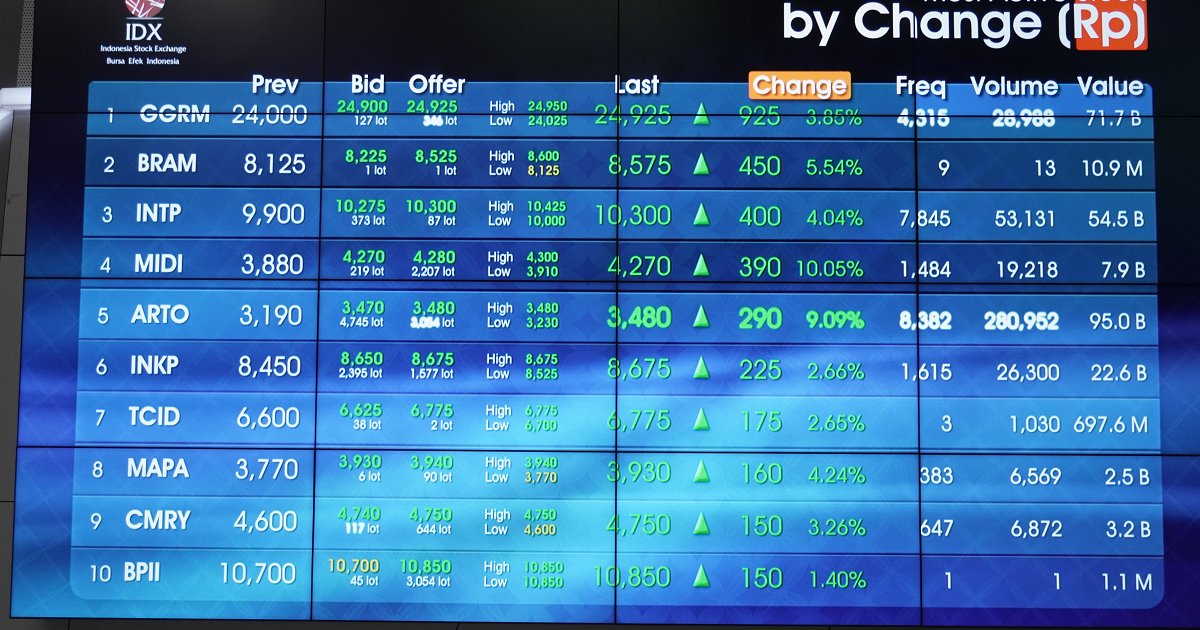
The Indonesian Stock Price Index (IHSG) closed on Tuesday at the Indonesia Stock Exchange (BEI) with a significant decline, falling by 43.45 points, or 0.61%, to reach 7048.22 points. The LQ45 index, which includes 45 leading stocks, also saw a decrease of 1.68 points, or 0.23%, reaching 715.81 points. This downturn reflects multiple influences from both domestic and international factors affecting the Indonesian market.
According to financial market expert Ridi Okta, the pressures faced by the index stem from a mix of geopolitical and economic factors. He pointed out that the ongoing tensions between the United States and Iran, along with rising energy prices, have significantly impacted investor sentiment.
Market Performance Details
The IHSG opened on Tuesday with gains but quickly shifted into negative territory during the trading session. This trend continued until the end of the session, reflecting a cautious attitude among investors. Data showed that only three sectors among the listed sectors achieved gains, with the consumer staples sector leading with an increase of 1.32%, followed by the health and real estate sectors with increases of 0.43% and 0.33%, respectively.
This decline in the index also reflects a shift among investors towards defensive positions, as they began to pivot towards stocks related to energy and basic commodities, indicating a state of caution and vigilance in the market.
Background & Context
The Indonesia Stock Exchange is considered one of the emerging markets that is significantly affected by global economic changes. In recent years, the country has experienced notable economic growth, but it continues to face ongoing challenges related to inflation and currency fluctuations. The rise in oil and gas prices has heightened concerns about domestic inflation, which has impacted investor confidence.
Furthermore, geopolitical tensions between major powers, such as the United States and Iran, cast a shadow over global markets, increasing uncertainty in emerging markets like Indonesia. These combined factors make it challenging for investors to make clear investment decisions.
Impact & Consequences
The decline of the IHSG index serves as a warning to investors about the need to adapt to changing economic conditions. With ongoing global and local pressures, investors may need to reassess their investment strategies. This downturn is likely to lead to further shifts in investor portfolios, as they may seek safer assets under these circumstances.
Additionally, this decline could affect the flow of foreign investments into Indonesia, as investors may hesitate to enter a market experiencing significant volatility. Consequently, the Indonesian government needs to take measures to enhance market confidence and attract investments.
Regional Significance
Indonesia is one of the largest economies in Southeast Asia, and any fluctuations in its financial market could impact regional markets. For Arab countries, rising oil prices due to geopolitical tensions may have a dual effect, potentially increasing oil revenues while also causing inflationary pressures.
Moreover, Arab investments in Indonesia may be affected by changes in the market, necessitating close monitoring by Arab investors. Under these circumstances, Arab countries should strengthen their investment strategies to ensure desired returns.