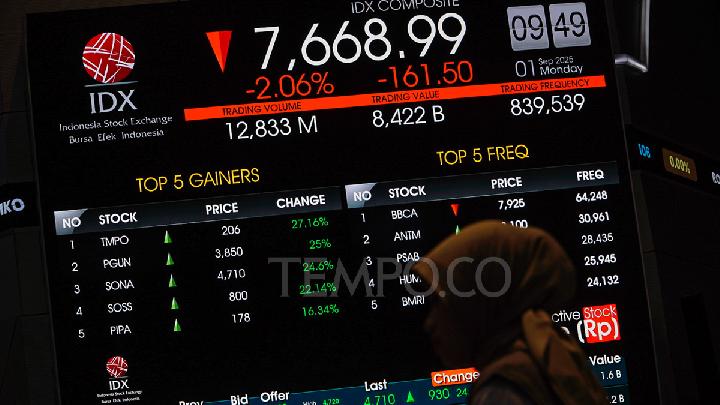
On Wednesday morning, Indonesia's Composite Stock Price Index (IHSG) opened higher by 101.03 points, or 1.43%, reaching 7,149.25 points. The LQ45 index, which includes 45 leading stocks, also saw an increase of 11.78 points, or 1.65%, reaching 727.59 points.
This rise comes at a time when investors are anticipating positive movements in the market, especially following recent news about raising the minimum free float of shares available for trading to 15%, reflecting the government's efforts to enhance market liquidity.
Details of the Event
This increase in the index is a sign of optimism in the Indonesian market, as investors seek to capitalize on available opportunities. The Indonesian stock exchange has recently experienced fluctuations due to a mix of local and international factors, including changes in global monetary policies.
Despite the challenges facing financial markets, technical analysis indicates that current indicators may support the continuation of the upward trend in the coming days. There is also growing interest from foreign investors in the Indonesian market, which enhances economic growth prospects.
Background & Context
The Indonesia Stock Exchange was established in 1977 and is one of the oldest exchanges in Southeast Asia. Over the years, the exchange has undergone significant developments, becoming a major center for stock trading in the region. In recent years, the Indonesian government has taken steps to enhance the investment environment, including improving trading regulations and increasing transparency.
Indonesia is one of the largest economies in Southeast Asia, heavily reliant on agricultural, industrial, and service sectors. However, the Indonesian economy faces challenges such as inflation and unemployment, making the stability of the financial market vital for sustainable growth.
Impact & Consequences
The current rise in the IHSG index may have positive effects on the Indonesian economy as a whole. Increased confidence in the market could encourage more investments, both domestic and foreign, thereby boosting economic growth. Additionally, improvements in stock market performance could lead to increased job opportunities and an enhanced standard of living for the population.
However, investors should remain cautious of potential market volatility, especially amid changing global economic conditions. Changes in monetary policies by major central banks, such as the U.S. Federal Reserve, could directly impact investment flows into Indonesia.
Regional Significance
Indonesia is one of the largest trading partners for Arab countries in Southeast Asia. Therefore, any improvement in Indonesia's economic performance could open new avenues for trade and investment cooperation between Arab countries and Indonesia. Moreover, stability in the Indonesian market may encourage Arab investors to explore available opportunities in this promising market.
In conclusion, it remains important to monitor developments in the Indonesian market and their impact on the regional and global economy. Positive movements in the stock market could enhance growth and cooperation opportunities between Indonesia and Arab countries, contributing to sustainable development in the region.