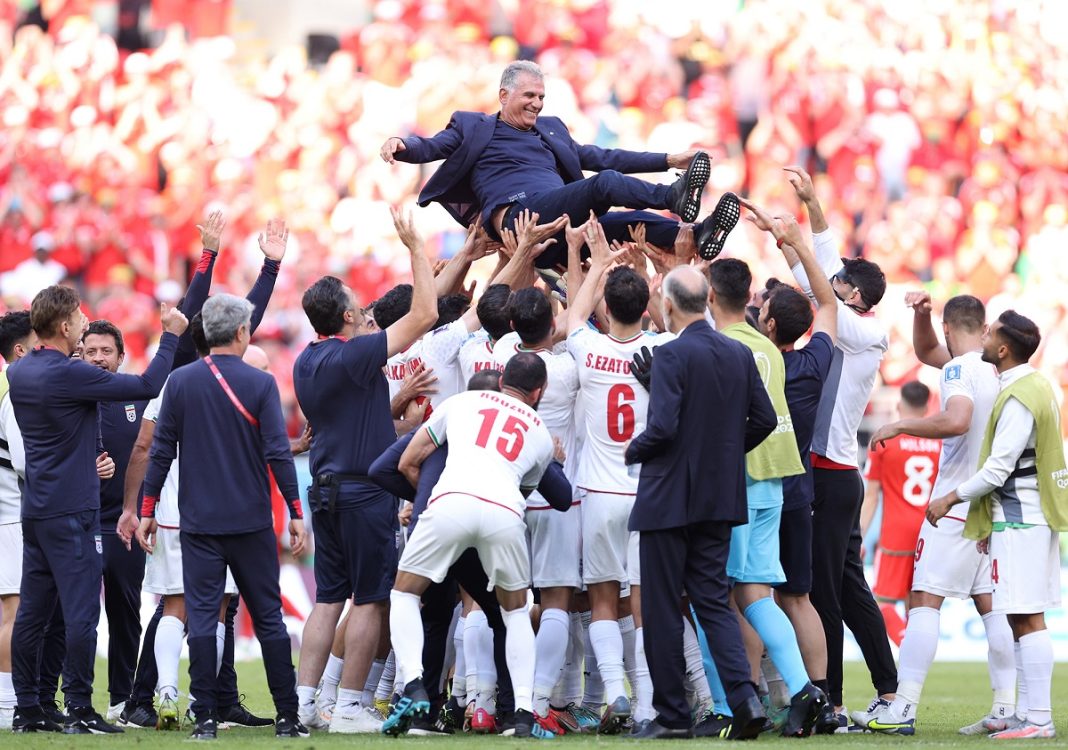
FIFA President Gianni Infantino confirmed that Iran will participate in the 2026 World Cup, set to take place in the United States, Canada, and Mexico, despite ongoing political tensions. In an interview with a Mexican channel, Infantino stated that "Iran represents its people, both those residing in the country and abroad," noting that there are no alternative plans for the Iranian national team's participation.
Infantino's remarks come at a time when the Iranian team faces challenges regarding the location of its matches, as the team prefers to play in Mexico rather than the United States due to escalating conflicts in the Middle East. Nevertheless, FIFA's stance remains ambiguous regarding the possibility of accommodating this request, as Infantino emphasized the importance of ensuring Iran's participation under the best possible conditions.
Event Details
Earlier, the official Iranian news agency IRNA reported that the President of the Iranian Football Federation, Mahdi Taj, announced that the national team would boycott the United States but would not boycott the World Cup. Taj did not provide additional details about this decision, complicating the situation further.
The Iranian Minister of Sports, Ahmad Donyamali, also indicated that Iran might consider relocating its matches from the United States to Mexico, expressing hope that suitable conditions would be prepared for the Iranian team's participation in the tournament. Communication has been made with FIFA to discuss this proposal, reflecting Iran's efforts to ensure participation in this globally significant sporting event.
Background & Context
The 2026 World Cup is a major sporting event, hosted by three countries: the United States, Canada, and Mexico, from June 11 to July 19. The Iranian team is set to face teams such as Belgium, New Zealand, and Egypt in the group stage, increasing the importance of its participation in the tournament.
Historically, relations between Iran and the United States have been marked by significant tensions, especially following the 1979 Iranian Revolution. These tensions could impact Iran's participation in international events, including sports. However, FIFA remains committed to the principle of including all countries in sporting competitions, reflecting the importance of sports as a means of communication between peoples.
Impact & Consequences
The implications of Iran's participation in the World Cup extend beyond sports, reflecting the political and social conflicts in the region. Iran's participation in the tournament could contribute to improving relations between countries and presenting a positive image of the Iranian people on the international stage.
Moreover, Iran's participation in the World Cup may influence Iranian players and youth, as sports serve as a means of expressing national identity and promoting sportsmanship. In this context, the tournament could play a role in fostering unity among Iranians, both within the country and in the diaspora.
Regional Significance
Iran's participation in the 2026 World Cup holds particular significance for the Arab region, as it reflects the political and sporting tensions in the Middle East. This participation could enhance dialogue between Arab countries and Iran, providing an opportunity for understanding and cooperation in various fields.
The tournament may also serve as a platform to highlight social and political issues in the region, reinforcing the importance of sports as a means for positive change. Ultimately, Iran's participation in the 2026 World Cup is an event that many are eagerly awaiting, whether they are football fans or those interested in the political situation in the region.