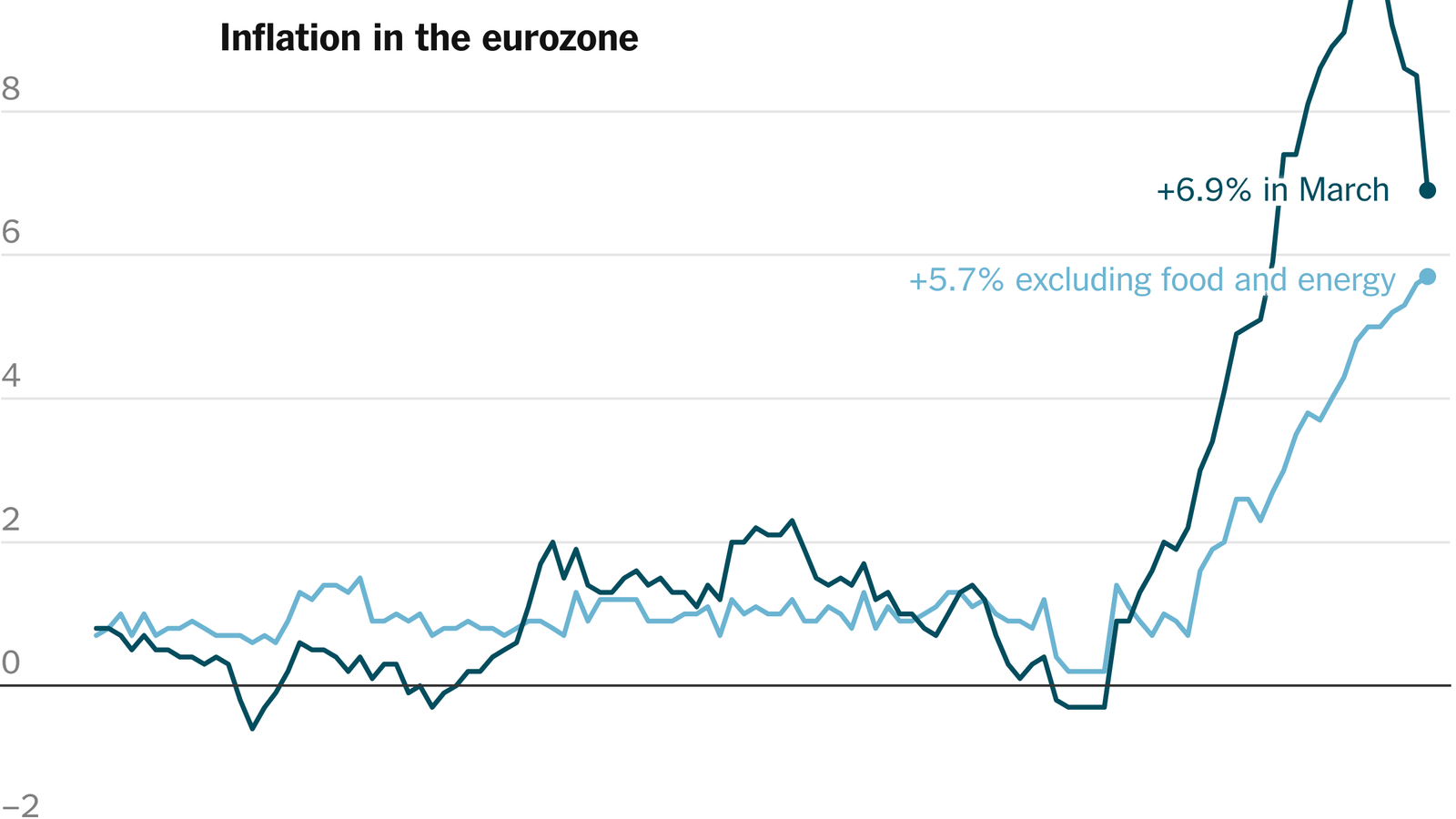
Consumer prices in the Eurozone have recorded a notable increase of 2.5% in the latest report, the fastest monthly rate since October 2022. This rise comes amid escalating tensions resulting from the conflict in Iran, which has significantly impacted energy markets and commodity prices.
This increase in inflation is a sign of the economic pressures facing the Eurozone, where the European Central Bank (ECB) is grappling with significant challenges in making decisions regarding monetary policy. While some economists expect the ECB to move towards raising interest rates, others remain cautious about this step.
Details of the Event
According to reports, the surge in energy prices was the main driver behind this inflation increase. Oil and gas prices have seen notable rises due to disruptions in the Middle East, leading to increased production and transportation costs. Additionally, geopolitical tensions in the region have caused market instability, affecting consumer and investor confidence.
Although the ECB has previously indicated its readiness to raise interest rates to combat inflation, the current situation may make it hesitant to take this step. Raising interest rates could lead to an economic slowdown, which may have negative repercussions on recovery following the COVID-19 pandemic.
Background & Context
Historically, the Eurozone has experienced significant fluctuations in inflation rates, especially during global economic crises. Since the onset of the COVID-19 pandemic, governments and central banks have worked to support the economy through accommodative monetary policies, which have contributed to increased demand but also rising prices.
The war in Iran is not new, but its impact on global energy markets has become more pronounced recently. Economic sanctions and political unrest have curtailed supplies, significantly contributing to price increases.
Impact & Consequences
If inflation continues to rise, the ECB may be forced to take more decisive actions, such as raising interest rates, which could affect borrowing and investment in the region. This could lead to an economic slowdown, raising concerns among both investors and consumers.
On the other hand, rising energy prices may increase the cost of living, negatively impacting low-income households. Under these circumstances, it may become challenging for governments to strike a balance between supporting the economy and addressing inflation.
Regional Significance
Arab countries are directly affected by economic developments in the Eurozone, especially those reliant on oil and gas exports. Rising energy prices could have a positive impact on the revenues of these countries, but at the same time, it may lead to increased costs for imported goods.
Moreover, tensions in the Middle East, such as the conflict in Iran, could lead to greater market instability, affecting both Arab and foreign investments in the region.
In light of current conditions, the future of inflation in the Eurozone remains uncertain. The ECB must make difficult decisions amid rising economic challenges, which could impact the global economy as a whole.