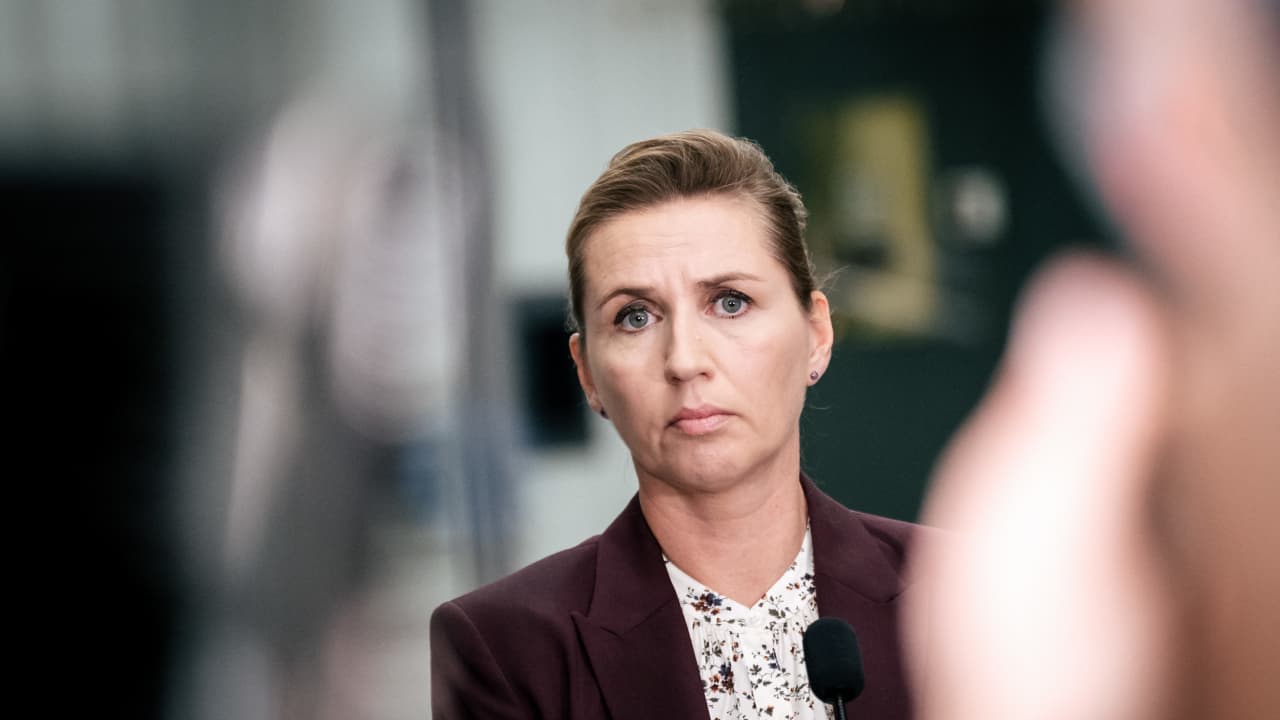
Danish Prime Minister Mette Frederiksen initiated talks on Friday to form a new coalition government, hoping to secure a third term in office after her central government faced a significant defeat in the elections held last Tuesday.
This dialogue comes at a sensitive time, as the Social Democratic Party, led by Frederiksen, seeks to rebuild political alliances with other parties in an effort to strengthen its position following the disappointing results revealed by the elections.
Details of the Event
The recent election results showed a substantial decline in support for the Social Democratic Party, placing Frederiksen in a challenging position. Nevertheless, she hopes to form a coalition with other parties, such as the Left Party and the Center Party, to enhance her chances of remaining in power.
This election is a true test for Frederiksen, who has held her position since 2019, leading the government through a difficult period marked by significant challenges such as the COVID-19 pandemic and its economic repercussions.
Background & Context
Historically, Denmark has experienced significant political shifts, with previous governments often formed from coalitions among several parties. This dynamic has contributed to the stability of the political system in the country, but the recent elections revealed a divergence of opinions regarding economic and social policies.
It is worth noting that Frederiksen has faced criticism for some of her policies, including the management of the refugee crisis, which has affected her popularity in both political and public circles.
Impact & Consequences
If Frederiksen is able to form a coalition government, it could lead to political stability in Denmark, helping to bolster the national economy and improve public services. However, failure to do so may result in new elections, increasing political uncertainty.
Additionally, the election results could impact European policies in general, especially given the challenges European countries face in areas such as immigration and the economy. Denmark plays a significant role in shaping European policies, and any change in government could reflect on European stances regarding common issues.
Regional Significance
Denmark is one of the European countries that has an influence on foreign policies, including relations with Arab countries. If Frederiksen continues in her position, it may signify the continuation of current policies towards issues such as immigration and economic cooperation.
Moreover, any changes in the Danish government could affect trade and cultural relations with Arab countries, as many Arab nations seek to enhance cooperation with European countries in various fields.
In light of these circumstances, the future of the Danish government remains uncertain, as the country awaits the results of coalition talks that may determine the course of Danish policy in the coming years.