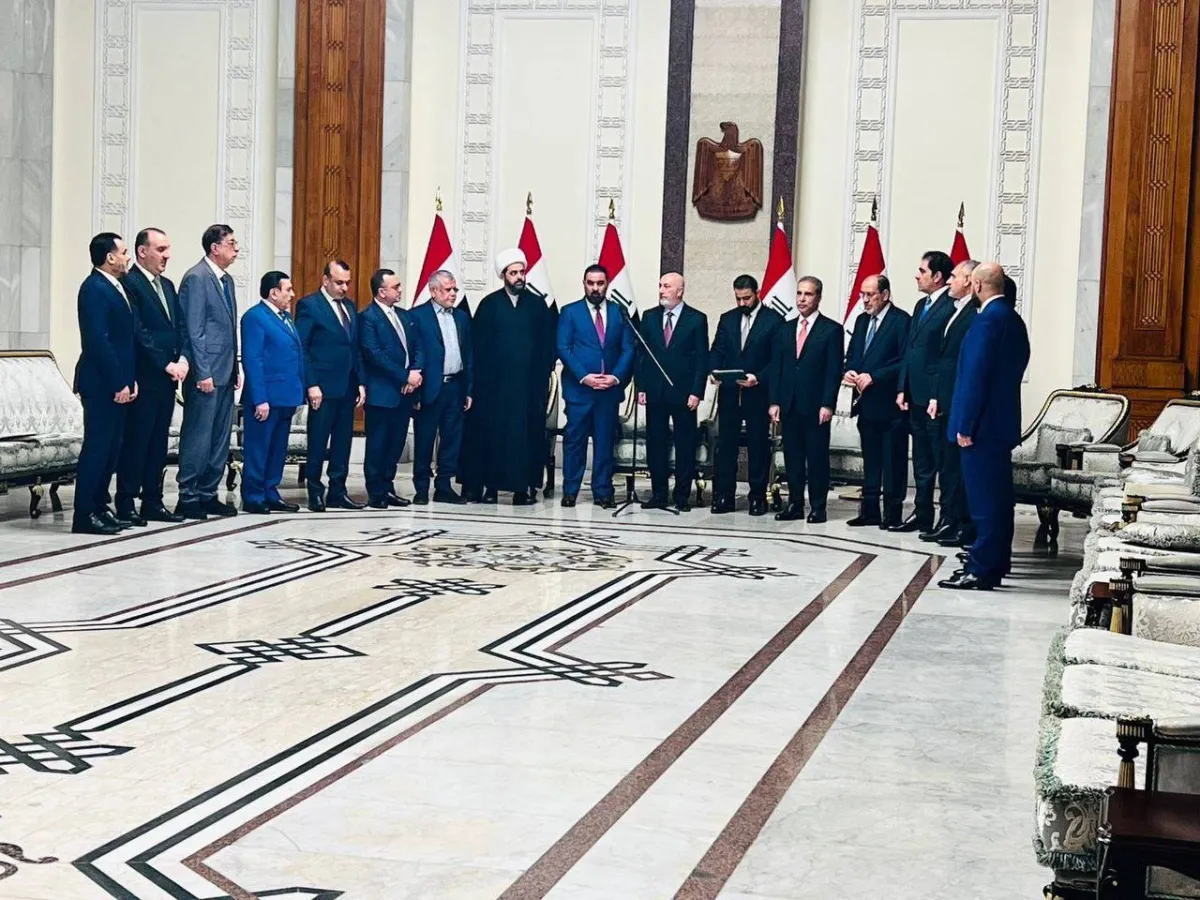
Ali Al-Zaydi, who has been appointed to form the new Iraqi government, has commenced the distribution of ministerial portfolios amidst fierce competition among political factions. Al-Zaydi, selected by the "Coordination Framework" alliance, faces significant challenges due to the unclear political landscape.
According to Iraqi sources, Al-Zaydi has started initial consultations for government formation, yet his success in this endeavor remains uncertain. Despite the support he received upon receiving the official mandate, it is still early to determine the outcomes of these consultations.
Details of the Event
Al-Zaydi's nomination came after a settlement between Nouri Al-Maliki, head of the State of Law Coalition, and outgoing Prime Minister Muhammad Shia' Al-Sudani. This agreement reflects the existing political tensions in Iraq, where multiple forces are vying for influence.
Simultaneously, both London and Paris welcomed Al-Zaydi's appointment, while Washington linked its stance on the new government to the resolution of key issues, most notably the weapons of armed factions. This American position reflects concerns about the impact of these factions on security and stability in Iraq.
Background & Context
Historically, Iraq has witnessed a series of political crises that have delayed the formation of governments. Following the recent elections, there were expectations that the new government could achieve stability; however, internal conflicts among political forces may hinder this.
Al-Zaydi, who lacks a prominent political history, may find himself in a challenging position, as he must negotiate with multiple forces, each seeking to achieve its own interests. These dynamics could affect the new government's ability to function effectively.
Impact & Consequences
If Al-Zaydi succeeds in forming the government, it could lead to relative political stability in Iraq, potentially contributing to improvements in economic and security conditions. However, any failure to form the government could result in further political chaos, threatening stability in the country.
The challenges facing Al-Zaydi include dealing with armed factions, which still play a significant role in Iraqi politics. This situation may impact the government's ability to assert control and achieve security.
Regional Significance
The formation of the new Iraqi government could have wide-ranging effects on the Arab region, especially amidst existing tensions in neighboring countries. The government's success in achieving stability could enhance Iraq's position in the regional arena.
On the other hand, failure to form the government may lead to escalating tensions, negatively affecting relations between Iraq and its neighbors and increasing instability in the region.
In conclusion, the political landscape in Iraq remains complex, with political interests intertwined with security and economic challenges. Al-Zaydi's success in forming the government will have significant implications for the future of Iraq and the region.