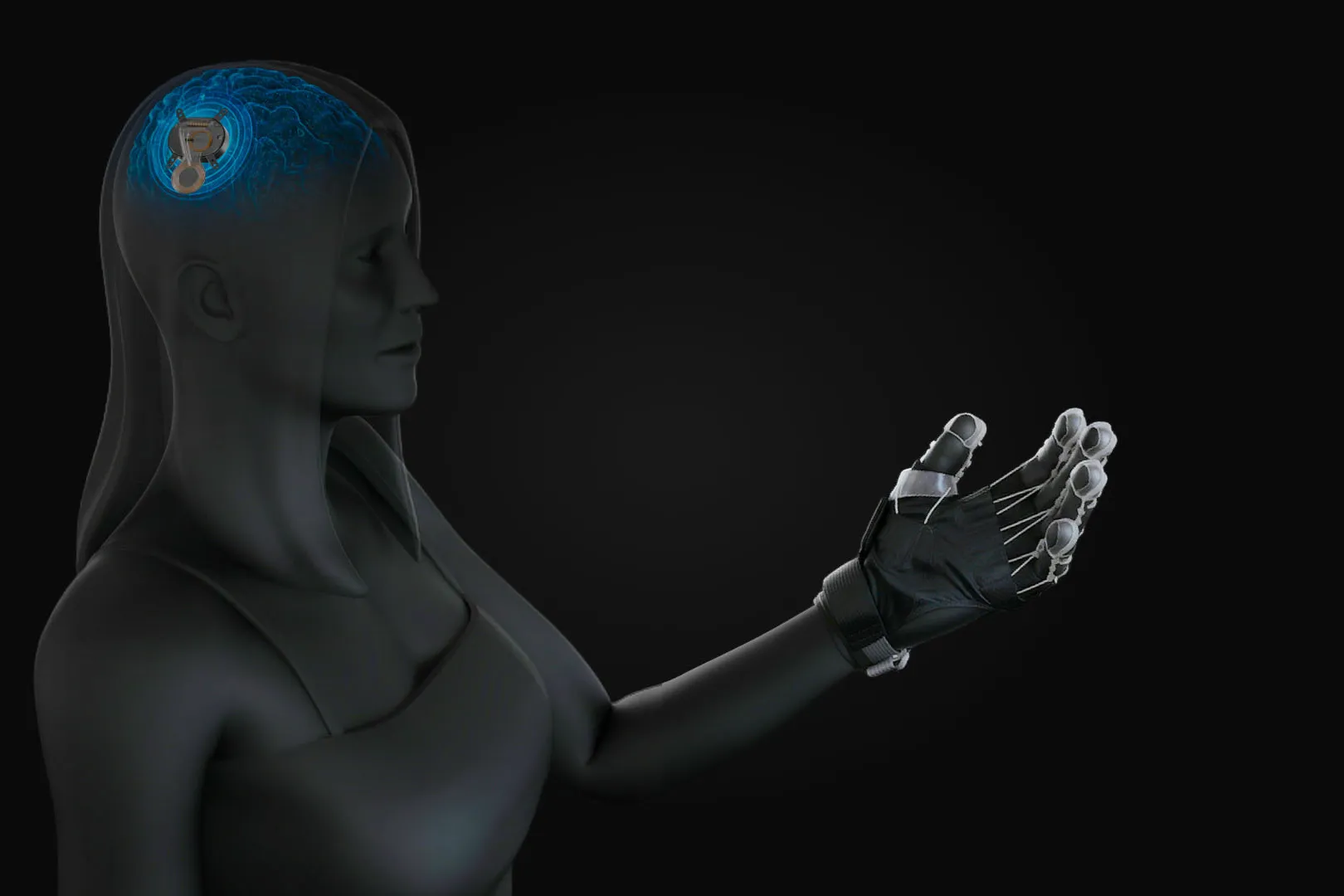
Epia New, a startup based in San Francisco, has revealed an innovative technology aimed at helping stroke patients regain movement in their hands through the implantation of a device in the brain and the use of a robotic glove. Stroke is one of the leading causes of long-term disability, with about two-thirds of survivors experiencing significant weakness in their hands and arms.
Epia New seeks to improve recovery opportunities for patients living with permanent paralysis or mobility impairment. The new technology relies on a brain-computer interface that reads neural signals from the brain and translates them into actual movements, opening new horizons in the field of rehabilitation.
Details of the Technology
The new technology involves implanting a circular device in the skull that detects neural signals associated with a person's intention to move their hand. The device works in conjunction with a robotic glove that helps patients regain the ability to grasp objects. Neural signals are analyzed using artificial intelligence algorithms, allowing for the prediction of grasping movements based on the received signals.
Michel Maharbiz, the CEO of Epia New, states that improving hand function can make a significant difference in patients' lives, enabling them to regain the ability to dress themselves or eat independently.
Background & Context
Historically, strokes have posed a significant challenge in the medical field, as damage to areas of the brain responsible for movement leads to permanent paralysis. With advancements in technology, startups have begun developing brain-computer interfaces aimed at improving the quality of life for patients. For instance, Neuralink, founded by Elon Musk, has received substantial investments to develop similar technologies.
Epia New's technology is based on the concept of neuroplasticity, which is the brain's ability to adapt and reshape itself after injury. By harnessing this capability, the new device can assist patients in regaining movement by enhancing neural connections.
Impact & Consequences
This innovation could have a significant impact on the lives of stroke patients, providing them with a new opportunity to regain movement and independence. Additionally, the use of implantable devices may pave the way for the development of new techniques in the field of neurological rehabilitation.
This innovation represents an important step towards achieving better outcomes in patient rehabilitation, as the use of implantable devices may provide more accurate signals compared to wearable devices, thereby increasing treatment effectiveness.
Regional Significance
With the rising incidence of strokes in the Arab world, this innovation could have a positive impact on patients in the region. This technology may contribute to improving the quality of life for many individuals suffering from the effects of strokes, reflecting the importance of investing in research and development in the field of neurology.
In conclusion, the new innovation from Epia New represents a promising step towards improving the lives of stroke patients and reflects the ongoing advancements in medical technology.