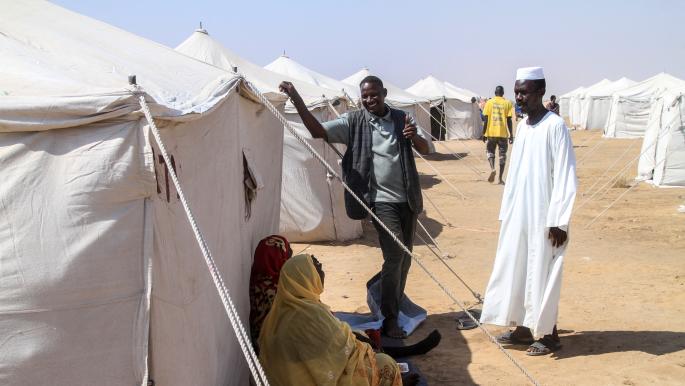
Intense battles continue between the Rapid Support Forces and the Sudanese army in the Blue Nile region, located in southern Sudan. These clashes come at a time when civilians in areas such as El Fasher and Kordofan are enduring continuous shelling, exacerbating their suffering and putting their lives at risk.
Reports indicate that the fighting in the Blue Nile has resulted in numerous casualties, both military and civilian. Furthermore, the humanitarian situation in the area is worsening, as local communities lack essential aid, threatening the lives of many.
Details of the Ongoing Conflict
Clashes between the two sides have persisted for several days, with the Rapid Support Forces attempting to seize strategic positions in the region. In response, the Sudanese army is launching counterattacks aimed at reclaiming lost territories. These battles occur within the broader context of a conflict between government forces and the Rapid Support Forces, which were originally formed as a paramilitary group to combat rebellion in Darfur.
At the same time, cities like El Fasher and Kordofan are subjected to ongoing bombardment, causing panic among the population. Reports suggest that many civilians have been killed or injured as a result of these attacks, raising concerns about the worsening humanitarian conditions in the region.
Background & Context
Historically, Sudan has experienced multiple conflicts over decades, with political, ethnic, and economic factors intertwining to shape the current landscape. The Rapid Support Forces, which emerged amid the conflict in Darfur, have now become a key player in the Sudanese conflict, reflecting a shift in military and political dynamics within the country.
It is noteworthy that the Blue Nile region is rich in resources, making it a strategic target for both the Sudanese army and the Rapid Support Forces. The struggle for control over this area mirrors the broader conflicts in Sudan, where various factions compete for influence and resources.
Impact & Consequences
The repercussions of these battles extend beyond Sudan's borders, affecting regional stability. The ongoing conflict in Sudan could lead to a flow of refugees into neighboring countries, placing additional pressure on those nations and complicating the humanitarian situation in the region.
Moreover, the continuation of fighting may exacerbate humanitarian crises, as civilians suffer from severe shortages of food, water, and healthcare. Humanitarian organizations are facing difficulties in accessing affected areas, further increasing the suffering of local populations.
Regional Significance
The events in Sudan raise concerns among Arab countries, as stability in Sudan is considered part of regional stability. The conflict may impact relations between Arab nations, especially those with interests in Sudan or historical ties to it.
Furthermore, the situation in Sudan could open the door to external interventions, complicating the conflict and affecting regional security. Arab nations are urged to closely monitor the situation and work to support peace efforts in Sudan.
In conclusion, the situation in Sudan remains tense, with ongoing battles between the Sudanese army and the Rapid Support Forces. The humanitarian impact of these conflicts necessitates an urgent response from the international community to ensure the protection of civilians and provide necessary aid.