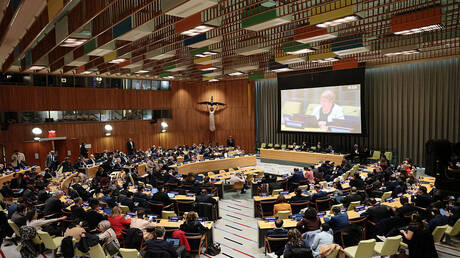
All eyes are on four candidates competing for the position of UN Secretary-General, as they spend hours answering complex questions related to issues of peace, poverty, and human rights. These sessions, described by the President of the General Assembly as among the toughest job interviews in the world, reflect the significant challenges facing the international organization amid escalating crises.
The four candidates are: Antonio Guterres, who is seeking to renew his term, alongside Mary Robinson, the former President of Ireland, the Secretary-General of the Organization of Islamic Cooperation, and the Canadian Foreign Minister. Each of them brings a different vision on how to address current global issues.
Details of the Event
The questions posed to the candidates cover sensitive topics such as how to promote peace in conflict zones, reduce poverty, and achieve sustainable development. These sessions are designed to serve as a test of the candidates' critical thinking abilities and their quick responses to complex challenges.
The candidates expressed their views on how to enhance the UN's role in addressing humanitarian crises and improving international cooperation in the face of global challenges such as climate change and pandemics.
Background & Context
The United Nations was established in 1945 with the aim of promoting international peace and security, and over the years it has faced numerous challenges, from civil wars to humanitarian crises. In recent years, the organization has come under increasing pressure to be more effective in responding to global crises.
This competition comes at a sensitive time, as geopolitical tensions are rising in many regions, making it essential to choose a leader capable of steering the organization towards achieving its core objectives.
Impact & Consequences
The selection of the new Secretary-General will have a significant impact on UN policies in the future. The Secretary-General is the public face of the organization and has the ability to shape its policies and direct its responses to global challenges.
If the candidates can present innovative and effective visions, this may enhance the UN's role on the international stage and increase member states' confidence in its ability to address global issues.
Regional Significance
For the Arab region, the choice of the new Secretary-General could influence how the UN addresses ongoing crises in Arab countries, such as the conflicts in Syria and Libya, and the humanitarian crises in Yemen and Palestine.
The policies adopted by the new Secretary-General are expected to have a direct impact on peace and development efforts in the region, making this competition particularly significant for Arab states.
In conclusion, the competition for the leadership of the United Nations remains a focal point for the world, as everyone looks forward to seeing who will lead this international organization in facing the major challenges confronting humanity.