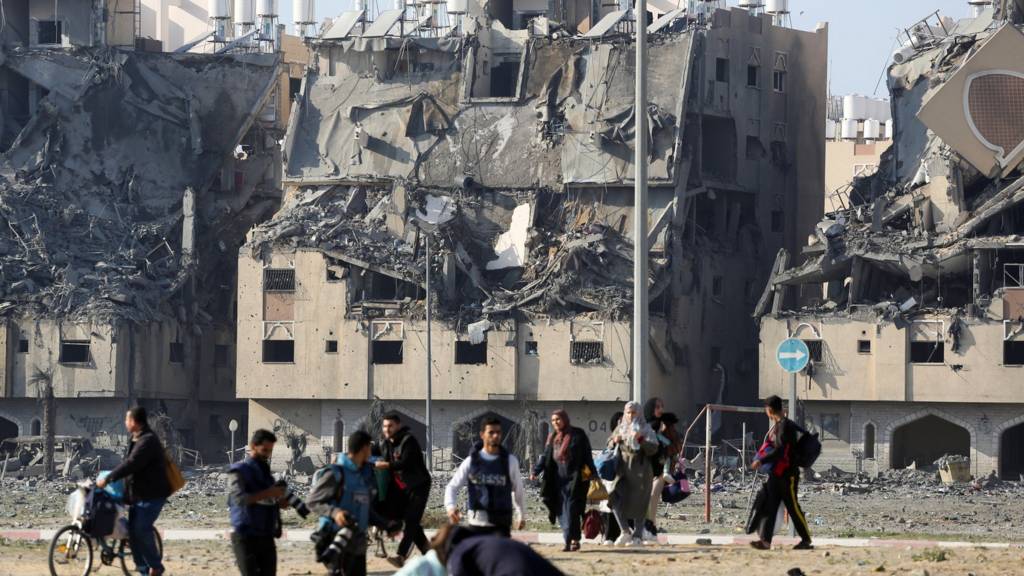
Violent clashes continue along the southern border of Lebanon, where the Israeli army is engaging with Hezbollah fighters amid heavy bombardment targeting several Lebanese areas. The military escalation that began days ago has resulted in human and material losses, increasing tensions in the region.
Reports indicate that the clashes have concentrated in areas close to the border, where both sides have used heavy weaponry, leading to the destruction of several homes and infrastructure. Local sources have reported that Israeli bombardment has targeted residential areas, causing many families to flee.
Details of the Event
In recent hours, reports have noted an increase in the frequency of Israeli airstrikes, targeting sites believed to be affiliated with Hezbollah. Images captured from the affected areas show extensive destruction, reflecting the intensity of the bombardment. In response, Hezbollah has launched rockets at Israeli military sites, further escalating tensions between the two sides.
This escalation comes at a sensitive time, as the region is witnessing increasing political and security tensions, raising fears of a larger escalation that could lead to a comprehensive confrontation. The Lebanese government has issued statements condemning the Israeli bombardment, calling on the international community to intervene to stop the aggression.
Background & Context
Historically, the Lebanese-Israeli border has witnessed numerous armed conflicts, with Hezbollah being one of the most prominent Lebanese factions opposing Israeli occupation. Since the 2006 July War, intermittent clashes between the two sides have not ceased, resulting in ongoing tensions in the region.
The political transformations in Lebanon, including economic and social crises, have contributed to the escalation of these conflicts. Additionally, regional tensions, including the Israeli-Palestinian conflict, cast a shadow over the situation in Lebanon, complicating the security landscape.
Impact & Consequences
The current military escalation could have significant repercussions on stability in Lebanon and the region. If the fighting continues, it may exacerbate humanitarian conditions, as Lebanon is already suffering from a crippling economic crisis. Furthermore, the mass displacement of populations could place additional pressures on the Lebanese government.
Moreover, this escalation could affect relations between Lebanon and neighboring countries, especially amid concerns about external interventions that may complicate the situation further. The international community is closely monitoring developments, as urgent diplomatic interventions may be required to contain the crisis.
Regional Significance
The ongoing events in Lebanon are part of a larger picture concerning regional security. The conflict between Israel and Hezbollah could impact stability in neighboring countries such as Syria and Palestine, potentially leading to escalated violence in other areas.
Additionally, Arab and international reactions to this escalation will be crucial in determining the course of events. Given the multiple crises facing the region, there may be an urgent need to unify regional and international efforts to achieve peace and stability.
In conclusion, the situation in Lebanon remains under observation, with growing fears of a larger escalation that could drag the region into a comprehensive conflict. It is essential that international and regional efforts combine to contain this escalation and achieve lasting peace.