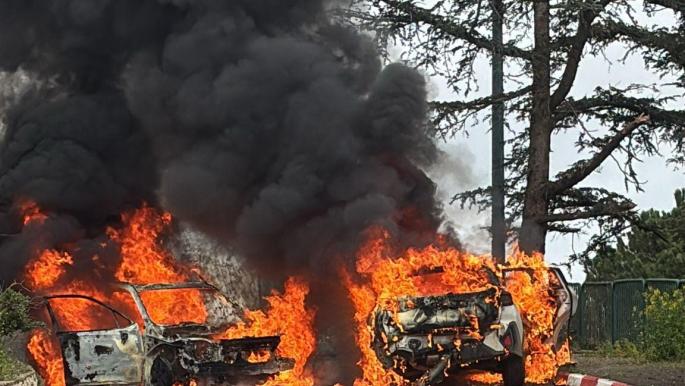
A significant escalation in confrontations is occurring in the border areas between Lebanon and Israel. Israeli reports indicate the death of an Israeli soldier in the Galilee, prompting occupation forces to launch extensive airstrikes on Hezbollah sites in Lebanon. These developments come amidst Israeli threats to intensify aggression and expand military operations.
Details reveal that the confrontations between occupation forces and Hezbollah have escalated unexpectedly, with rocket fire into border areas providing a new twist in the escalating conflict. The Israeli airstrikes, which began shortly after the announcement of the soldier's death, targeted several locations in southern Lebanon. In response, Hezbollah launched rocket attacks, increasing the likelihood of further violence in the region.
Event Details
The death of the Israeli soldier in the Galilee, which marks a significant escalation in the conflict, follows a series of targeted operations observed in recent months. Hezbollah, which continues to strengthen its military presence along the border, has demonstrated the capability to target sensitive points that could directly affect Israeli security.
The airstrikes, which targeted various regions in Lebanon, serve as a clear warning from Israeli authorities, who continuously caution that any future assaults could trigger strong reactions. Information circulated from military sources confirms intentions to broaden the scope of military operations against Hezbollah, raising concerns about a wider escalation and exacerbation of the conflict.
Background & Context
This escalation occurs against a backdrop of a long history of conflict between Hezbollah and Israel, which has seen multiple periods of escalation and wars. A conflict that began decades ago occasionally takes on a military aspect, especially amid rising political tensions in the region, particularly following recent events in Gaza.
Israel perceives Hezbollah as a direct threat to its national security, while Hezbollah considers itself the protector of Lebanese sovereignty against Israeli aggressions. This divergence in perspectives complicates the conflict, reflecting the political and religious dimensions in the region.
Impact & Consequences
The recent escalation could lead to serious repercussions that embody the nature of the conflict in the Middle East. The instability along the border may cast a shadow over relations between neighboring countries and affect regional security in general.
Furthermore, ongoing tensions may result in an influx of more displaced individuals and worsen humanitarian crises in Lebanon, which is already facing multiple crises on economic and political fronts.
Regional Significance
The absence of a ceasefire between Hezbollah and Israel increases the state of alertness in the region, potentially prompting other Arab countries to reassess their security and military policies under circumstances that demand realism and deeper risk analysis.
The severe crises affecting some Arab countries, such as Syria and Iraq, complicate the adoption of coherent strategies to address potential escalation in the region.
In conclusion, the ongoing escalation between Israel and Hezbollah calls for urgent Arab and international attention to seek peaceful solutions and avoid military methods that complicate the crisis further.