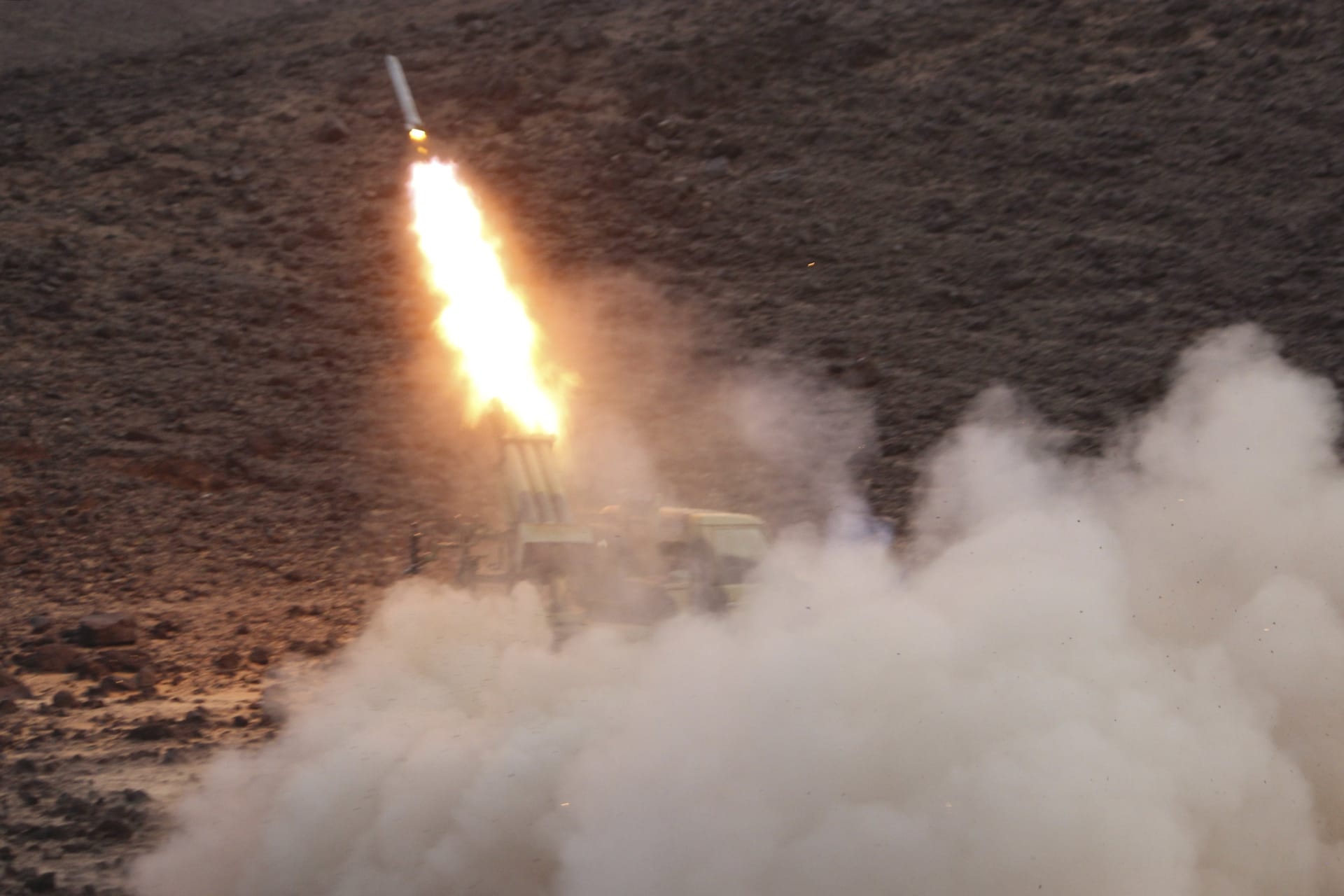
The Saudi Ministry of Defense announced on Saturday that its forces successfully intercepted a ballistic missile directed towards the Riyadh area. The ministry confirmed through its official account on the platform "X" (formerly Twitter) that the missile was destroyed before it could reach its target, showcasing the capability of Saudi air defenses to counter threats.
This interception is part of the Kingdom's ongoing efforts to protect its territory and citizens from potential attacks, especially given the tense security conditions in the region. The ministry did not provide details regarding the missile's source or the entity that launched it, raising questions about the possible parties behind this attack.
Details of the Incident
While the Ministry of Defense did not disclose specific details about the missile's origin, reports suggest that such attacks are often linked to regional conflicts, particularly those involving the Houthis in Yemen. The Kingdom has experienced numerous missile attacks targeting its territory in recent years, prompting it to enhance its defensive capabilities.
This interception is considered part of the advanced air defense system that Saudi Arabia possesses, which includes systems like "Patriot" and "THAAD," developed to counter aerial threats. These systems have proven effective in responding to many previous attacks, contributing to national security enhancement.
Background & Context
Historically, the Middle East has witnessed increasing tensions due to ongoing conflicts, especially in Yemen where the Houthis are launching attacks on Saudi territory. Since 2015, Saudi Arabia has intervened in the Yemeni conflict to support the internationally recognized government against the Iranian-backed Houthis. This intervention has led to a rise in missile attacks on the Kingdom, prompting it to adopt more sophisticated defensive strategies.
Moreover, the tense regional situation, including tensions between Iran and the United States, increases the likelihood of such attacks. Saudi Arabia seeks to bolster its national security by developing its military capabilities and cooperating with its allies, including the United States.
Impact & Consequences
The recent successful interception is seen as an indicator of the effectiveness of Saudi air defenses, which may help to enhance citizens' confidence in the government's ability to protect the country. However, the continuation of these attacks could escalate tensions in the region, affecting regional stability and intensifying conflicts.
These events may also impact Saudi relations with its neighbors, particularly with Iran, which is accused of supporting the Houthis. This could lead to increased political pressure on the Kingdom, necessitating new diplomatic strategies to address security challenges.
Regional Significance
These developments are of significant importance to the Arab region as a whole, reflecting the ongoing tensions in the Middle East. The missile attacks on Saudi Arabia are not only a threat to national security but also represent a challenge to regional security. Other Arab countries may find themselves compelled to reassess their defensive strategies in light of these increasing threats.
In conclusion, the successful interception of the ballistic missile highlights the importance of enhancing defensive capabilities in the face of rising threats. As tensions in the region persist, the question remains as to how other Arab countries will respond to these security challenges.