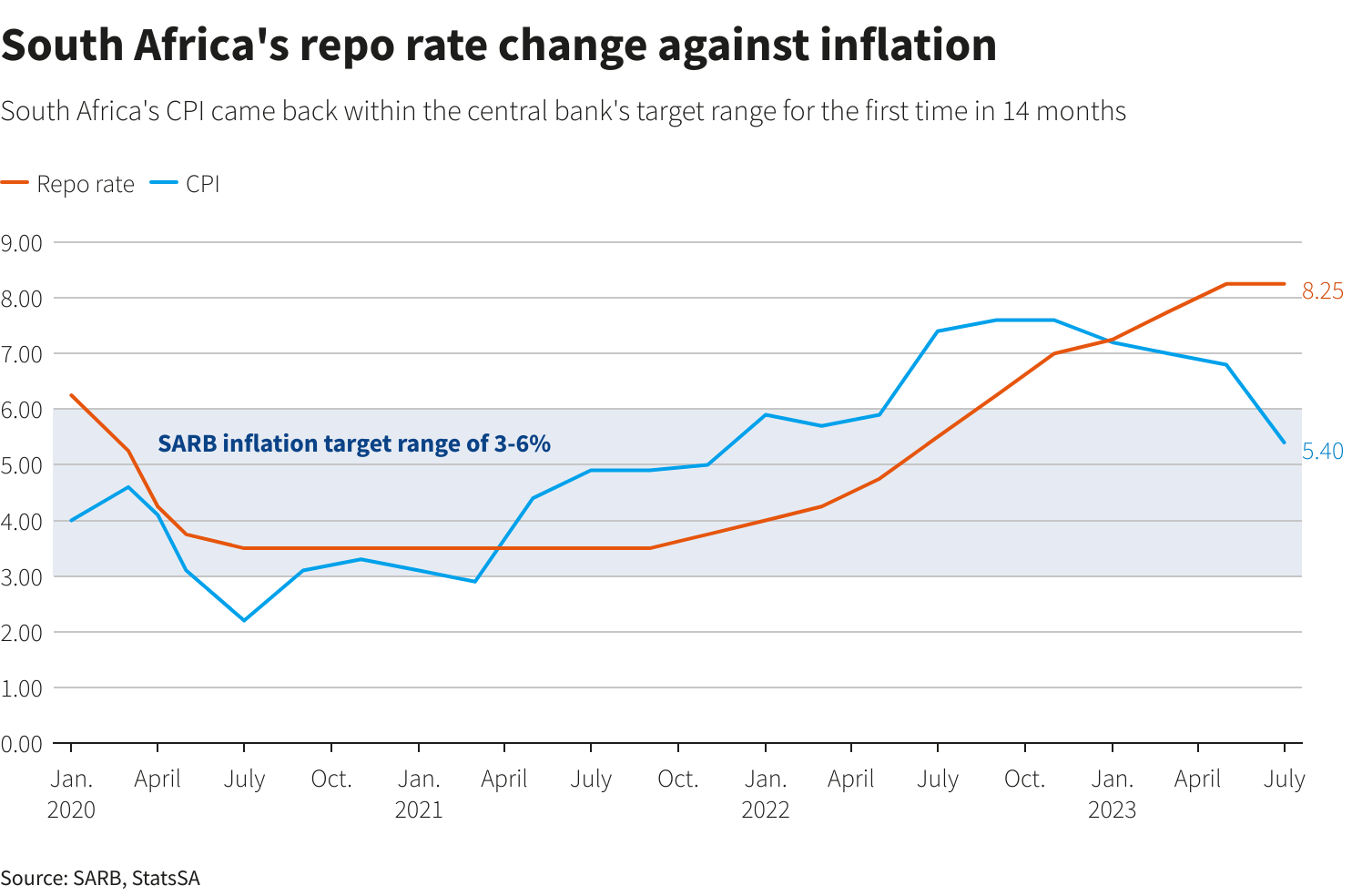
Reports from Morgan Stanley suggest that the central bank of South Africa may take bold steps to address increasing inflation, with an interest rate hike expected in the next meeting scheduled for May. This action comes at a time when the global economy is facing significant challenges, increasing pressure on the South African economy.
This step is part of the central bank's strategy to combat inflation, which has seen a noticeable rise recently, negatively affecting the purchasing power of citizens. This decision is expected to have wide-ranging effects on various economic sectors in the country.
Details of the Event
The monetary authorities in South Africa are striving to control inflation, which has surpassed targeted levels, as recent data shows an increase in the prices of goods and services. Raising interest rates is a traditional tool used by central banks to curb inflation, as it leads to reduced consumer spending and investment.
The central bank is expected to decide on an interest rate increase of 25 basis points, which could raise borrowing costs and thus impact economic activities. This decision comes at a critical time, as the South African economy faces multiple challenges including high unemployment and slow growth.
Background & Context
Historically, South Africa has struggled with high inflation rates, prompting the central bank to take stringent measures in the past. In recent years, the country has experienced economic fluctuations due to both internal and external factors, including geopolitical tensions and the impacts of the COVID-19 pandemic.
In recent years, there have been multiple attempts by the government to stimulate the economy, but these efforts have faced difficulties in achieving tangible results. Raising interest rates is a bold step, but it may be necessary under the current circumstances.
Impact & Consequences
The anticipated interest rate hike is expected to have multiple effects on the South African economy. It may lead to increased borrowing costs, negatively affecting both businesses and individuals. At the same time, it could help curb inflation, benefiting consumers in the long run.
However, there needs to be a delicate balance, as excessive rate hikes could lead to economic slowdown and increased unemployment rates. Therefore, the decision made by the central bank in May will have far-reaching implications for the economy.
Regional Significance
The economic developments in South Africa are of particular importance to the Arab region, as many Arab countries are affected by global economic changes. The rise in interest rates in South Africa may impact investment flows to the region, as well as affect the prices of essential commodities imported by Arab countries.
Moreover, economic tensions in South Africa could influence trade relations with Arab nations, necessitating close monitoring by decision-makers in the region.