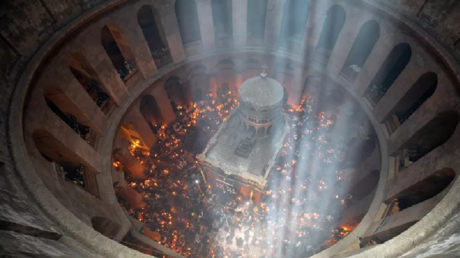
Spanish Prime Minister Pedro Sánchez strongly condemned the Israeli police's ban on Latin Patriarch Pierbattista Pizzaballa from entering the Church of the Holy Sepulchre, deeming it an unjust attack on religious freedom. This incident comes at a sensitive time, as tensions in the region are escalating, raising international concerns about worship rights in sacred places.
The Church of the Holy Sepulchre is one of the most important religious sites in Christianity, symbolizing the resurrection of Christ. Therefore, any assault on the freedom to access this site is considered a violation of the rights of believers from all denominations.
Details of the Incident
In a recent incident, Israeli police prevented Patriarch Pizzaballa from entering the Church of the Holy Sepulchre, provoking angry reactions from many political and religious figures. Sánchez emphasized in his statements that this act contradicts the fundamental values of religious freedom, and Israeli authorities must respect the rights of all religions.
Sánchez also pointed out that this assault is not just a local issue but has broader implications for interfaith relations in the region. This statement comes at a time when Jerusalem is witnessing increasing tensions between Palestinians and Israelis, complicating the situation further.
Background & Context
Historically, the Church of the Holy Sepulchre has been the scene of numerous disputes among different Christian denominations, as churches compete for control over this sacred site. However, freedom of worship has always been a sensitive topic in Jerusalem, where each party seeks to protect its rights to access holy places.
In recent years, Jerusalem has seen a rise in tensions, especially following events that took place at the Al-Aqsa Mosque. These events have led to increased divisions among different communities, making it essential to promote dialogue and understanding between religions.
Impact & Consequences
The ban on the patriarch from entering the church could exacerbate tensions between Christian and Israeli communities and may provoke negative reactions from other countries. Additionally, this incident could impact religious tourism to Jerusalem, as many tourists consider visiting the Church of the Holy Sepulchre an essential part of their spiritual experience.
Moreover, this assault may open the door for further international criticism of Israeli policies in Jerusalem, potentially affecting diplomatic relations between Israel and European countries.
Regional Significance
This incident represents a turning point in how Arab countries address issues related to Jerusalem. Sánchez's reaction indicates an increasing interest from European countries in supporting Palestinian rights, which could bolster the position of Arab nations in international forums.
Furthermore, this incident may encourage Arab countries to adopt firmer stances against Israeli violations, potentially leading to new diplomatic moves in the region. Under these circumstances, it becomes crucial to enhance Arab unity to face common challenges.
In conclusion, the ban on the patriarch from entering the Church of the Holy Sepulchre stands as another example of the ongoing tensions in Jerusalem, and the international community must work towards finding solutions that ensure freedom of worship for all religions.