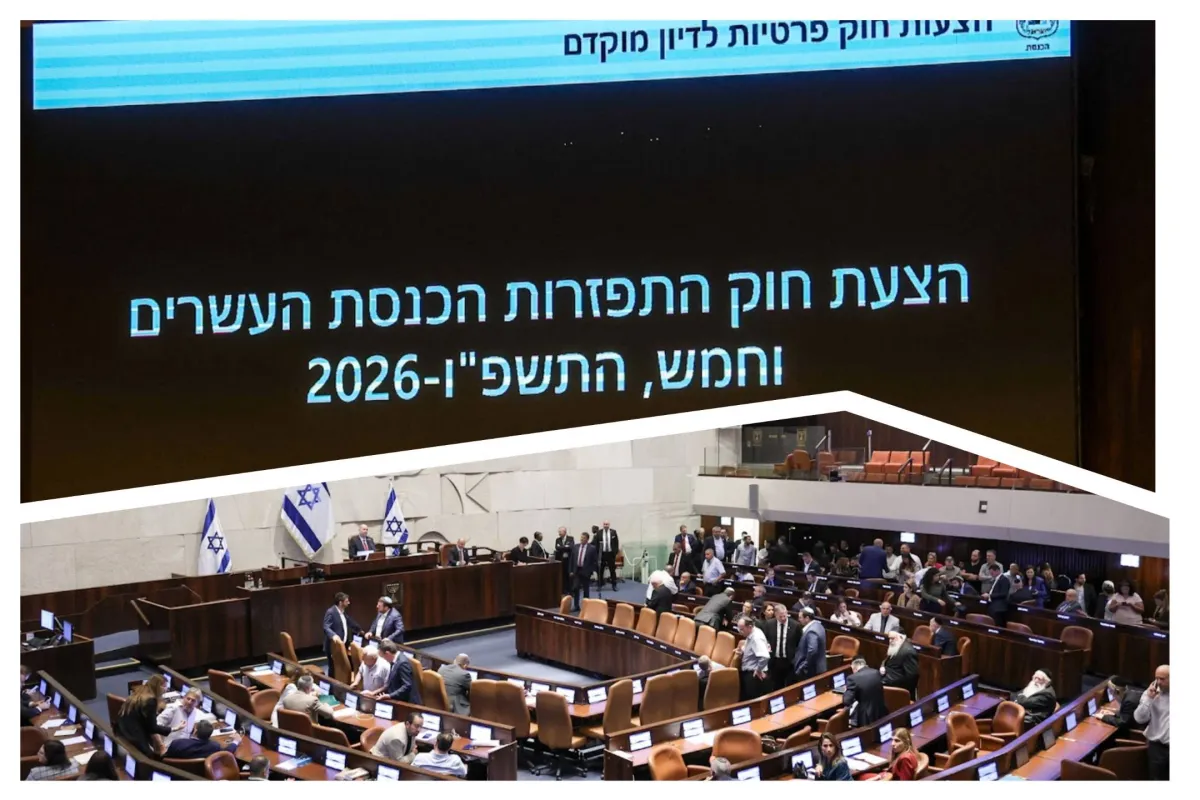
The Israeli Knesset has begun practical steps to dissolve itself, as coalition leader Ofir Katz announced a discussion and vote next Monday on a bill to dissolve the Knesset. This announcement comes at a time when disputes within the government coalition are intensifying regarding the timing of the upcoming elections.
Israeli Channel 14 reported that this announcement reflects a noticeable acceleration in the legislative process by the coalition towards dissolving the Knesset and conducting elections, which may occur before the original date. The bill to dissolve the Knesset passed its preliminary reading with a majority of 110 votes without any opposition, but there are still many stages in the legislative process before it can be finally approved.
Details of the Event
The Knesset Committee is scheduled to hold a discussion on Monday, followed by a voting session on the bill to dissolve the Knesset for its first reading. If approved, the law will be re-drafted in the committee and then passed in second and third readings. However, the process seems likely to proceed smoothly due to the support of the government coalition, which includes the hardline Haredi parties that were behind the decision to dissolve the Knesset.
According to Maariv newspaper, the coalition is reconsidering the current situation and strongly supports holding early elections. Rabbi Dov Lando, the spiritual leader of the Degel HaTorah party, indicated that the lack of trust in Prime Minister Benjamin Netanyahu is one of the main reasons behind the call to dissolve the Knesset.
Background & Context
Historically, the Israeli Knesset has witnessed numerous political crises that led to its self-dissolution and early elections. In recent years, divisions within the government coalition have increased, resulting in political instability. The Haredi parties, which represent a significant portion of the coalition, are facing pressures related to mandatory conscription laws, complicating the situation further.
Previously, there was consensus among the Haredi parties on the necessity of dissolving the Knesset, but disagreements over the timing of the elections and pressure from Netanyahu may affect the course of the process. There are also concerns that these disputes may impact voter turnout in the upcoming elections.
Impact & Consequences
If the bill to dissolve the Knesset is approved, it will lead to early elections that could change the political landscape in Israel. This could open the door for new parties or unexpected alliances, potentially affecting the formation of the next government.
The current tensions within the coalition may also lead to the disintegration of existing alliances, increasing political instability in the country. Furthermore, early elections may reflect voters' desire for change, especially in light of the increasing crises faced by the current government.
Regional Significance
The political developments in Israel are of great importance to the Arab region, as any change in the Israeli government could affect policies towards Palestinians and Arab countries. Early elections could reshape relations between Israel and neighboring countries, especially amid ongoing tensions in the Palestinian territories.
In conclusion, the situation in Israel remains volatile, with the possibility of early elections that could alter the course of events in the region. Arab countries must closely monitor these developments, as the outcomes may impact the overall stability of the region.