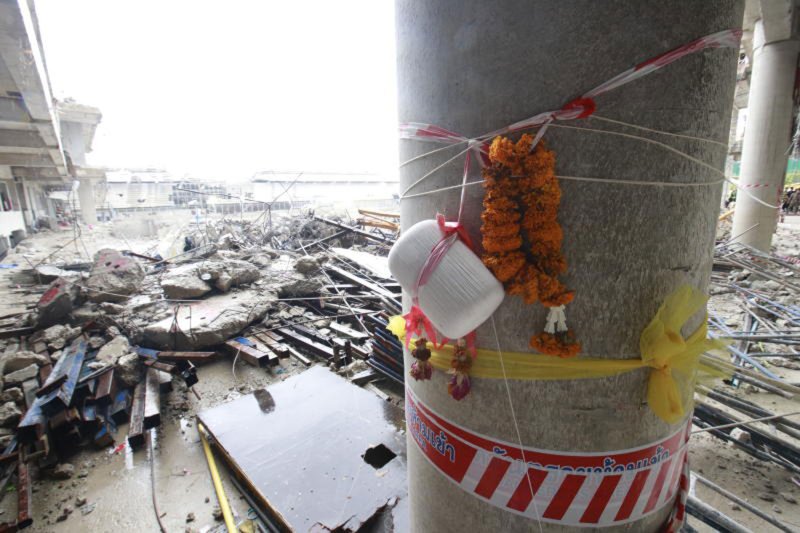
One year after the collapse of the government audit office (SAO) in the Chatuchak area of Bangkok on March 28, 2025, Thai authorities are still searching for answers regarding the causes of this tragic incident. The disaster, which resulted in the death of 93 people and left three others missing, not only exposed infrastructural weaknesses but also systemic flaws in the oversight of government construction projects.
The new headquarters, which cost approximately 2.1 billion baht, was designed to be a symbol of the integrity of the agency responsible for state oversight, but it has turned into a symbol of public discontent and institutional failure. The collapse occurred after seismic tremors from an earthquake in Myanmar were exacerbated by the soft soil in Bangkok, leading to the catastrophe.
Details of the Incident
Public anger has reignited after the agency issued limited updates regarding the investigations. The release of a promotional video following the incident drew widespread criticism, as many considered it insensitive to the victims. The rubble of the building has become a focal point for broader concerns about corruption, procurement practices, and safety standards in state-funded projects.
Despite the magnitude of the disaster, the full official report of the investigation has yet to be disclosed. Mana Nimitmongkol, head of Thailand's anti-corruption organization, expressed concern over the lack of clear accountability, noting that the delay in releasing the findings deepens public skepticism.
Background & Context
Historically, Thailand has witnessed numerous similar incidents that have highlighted issues of corruption in government construction projects. With rising corruption in recent years, it has become evident that there is an urgent need for comprehensive reforms in the oversight system of projects. Three groups have been identified under investigation: alleged commercial operators acting as fronts for foreign capital, individuals from the private sector including designers, engineers, and contractors, as well as government officials accused of procurement violations.
Investigations have also revealed additional issues, such as the alleged illegal use of engineers' and architects' signatures, and the use of Thai companies as fronts by foreign investors to compete for major projects. These practices, as warned by the organization, could lead to excessively low bids, excessive subcontracting, and reduced safety standards.
Impact & Consequences
The disaster illustrates how accountability can dissipate within complex bureaucratic structures. Projects were approved across multiple departments, leading to a diffusion of responsibility and weakened oversight. Mana warned that the risks of corruption can manifest at every stage of a project.
While the involvement of a foreign company has been indicated, Mana emphasized that the issue is not related to nationality but to systemic weaknesses. He called for urgent reforms that include full disclosure of the investigation, enhanced safety standards, increased transparency in procurement processes, and the implementation of stricter professional ethics.
Regional Significance
This case serves as a warning to Arab countries facing similar challenges in construction and corruption. Many Arab nations struggle with corruption issues in infrastructure projects, hindering development and affecting public trust in institutions. Enhancing transparency and accountability in government projects has become an urgent necessity to ensure citizen safety and achieve sustainable development.
In conclusion, the collapse of the audit office in Thailand remains an example of the importance of strengthening oversight and accountability systems in government projects. It requires joint efforts from governments and civil society to ensure that such disasters do not recur in the future.