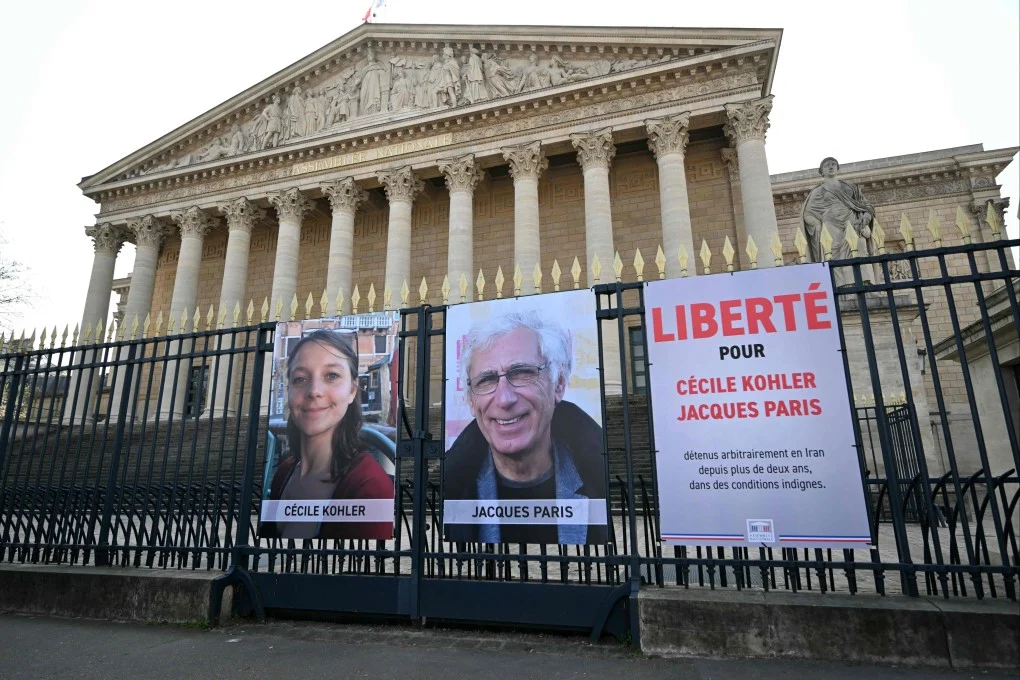
In a positive development, France announced that Iran has allowed former French detainees, Céline Kohler and Jacques Paris, to leave its territory after being held for three and a half years. This announcement was made by French President Emmanuel Macron, who confirmed that the detainees are on their way to French soil after a prolonged period of diplomatic tensions between the two countries.
Kohler and Paris had been detained in Iran since 2019, facing charges related to espionage. Following their release, they were held at the French embassy in Tehran, raising concerns for the French government, which worked diligently to ensure their return home.
Details of the Event
Macron confirmed via X platform that Kohler and Paris are now en route to France, indicating that this step represents progress in relations between Paris and Tehran. The French government had repeatedly demanded the release of the detainees, reflecting the significance of this issue in French foreign policy.
This move comes at a sensitive time, as Iran seeks to improve its relations with Western nations after years of tensions stemming from its nuclear program and regional policies. It appears that Iran is attempting to demonstrate flexibility in its diplomatic dealings, which could open the door for further dialogue with European countries.
Background & Context
Historically, French-Iranian relations have experienced numerous fluctuations, with periods of cooperation followed by times of tension. The detention of Kohler and Paris was part of a series of events that have impacted relations between the two countries, especially amid rising regional tensions.
Since 2015, when the Iranian nuclear deal was reached, relations between Iran and Western nations have been unstable. With the United States' withdrawal from the agreement in 2018, pressure on Iran increased, affecting its domestic and foreign policies.
Impact & Consequences
This step carries significant implications for the future of relations between Iran and Western countries. The release of Kohler and Paris may help alleviate tensions and could pave the way for further discussions on outstanding issues, including the Iranian nuclear program.
Moreover, this action may influence Iran's position in international forums as it seeks to improve its image after years of isolation. Restoring relations with France, one of the major European powers, could be a strategic move to bolster its standing in the region.
Regional Significance
The Iranian-French relationship is directly affected by the situation in the Arab region. Improving relations between Iran and Western nations may impact regional balances, particularly amid ongoing conflicts in Syria and Yemen.
This step may also reflect Iran's desire to strengthen its ties with Arab countries, potentially contributing to a reduction in tensions in the region. Diplomatic dialogue could be key to resolving many complex issues facing the area.
In conclusion, the release of Kohler and Paris represents a positive step toward improving relations between Iran and France, with potential wide-ranging effects on the regional and international landscape. It is crucial to monitor the developments of this issue and how it will influence relations between countries in the future.