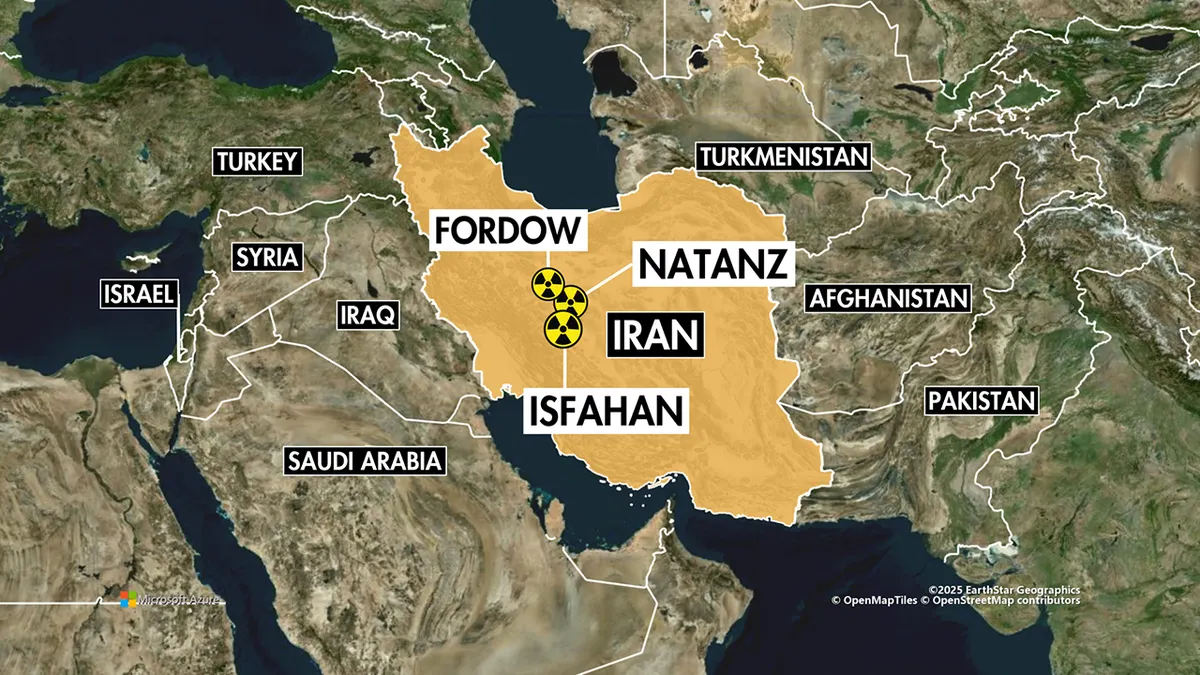
In an official statement, the Iranian Atomic Energy Organization (AEOI) confirmed that the nuclear facilities that sustained damage from recent attacks do not represent a danger to public health. This announcement was made by the organization's deputy head, Mohammad Reza Kardan, who clarified that the damage inflicted on the facilities has not reached a level that threatens public health.
Kardan added that nuclear safety experts are currently assessing the situation following reports of potential damages. This comes at a sensitive time as regional tensions are escalating, especially after attacks targeting uranium production facilities in Iran.
Details of the Incident
On March 27, the Iranian Atomic Energy Organization reported that the United States and Israel had launched an attack on a factory producing uranium powder known as the "yellowcake" in southern Iran. Earlier, on March 24, another attack was reported on the Bushehr nuclear power plant, where Iranian authorities confirmed that there were no damages or injuries, and the plant continues to operate normally.
The organization also reported previous attacks on March 17, which resulted in no injuries or material damages. Additionally, two attacks on the Natanz nuclear facilities were recorded on March 1 and March 21, raising concerns about nuclear security in the country.
Background & Context
Iran is considered one of the countries seeking to develop a nuclear program for peaceful purposes; however, this program has sparked widespread controversy on the international stage. Many countries, particularly the United States and Israel, accuse Iran of attempting to acquire nuclear weapons, leading to economic sanctions imposed on the country.
Historically, Iran has witnessed several attacks on its nuclear facilities, reflecting ongoing tensions in the region. In recent years, these attacks have significantly increased, raising international concerns about the safety of Iranian nuclear facilities.
Impact & Consequences
These events raise questions about Iran's ability to protect its nuclear facilities amid increasing tensions. Furthermore, the continuation of attacks may impact international negotiations regarding Iran's nuclear program, as Tehran seeks to alleviate the sanctions imposed on it.
Moreover, these events could escalate tensions in the region, as neighboring countries may feel concerned about any potential repercussions on regional security. These developments could affect the overall stability of the region, necessitating close monitoring by the international community.
Regional Significance
The developments in Iran's nuclear program are of significant importance to Arab countries, as any escalation in tensions could impact regional security. Arab nations, particularly those close to Iran, are closely monitoring the situation, as any potential threat may require a coordinated response.
Furthermore, the ongoing attacks on Iranian nuclear facilities may raise fears of nuclear weapons proliferation in the region, prompting the need for enhanced security cooperation among Arab states to address any potential threats.
In conclusion, the situation in Iran remains a focal point for the world, as recent events could affect both regional and international security. It is crucial for Arab countries to remain vigilant and work on strengthening their security strategies to face any challenges that may arise in the future.