Despite the escalating military pressures faced by Iran from the United States and Israel, the Iranian regime continues to threaten regional stability. In a recent speech, President Donald Trump stated that "regime change has occurred" in Iran, asserting that the United States is "on the right path to achieving all its goals soon."
Trump added that "the enemy has not suffered significant and clear losses in the history of wars within weeks," referring to the military pressures exerted on Iranian forces. According to reports, 13,000 targets in Iran have been struck since the commencement of airstrikes on February 28.
Details of the Situation
Reports indicate that 80% of Iran's air defense systems have been destroyed, while military pressures continue on defensive installations. Nevertheless, the Iranian regime remains capable of executing counter-operations, as reports show that the Iranian leadership, despite losing many of its senior commanders, is still able to coordinate defense strategies.
On another note, the absence of the former leader Ali Khamenei's son, Mojtaba, from public appearances since the onset of the war has sparked rumors about his condition and whereabouts. Additionally, many of the Iranian regime's security leaders have been targeted and killed.
Background & Context
For decades, the Islamic Republic of Iran has funded proxies across the Middle East while suppressing any signs of popular opposition. The imposition of sanctions on Iran's nuclear program has led to economic deterioration, forcing the regime to rely on asymmetric survival strategies.
The roots of these strategies date back to the Islamic Revolution of 1979, when the United States imposed an arms embargo, prompting Iran to develop its own military capabilities. Following the bloody war with Iraq in the 1980s, these strategies evolved into a coherent doctrine for the Iranian Revolutionary Guard Corps.
Impact & Consequences
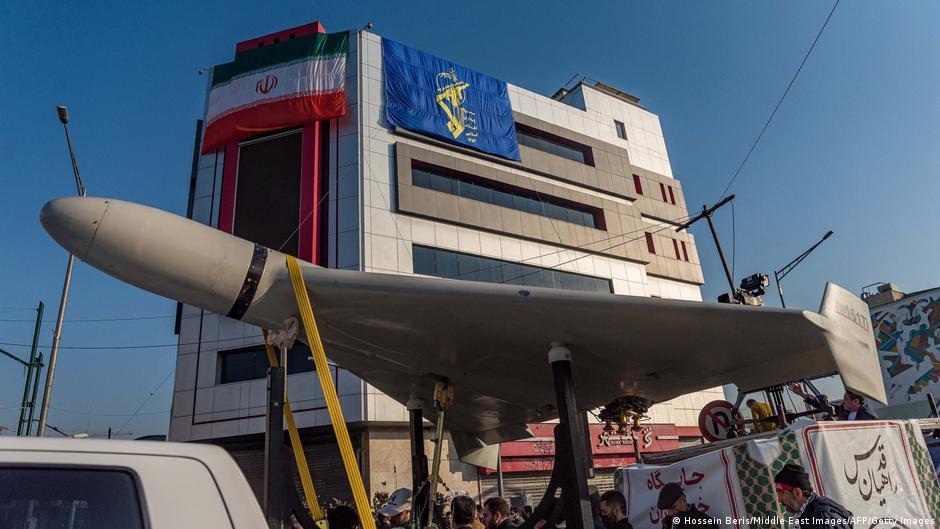
Analyses suggest that Iran may be able to maintain an unbalanced threat for an extended period, despite the deterioration of its conventional military capabilities. However, the threat posed by drones is more sustainable than that of ballistic missiles, as Iran relies on "Shahed" drones that can be produced quickly and affordably.
Iran can utilize these drones, along with naval mines and fast boats, to threaten oil tankers in the Strait of Hormuz, enabling it to use this strategic passage as leverage against major powers.
Regional Significance
The threat posed by Iran to navigation in the Strait of Hormuz presents a significant challenge to many Arab nations, through which 20% of global oil supplies pass. Any escalation by Iran could directly impact the global economy, placing Arab nations in a sensitive position.
In light of the lack of willingness from the United States to engage in a new ground war, there may be an incentive for President Trump to de-escalate tensions. However, any move towards negotiations with Iran may require significant concessions.