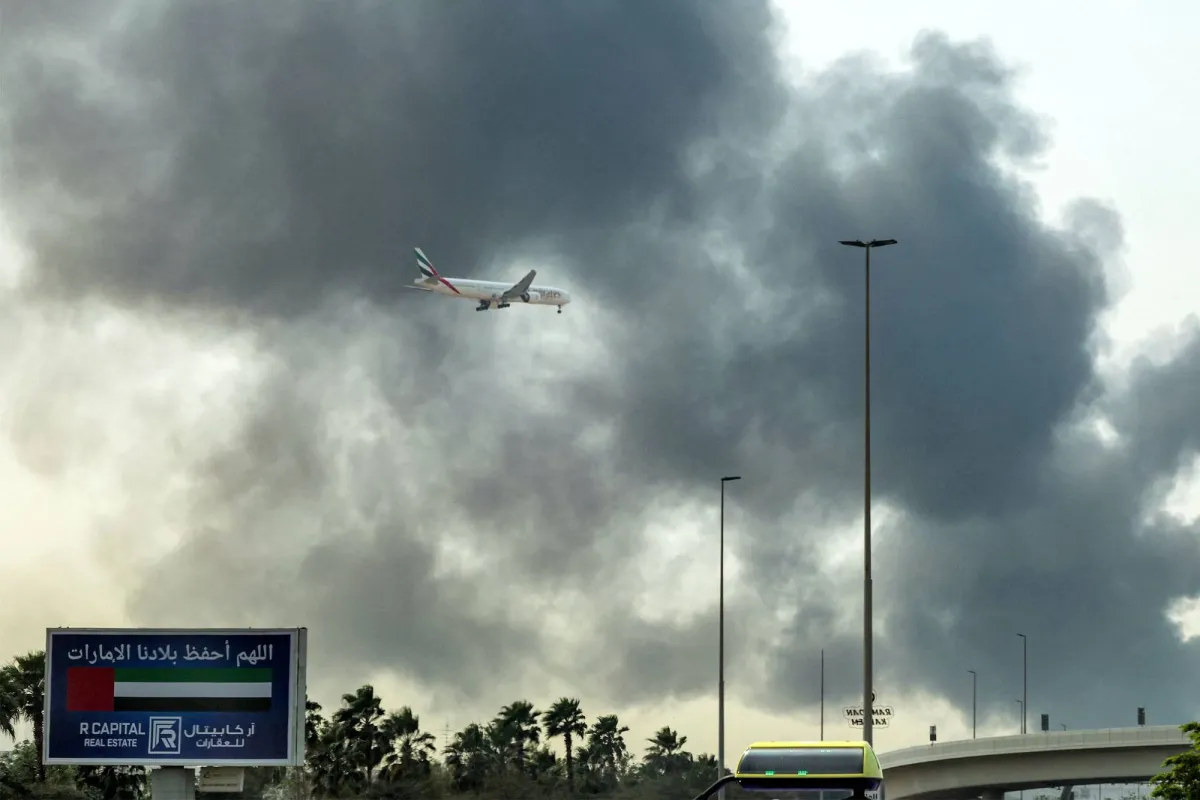
Despite the implementation of the "ceasefire" agreement between Iran on one side and the United States and Israel on the other for two weeks, Tehran has continued to target several Gulf cities. These attacks, deemed by analysts as evidence of the truce's fragility, are causing alarm in the region.
According to official statistics, Iran launched 94 drones and 23 missiles towards Gulf countries after the ceasefire was announced. Kuwait dealt with 28 drones, while Bahrain intercepted 6 missiles and 31 drones coming from Iran. The UAE also intercepted 17 ballistic missiles and 35 drones.
Details of the Incident
Saudi political analyst Dr. Khalid Al-Habbas pointed out that the continuation of attacks by Iran, even after the ceasefire took effect, has multiple implications. He explained in an interview with "Asharq Al-Awsat" that this could indicate the truce's fragility and Iran's attempt to establish the opening of the Strait of Hormuz as a key American demand.
He also added that the attacks reflect Iran's aggressive behavior towards Gulf states, as Iran has targeted countries that are not parties to the war, indicating a premeditated plan in anticipation of any potential confrontation.
Background & Context
These developments come at a sensitive time for the region, where tensions between Iran and the United States are escalating. Relations between the two sides have seen significant escalation in recent years, with mutual accusations and threats. Some believe that Iran is using these attacks as a means to pressure the United States and its allies in the Gulf.
On the other hand, these attacks also reflect the nature of decision-making in Iran, where it appears that hardline military leaders in the Revolutionary Guard are making strategic decisions without consulting political leaders.
Impact & Consequences
The continuation of Iranian attacks could lead to military escalation in the region, threatening security and stability. This situation may require Gulf countries to reassess their diplomatic strategies, especially in light of Pakistani mediation.
Moreover, these aggressions could affect relations between Gulf states and Iran, complicating the regional landscape. It may necessitate the international community to take stricter measures to pressure Iran to adhere to the ceasefire.
Regional Significance
These events serve as a wake-up call for countries in the region about the need to enhance security and defense cooperation to confront Iranian threats. These developments may contribute to unifying the ranks among Gulf states to face any potential escalation.
In conclusion, hope remains that the ceasefire will lead to comprehensive and sustainable calm, enhancing regional security and limiting any future aggressions.