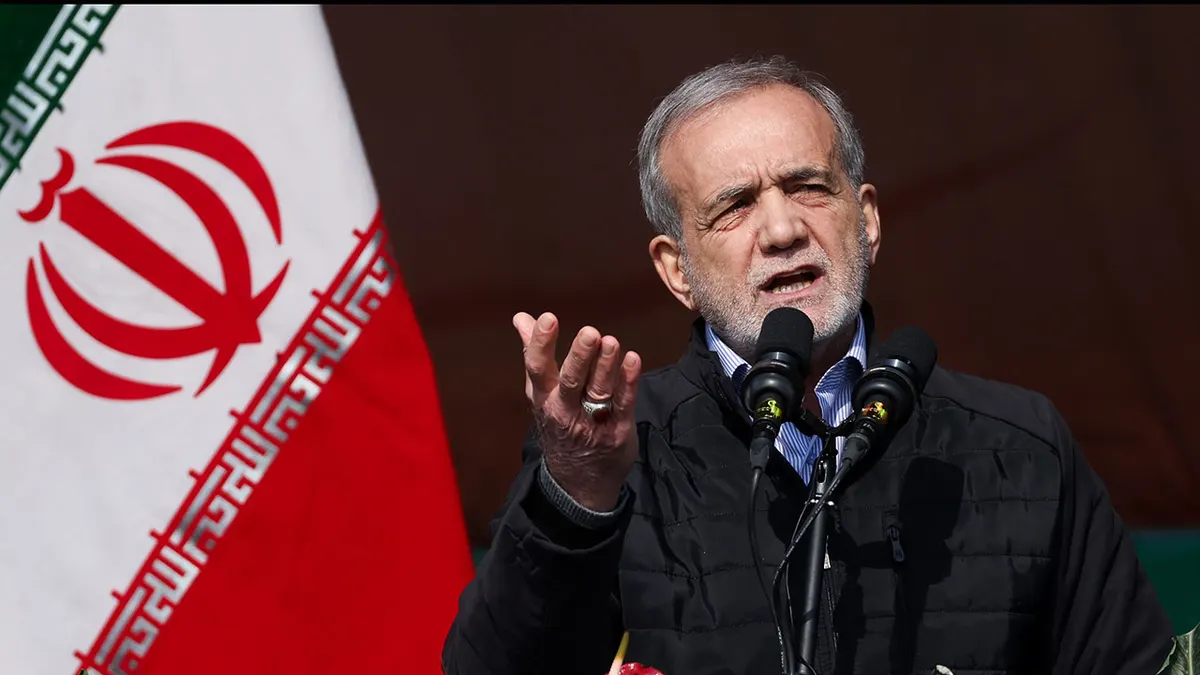
The Iranian president, in an official message, has confirmed his country's readiness to end the war, highlighting the importance of achieving peace and stability in the region. These statements come at a time when global tensions are rising, raising questions about the future of regional and international relations.
The Iranian president, who did not specify details on how to end the war, indicated that Iran is always seeking peace and is willing to cooperate with all concerned parties to achieve this goal. This message comes at a time when the region is experiencing increasing tensions, particularly amid ongoing conflicts in some neighboring countries.
Details of the Event
In his message, the Iranian president clarified that his country looks forward to ending armed conflicts that affect civilian lives and hinder development. He also emphasized that Iran is ready to sit at the negotiating table with all concerned parties, pointing to the importance of dialogue as a means to resolve disputes.
These statements follow a series of events in the region, including a rise in violence in some neighboring countries, which increases the need for diplomatic efforts to end conflicts.
Background & Context
Historically, Iran has been a key player in many regional conflicts, playing a pivotal role in supporting certain armed groups in countries like Iraq and Syria. However, recent statements reflect a potential shift in Iranian policy towards greater openness to dialogue.
In recent years, Iran has faced increasing international pressure due to its nuclear program and regional interventions. This pressure may be a driving force behind adopting a more moderate policy aimed at improving relations with other countries.
Impact & Consequences
Iran's readiness to end the war could have significant implications for regional conditions. If peace is achieved, it could lead to greater stability in the region, allowing countries to focus on economic and social development.
However, the question remains about the seriousness of Iran in implementing these statements, especially given its long history of military interventions in regional affairs. Any efforts to end the conflict may require cooperation from all concerned parties, including major powers.
Regional Significance
The Iranian president's statements serve as a glimmer of hope for many Arab countries suffering from conflicts. Ending the war in the region could contribute to improving relations between Iran and Arab nations, enhancing opportunities for regional cooperation in various fields.
At the same time, Arab countries must be cautious in dealing with these statements, as history reflects that changes in Iranian policy are often driven by strategic interests. Therefore, monitoring developments will be essential to understanding the true dimensions of this message.
In conclusion, Iran's readiness to end the war reflects a potential shift in Iranian policy and raises questions about the future of regional relations. There is hope that these statements will lead to practical steps towards achieving peace and stability in the region.