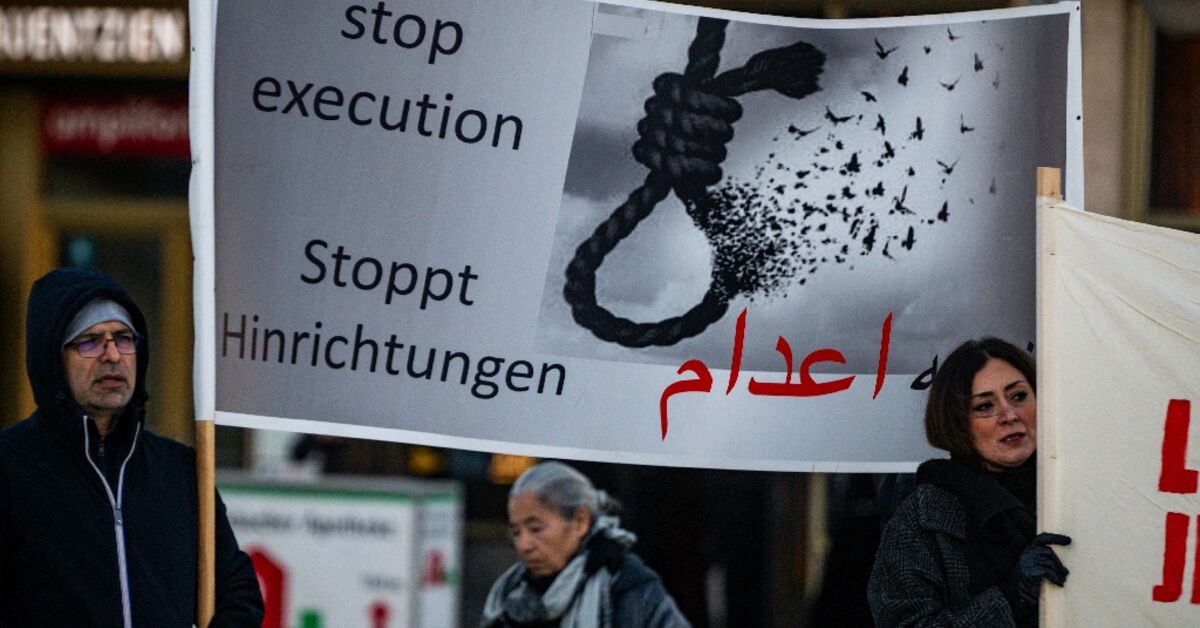
On Monday morning, Iranian authorities executed two political prisoners, Akbar Daneshfarkar (60 years old) and Mohammad Taghavi-Sandehi (59 years old), in Qazal Hessar Prison located in Karaj. Human rights organizations have classified these detainees as political prisoners, as they belong to the banned Iranian group, Mujahedin-e Khalq, also known as MEK.
These executions come at a time when Iran is facing both internal and external pressures, with escalating tensions with the United States and Israel, which intensifies the crackdown on dissenters. Human rights reports indicate that Iran is one of the world's leading countries in carrying out death penalties, using this punishment as a means to suppress political opponents.
Details of the Executions
Daneshfarkar and Taghavi-Sandehi were executed in Qazal Hessar Prison, a facility notorious for its harsh conditions and mistreatment of detainees. They were arrested earlier on charges of belonging to the Mujahedin-e Khalq, which the Iranian government considers a terrorist organization. The detainees were convicted based on confessions that were reportedly extracted under duress.
It is worth noting that the Mujahedin-e Khalq was founded in the 1960s as an opposition movement against the Iranian regime and has a long history of conflict with the government, including military operations and protests. However, its classification as a terrorist organization by the Iranian government makes it difficult for its members to secure their legal rights.
Background & Context
Historically, Iran has witnessed waves of repression against political opponents, especially following the Islamic Revolution in 1979. The Iranian government has used the death penalty as a tool to intimidate dissenters and silence critical voices. In recent years, the frequency of executions has increased, with many carried out in the context of popular protests across the country.
These executions coincide with rising regional tensions, as Iran accuses the United States and Israel of interfering in its internal affairs. Such tensions have led to an increase in internal repression, as the government seeks to consolidate its power by demonstrating strength against dissenters.
Impact & Consequences
These executions serve as a message from the Iranian government to dissenters, showcasing its intolerance for any form of opposition. Additionally, these events may exacerbate the humanitarian situation in the country, where Iranian prisons suffer from severe overcrowding and inhumane conditions.
Moreover, these executions could affect Iran's international relations, as human rights violations are a primary concern for the international community. Such events may lead to the imposition of further sanctions on Iran, increasing its international isolation.
Regional Significance
The events in Iran have a direct impact on the Arab region, as Iran is a key player in many regional conflicts. The escalation of repression in Iran may encourage other regimes in the region to take similar actions against dissenters, worsening the political and human rights situations in Arab countries.
Furthermore, the tensions between Iran, the United States, and Israel could affect regional security, as these strained relations are a significant factor in the stability of the region. Under these circumstances, the situation in Iran remains a focal point for the world, with increasing calls to pressure the Iranian government to halt human rights violations.