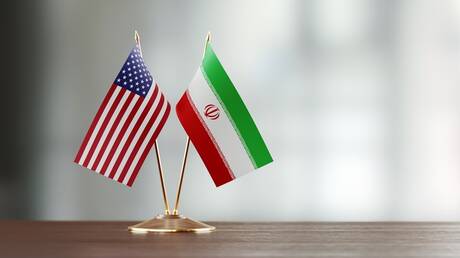
Iran has announced the cessation of direct communication with the United States following President Donald Trump's threats to destroy its civilization. This decision comes at a time when the world is witnessing increasing tensions between Tehran and Washington, raising concerns about regional stability.
According to reports from the Wall Street Journal, officials in the Middle East confirmed that this decision reflects the escalating tensions between the two sides, with Iran viewing such statements as a direct threat to its national security.
Details of the Event
In a post on social media, Trump threatened that Iran's civilization would perish if it continued its aggressive behavior. This statement provoked angry reactions in Tehran, where the Iranian government considered these remarks an unacceptable escalation in political rhetoric.
At the same time, Iran affirmed that it would not hesitate to take further steps to protect its interests, indicating that cutting off direct communication is part of its strategy to deal with external threats. This move could lead to increased tensions in bilateral relations, which have significantly deteriorated since the United States withdrew from the nuclear agreement in 2018.
Background & Context
The roots of tensions between Iran and the United States date back decades, with the relationship experiencing numerous crises, starting from the Iranian Revolution in 1979 to the economic sanctions imposed by Washington on Tehran. These crises have significantly deteriorated relations, complicating any attempts at direct communication between the two parties.
Additionally, the mutual hostile statements from both sides reflect a state of mistrust, as each country seeks to protect its interests in a volatile geopolitical environment. In recent years, tensions have notably increased, especially following attacks on oil facilities in Saudi Arabia, which Iran was accused of orchestrating.
Impact & Consequences
The cessation of direct communication between Iran and the United States may exacerbate conditions in the region, potentially leading to further military escalation. This decision could also impact mediation efforts by some European countries aimed at reducing tensions, making it difficult to reach diplomatic solutions.
Furthermore, this escalation may affect global markets, particularly in the energy sector, as any military escalation in the region could lead to rising oil prices. The situation may also negatively impact the Iranian economy, which is already suffering from imposed sanctions.
Regional Significance
Neighboring Arab countries, such as Iraq and Saudi Arabia, are among the most affected by the rising tensions between Tehran and Washington. These countries face security and economic challenges as a result of these tensions, which could lead to destabilization of the region as a whole.
Arab nations may find themselves compelled to take clear stances regarding this escalation, potentially increasing divisions within the region. Under these circumstances, hope remains pinned on diplomacy as a means to alleviate tensions and achieve stability.