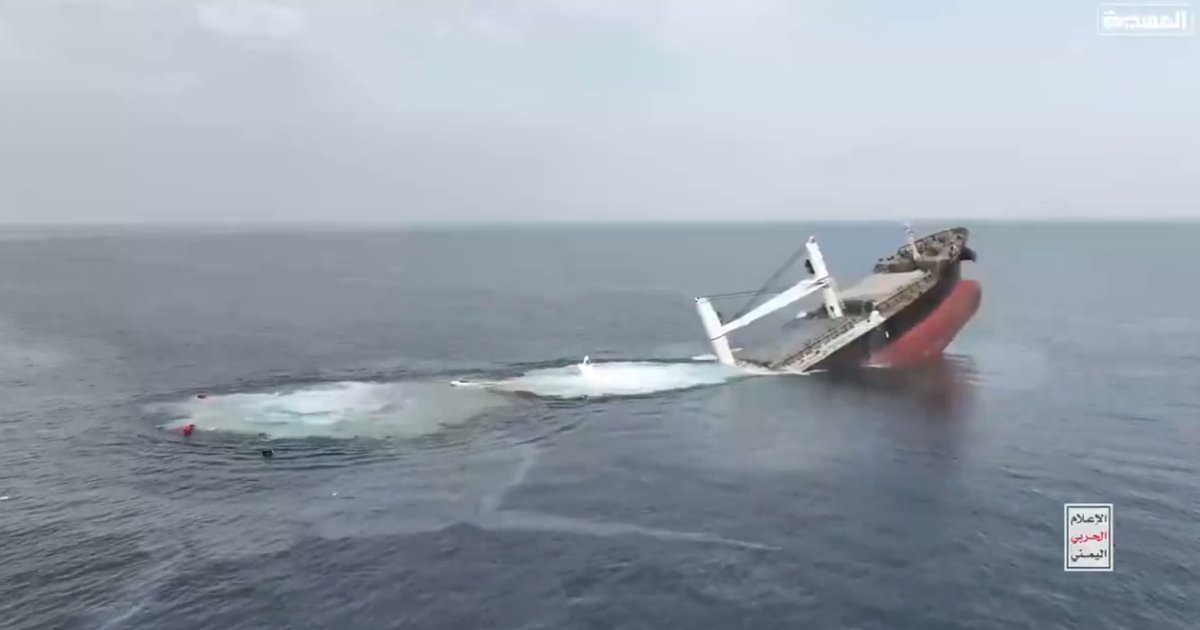
Recent reports reveal that Iran is exerting pressure on the Houthi group in Yemen to target maritime navigation in the Red Sea, raising concerns about escalating tensions in the region. This development comes amid increasing regional tensions, as navigation in the Red Sea is a vital artery for global trade.
This move by Iran is seen as part of its regional strategy to enhance its influence, seeking to use the Houthis as a tool to pressure neighboring countries. Reports indicate that Iran has supplied the Houthis with weapons and technology necessary to bolster their military capabilities, increasing threats to international navigation.
Details of the Incident
Bloomberg reported on Monday that Iran aims to exploit the Houthis as a means to destabilize the Red Sea. Military movements by the Houthis have been observed in the area, raising concerns among countries that rely on this vital waterway.
The Red Sea is a key transit point for oil and commercial goods, with approximately 10% of global trade passing through it. Therefore, any threat to navigation in this area could significantly impact the global economy.
Background & Context
Historically, the Red Sea region has experienced multiple tensions, particularly with the escalation of conflicts in Yemen. The Houthis, who control large parts of Yemen, are considered allies of Iran, complicating the conflict in the area. The civil war in Yemen has exacerbated humanitarian conditions, making any military escalation concerning.
Iran and the Houthis are part of a resistance axis that also includes other groups in the region, reflecting the broader struggle between regional powers. In recent years, Iran has increased its support for the Houthis, leading to enhanced military capabilities.
Impact & Consequences
If Iran continues to pressure the Houthis to target navigation, it could lead to military escalation in the region. This escalation could negatively impact global trade, resulting in rising oil and commodity prices.
Moreover, major powers, such as the United States, may intervene to protect their interests in the region, potentially leading to further escalation of the conflict. Any military intervention could drag the region into a broader conflict, threatening regional stability.
Regional Significance
The tensions in the Red Sea are a concern for neighboring Arab countries, many of which rely on navigation in the Red Sea to secure their trade. Any escalation in this context could affect Arab economies and increase humanitarian burdens in Yemen.
Under these circumstances, Arab countries must take proactive steps to protect their interests, including enhancing security cooperation and military coordination to address potential threats.
In conclusion, the situation in the Red Sea remains complex and requires close monitoring by the international community. Any escalation in tensions could have dire consequences for security and stability in the region.