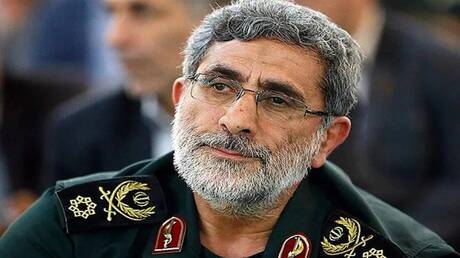
Ismail Qaani, the commander of Iran's Quds Force, emphasized that the heroic resistance of the Lebanese "Hezbollah" has debunked Israeli narratives that promote the idea of the party's demise and the end of resistance. Qaani pointed out that recent events in the region have demonstrated that the resistance remains strong and effective, reflecting Hezbollah's capability to confront challenges.
Qaani's statements come at a time when the region is witnessing increasing tensions, as the Israeli entity seeks to bolster its narrative regarding the weakness of the resistance. However, developments on the ground, including military operations and new tactics employed by Hezbollah, indicate the exact opposite.
Details of the Event
In his remarks, Qaani noted that the resistance in Lebanon is not only strong but also advanced in its military strategies. He affirmed that Hezbollah has achieved victories on the ground, making it difficult for the Israeli enemy to promote the idea of the resistance's collapse. He also added that popular support for Hezbollah continues to grow, reinforcing its position in the face of challenges.
Qaani's statements are part of Iran's strategy to support its allies in the region, as Tehran seeks to strengthen its position against Israeli and American pressures. This is reflected in the military and financial support Iran provides to Hezbollah, demonstrating its commitment to supporting the resistance in Lebanon.
Background & Context
Historically, the region has witnessed ongoing conflicts between the Lebanese resistance and the Israeli entity, with Hezbollah being one of the most prominent armed factions confronting the occupation. Since its establishment in the 1980s, the party has achieved several victories, making it a symbol of resistance in the Arab world.
In recent years, tensions between Hezbollah and Israel have escalated, particularly following the war in Syria and Iran's involvement in the conflict. These events have contributed to strengthening the ties between Hezbollah and Iran, making it increasingly difficult for Israel to achieve its objectives in the region.
Impact & Consequences
Qaani's statements underscore the importance of the resistance in Lebanon as a fundamental element in the regional equation. With increasing Israeli pressures, Hezbollah appears to have grown stronger, which could lead to heightened tensions in the region. Furthermore, these statements may affect the relationships between Iran and regional countries, especially those seeking to counter Iranian influence.
Moreover, these developments could bolster Hezbollah's internal position, increasing its popularity among the Lebanese. At the same time, Israel may face greater challenges in its attempts to control the security situation in the region.
Regional Significance
The resistance in Lebanon is seen as a symbol of resilience against occupation and has inspired many movements across the Arab world. The continued strength of Hezbollah may impact conditions in neighboring countries, where many factions seek to learn from Hezbollah's experience in resistance.
Additionally, these statements may reignite discussions about Iran's role in the region and its influence on ongoing conflicts. Therefore, the situation in Lebanon will remain a focal point for many Arab countries, closely monitoring developments.
In conclusion, the resistance in Lebanon continues to pose a significant challenge to the Israeli entity, as it strengthens its power despite the challenges. Qaani's statements reflect Iran's commitment to supporting its allies, which may further complicate the regional landscape.