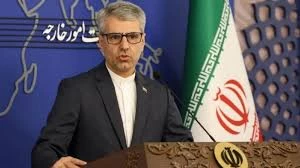
Iran's Foreign Ministry spokesperson, Ismail Baqaei, emphasized that Iran has not conducted any direct discussions with the United States, noting that communication between the two sides has been limited to exchanging messages through intermediaries. Baqaei described the American proposals presented to Tehran as "unrealistic, unreasonable, and exaggerated."
Baqaei clarified that Tehran's position has been clear from the outset, in contrast to the continuously changing stance of the United States. The Iranian spokesperson welcomed the "efforts of regional countries for peace," but urged for a "realistic perspective on events."
Details of the Situation
Baqaei's remarks come at a sensitive time, as U.S. President Donald Trump announced that the United States and Iran are engaged in "direct and indirect talks," suggesting that the new leaders in Iran are acting "very rationally." However, the presence of increased American forces in the region has raised warnings from Tehran that it will not accept humiliation.
Trump's comments followed Pakistan's announcement, which plays a mediating role between Tehran and Washington, expressing its readiness to host "meaningful talks" in the coming days aimed at ending the ongoing conflict that has lasted for a month. Trump expressed his belief that the United States could reach an agreement with Iran, but added that it might not happen.
Background & Context
The relationship between Iran and the United States has been marked by ongoing tension for decades, witnessing numerous crises and conflicts. In recent years, tensions have notably escalated following the U.S. withdrawal from the Iranian nuclear agreement in 2018, which led to the imposition of severe economic sanctions on Tehran.
Iran seeks to bolster its regional and international position, while the United States attempts to pressure it to curb its nuclear and military activities. In this context, Pakistan plays a significant role as a mediator, striving to facilitate dialogue between the two sides.
Impact & Consequences
Concerns are growing over a potential military escalation in the region, especially with the increase of American forces. Any escalation could have serious repercussions on regional security and complicate peace efforts in the Middle East.
Iran believes that any American moves aimed at pressuring it will be met with a strong response, as the Speaker of the Iranian Parliament, Mohammad Baqer Qalibaf, confirmed that Tehran is prepared to respond if the United States deploys ground troops. He indicated that Iran will never accept humiliation, reflecting Tehran's determination to protect its sovereignty.
Regional Significance
The tensions between Iran and the United States directly impact Arab countries, many of which view any military escalation as a threat to their stability. Additionally, the relationship between Iran and Arab countries, particularly in the Gulf region, is characterized by tension, further complicating the regional landscape.
In light of these circumstances, Arab nations are striving to enhance their diplomatic efforts to avoid any escalation, considering dialogue as the only path to achieving peace and stability in the region.
In conclusion, the situation in the region remains tense, and the future of relations between Iran and the United States depends on both sides' ability to overcome current obstacles and seek effective diplomatic solutions.