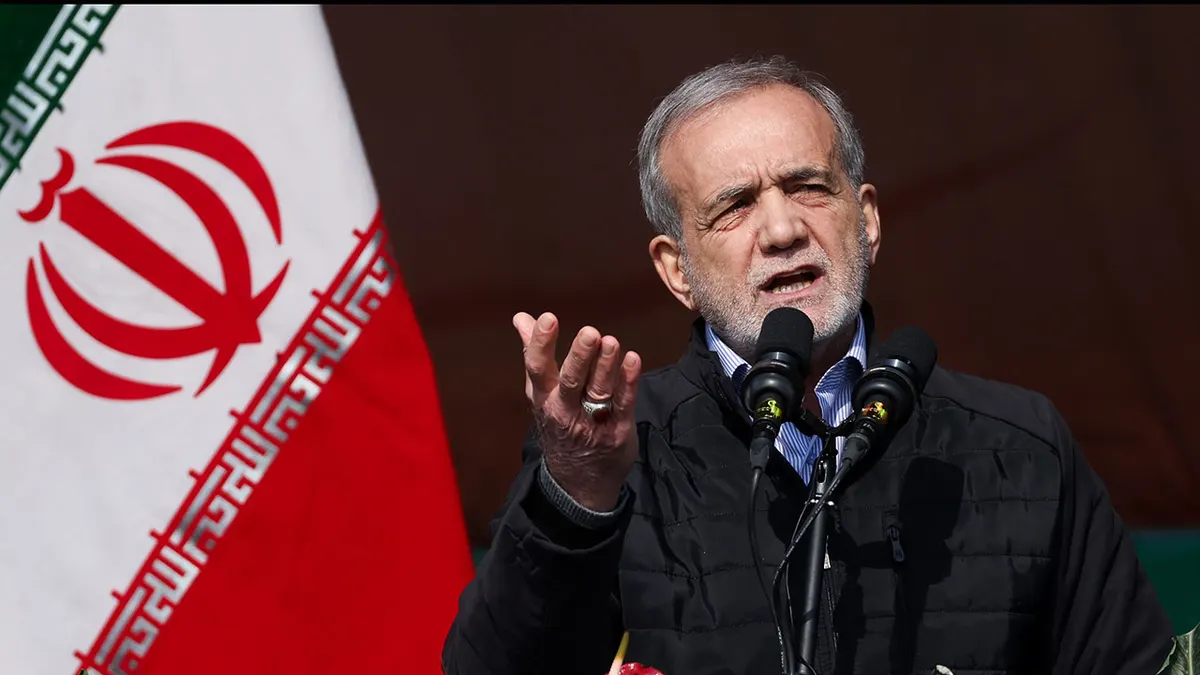
Iranian President Masoud Beizhekiyan affirmed that his country will not negotiate under any pressure or threat, stressing the necessity of providing a suitable environment for effective dialogue. These remarks came during a phone call with Pakistani Prime Minister Shahbaz Sharif, where he indicated that any discussions should take place under favorable conditions.
Beizhekiyan clarified that past experiences in negotiations have deepened the distrust among the Iranian people, as talks were often held concurrently with the imposition of sanctions and pressures. He emphasized that resolving conflicts requires halting hostile behavior and providing guarantees against its recurrence.
Details of the Event
Beizhekiyan's statements come at a sensitive time as Pakistan seeks to revive talks between Iran and the United States following heightened tensions in recent weeks. The first round of negotiations held in Islamabad two weeks ago failed to reach an agreement to end the conflict that began on February 28.
It is noteworthy that these talks followed a two-week truce mediated by Pakistan on April 8, which was later extended by U.S. President Donald Trump.
Background & Context
Historically, Iranian-American relations have experienced increasing tensions since the United States withdrew from the Iranian nuclear agreement in 2018. This withdrawal led to the re-imposition of stringent economic sanctions on Iran, adversely affecting the Iranian economy and escalating tensions in the region.
In recent years, several countries, including Pakistan, have attempted to play a mediating role in an effort to ease tensions between Iran and the United States, but these efforts often face significant obstacles due to mutual distrust.
Impact & Consequences
Beizhekiyan's statements indicate Iran's unwillingness to concede under pressure, which could exacerbate conditions in the region. If pressures and sanctions continue, Iran may escalate its actions, potentially affecting the stability of the entire region.
On the other hand, the failure of negotiations could negatively impact peace efforts in the Middle East, as any escalation in the Iranian-American conflict may lead to unforeseen repercussions involving other countries in the region.
Regional Significance
For Arab countries, the escalation of tensions between Iran and the United States could lead to increased instability in the region, particularly in neighboring countries like Iraq and Syria. Additionally, any escalation could impact oil prices and global markets, reflecting on Arab economies.
In conclusion, it remains crucial to monitor developments in this file, as any changes in the Iranian or American stance could significantly affect security and stability in the region.