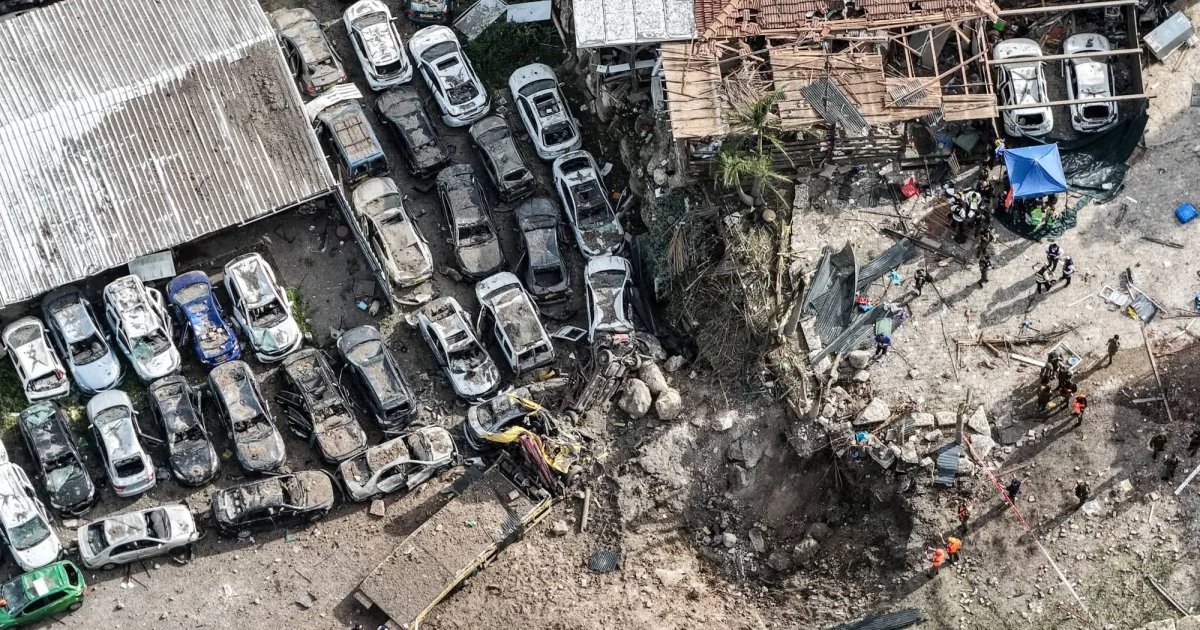
Despite the intense military pressures Iran has faced since the onset of the war, missile and drone attacks show that Tehran still retains operational capabilities that allow it to inflict ongoing damage on its adversaries, reflecting a shift in usage rather than a retreat in capabilities.
In previous statements, U.S. President Donald Trump asserted that the United States had nearly eradicated Iran's military capabilities, describing Iran as a toothless adversary. However, the U.S. military reported that the number of attacks launched by Iran has decreased by approximately 90% since the early days of the war, while the Israeli military confirmed that it rendered about 70% of Iran's missile launch platforms inoperable.
Details of Recent Attacks
Nevertheless, the series of attacks targeting Israel and neighboring countries in recent days serves as evidence that Iran still possesses enough missiles and drones to destabilize the region. Millions of Israelis continue to rush to shelters day and night to escape Iranian rocket fire, creating a state of fear and paralysis.
In a tragic incident, seven people were injured in central Israel due to a barrage of rockets, while a man was killed in Tel Aviv by shrapnel from a cluster munition warhead. Even when Iranian weapons are intercepted, they can still cause damage, as two people were killed in Abu Dhabi due to debris from an intercepted missile.
Background & Context
Farzin Nadimi, a security analyst at the Washington Institute, states that the U.S.-Israeli campaign has been effective in targeting Iranian leadership, resulting in the deaths of several leaders and the destruction of multiple military facilities. However, he points out that the main measure of Iran's success is its ability to continue launching missiles and drones at Israel, U.S. bases, and Gulf states.
An American official confirmed that Iran likely still possesses thousands of Shahed drones and possibly hundreds of ballistic missiles, despite military pressures. However, he warned of the difficulty in confirming this due to limited intelligence information.
Impact & Consequences
Data indicates that the number of Iranian attacks may not be as significant as the effectiveness of their arsenal's utilization. An analytical study showed that the hit rate has increased as the war progressed, suggesting that adversaries are adapting to the situation. There are indications that Iran may have reduced the number of launches due to repositioning or improved targeting, rather than as a result of the destruction of its capabilities.
Recent Iranian attacks have shown no signs of decline, causing damage across the Gulf, including disrupting radar at Kuwait Airport and injuring a worker at an Omani port. Additionally, the Houthis' readiness to strike Israel indicates the possibility of expanding the scope of attacks.
Regional Significance
Iran's ability to respond reflects a rapid recovery following the 12-day Israeli assault, suggesting that Israel may have underestimated the speed at which these capabilities could be rebuilt. Furthermore, Iran has not remained idle after that war, but has used the time to prepare for the next conflict.
Despite the pressures, Iran remains capable of launching around 20 to 30 missiles daily, reflecting the continued existence of tunnel networks linked to “missile cities” and drone storage facilities. This situation raises significant concerns in the region, as any escalation in hostilities could exacerbate humanitarian and political conditions.