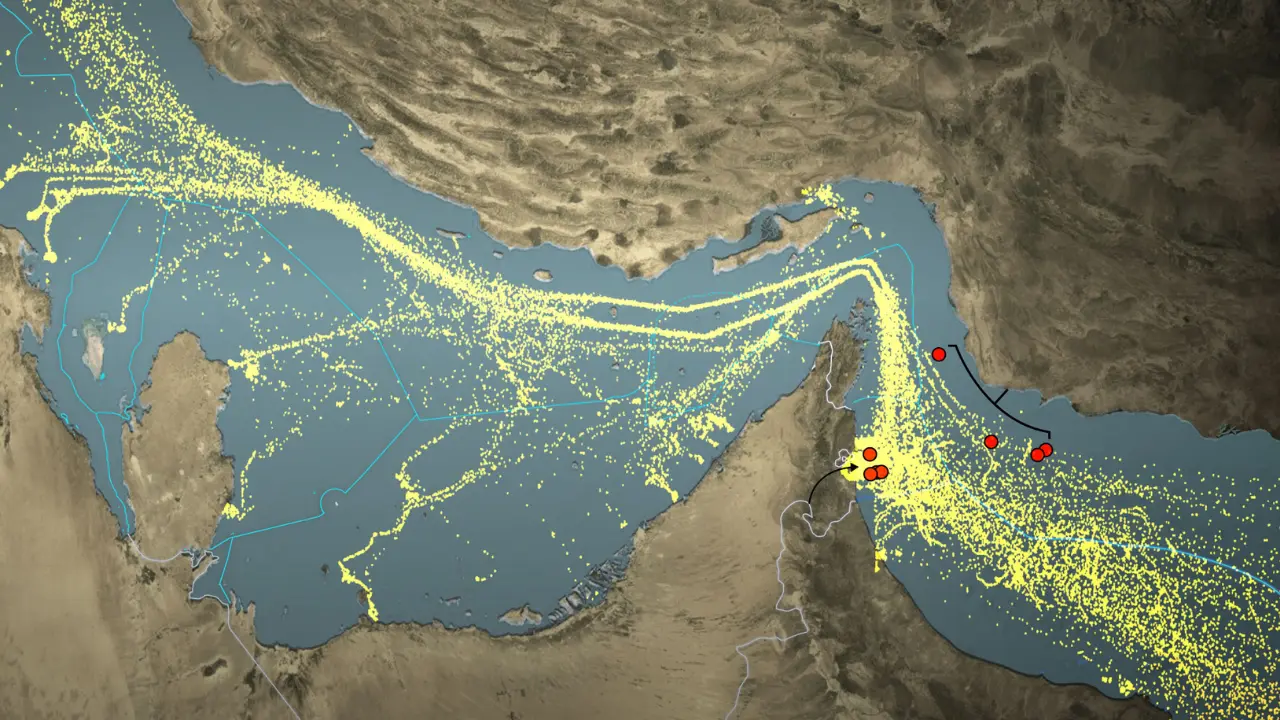
Submarine internet cables that pass through the Strait of Hormuz are the backbone of global communications, carrying approximately 99% of internet data. In this context, Iran has hinted at the possibility of targeting these cables, raising concerns among Western powers, particularly Washington and Brussels, regarding the effectiveness of current security measures.
These cables are located in a strategic area, through which a significant portion of global data traffic flows. With rising tensions in the region, fears are growing that these cables could become a potential target in any future conflict.
Details of the Situation
Submarine internet cables are distributed at several points across the Strait of Hormuz, making them vulnerable to geopolitical influences. Iran has shown on multiple occasions its willingness to use this point as leverage against Western nations. Meanwhile, the United States and European countries are striving to enhance cybersecurity and protect these cables from any potential threats.
These cables are essential for providing internet and communication services, relied upon by businesses and governments worldwide. Therefore, any threat to them could lead to significant disruptions in data flow, impacting the global economy.
Background & Context
Historically, the Strait of Hormuz has been a theater for numerous geopolitical conflicts. This area is a vital transit point for oil and gas, making it a focal point for major powers. In recent years, tensions between Iran and the United States have escalated, increasing concerns about the security of these cables.
Iran seeks to bolster its influence in the region and may use threats against internet cables as a means to pressure its adversaries. In response, Western nations are working to strengthen their military and economic alliances to ensure the safety of these vital corridors.
Impact & Consequences
If internet cables are targeted, it could lead to significant disruptions in internet services, affecting business operations and communication between countries. Such events could cause widespread economic turmoil, as many companies depend on the internet for their daily operations.
Moreover, these tensions could escalate military conflicts in the region, increasing the risk of a broader conflict. Therefore, protecting these cables is a top priority for many nations.
Regional Significance
Arab countries are part of the global communications network that relies on submarine internet cables. Any threat to these cables could directly impact internet services in Arab nations, negatively affecting their economies and trade.
Additionally, tensions in the region may lead to increased investments in cybersecurity, as Arab nations seek to enhance their capabilities to counter any potential threats.
In conclusion, the question remains about the effectiveness of current measures to protect internet cables in the Strait of Hormuz. As tensions rise, concerned nations must take effective steps to ensure the safety of this digital backbone of the world.