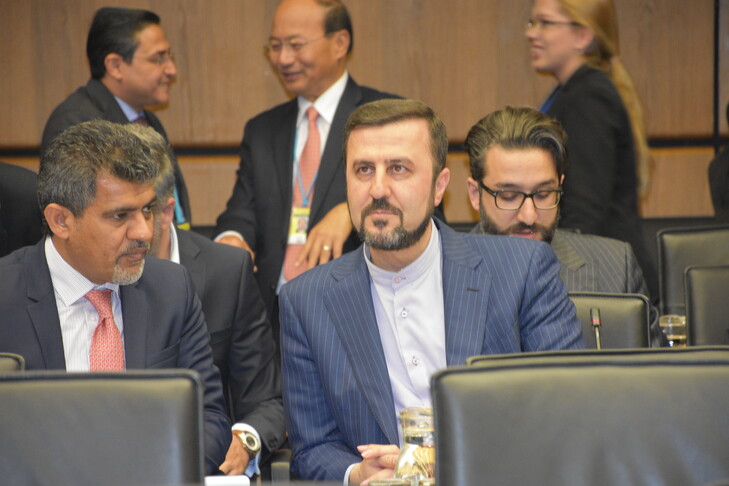
Iran has warned that the presence of French and British ships in the Strait of Hormuz, which is considered one of the most important waterways in the world, will be met with a decisive and immediate response. The Iranian Deputy Foreign Minister stated that the deployment of foreign naval forces in this sensitive area poses a threat to regional security.
These statements come at a time when the region is witnessing increasing tensions, as Western countries seek to bolster their military presence in the Arabian Gulf. The Iranian official pointed out that these actions are seen as violations of Iranian sovereignty, warning that Tehran will not hesitate to take necessary measures to protect its national interests.
Details of the Incident
Recently, Western military movements in Gulf waters have increased, with both France and Britain sending warships to the region. The Strait of Hormuz is a vital transit point for oil and gas, with approximately 20% of the world's total oil passing through it. Therefore, any escalation in this corridor could significantly impact global energy markets.
These Iranian warnings come at a sensitive time, as fears grow over the escalation of military conflicts in the region. Iran has expressed its readiness to respond to any threats, further heightening tensions between Tehran and Western nations.
Background & Context
Historically, the Strait of Hormuz has witnessed numerous military conflicts, serving as a battleground for several wars and disputes over the past decades. In the 1980s, during the Iran-Iraq War, the strait was a major clash point between Iranian and Iraqi forces. Recent years have also seen a rise in piracy incidents and maritime threats, making it essential to enhance military presence in the area.
Iran views the Strait of Hormuz as an integral part of its national security, heavily relying on oil exports through this corridor. Consequently, any foreign military presence is considered a direct threat to its economic and political interests.
Impact & Consequences
These tensions are likely to lead to military escalation in the region, which could affect global oil prices. Should any clashes occur, it could result in a significant spike in oil prices, impacting the global economy as a whole. Additionally, the presence of foreign troops may increase instability in the region, negatively affecting relations among countries.
Moreover, these events could heighten tensions between Iran and Western nations, complicating diplomatic efforts to resolve regional disputes. This may have a direct impact on nuclear talks between Iran and major powers, as these events could be used as leverage in negotiations.
Regional Significance
Neighboring Arab countries to the Strait of Hormuz, such as the United Arab Emirates and Oman, find themselves in a precarious position due to these tensions. Any military escalation in the region could disrupt trade and transportation, adversely affecting the economies of these nations. Furthermore, any threat to regional security could lead to an influx of refugees and increased sectarian tensions.
In conclusion, the situation in the Strait of Hormuz remains under scrutiny, with attention focused on Iran's reactions to Western military maneuvers. Maintaining stability in this vital region is crucial not only for Iran but for the entire area.