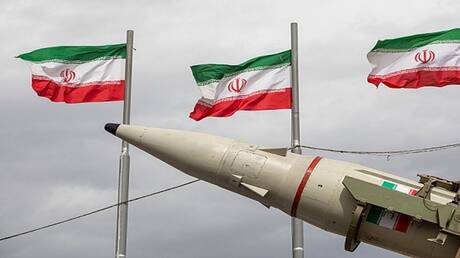
Iranian Deputy Foreign Minister Kazem Gharibabadi warned that the deployment of destroyers in the vicinity of the Strait of Hormuz under the pretext of "protecting navigation" is nothing more than an "escalation of the crisis." Gharibabadi confirmed that his country possesses full capability to establish security in the region, stressing that any military movements by Western powers will face a decisive and immediate response.
Gharibabadi's statements come at a sensitive time as the region experiences increasing tensions, with fears of a military escalation that could affect navigation in one of the world's most important maritime corridors. The Iranian official pointed out that such movements only reflect unsound intentions from Western countries.
Details of the Event
Recently, both Paris and London announced plans to deploy destroyers in the Strait of Hormuz, which provoked strong reactions from Tehran. Gharibabadi described this step as an attempt to increase tensions in the region, affirming that Iran will not accept any form of threats to its national security.
He also added that Iran has the capability to protect its interests and those of other countries in the region, indicating that security in the Strait of Hormuz is solely an Iranian responsibility. He considered that any foreign military presence in the area would exacerbate the security situation.
Background & Context
The Strait of Hormuz is a vital transit point for oil and natural gas, with approximately 20% of the world's total oil passing through it. In recent years, the region has witnessed increasing tensions between Iran and Western countries, especially after the United States withdrew from the Iranian nuclear deal in 2018.
This potential military escalation comes at a sensitive time as Iran seeks to bolster its regional position in the face of Western pressures. Relations between Iran and European countries have significantly deteriorated, increasing the likelihood of clashes in the region.
Impact & Consequences
If Western countries continue to deploy their forces in the Strait of Hormuz, it could lead to an undesirable military escalation, affecting global oil prices and increasing instability in the region. Any potential clashes could also have economic and political repercussions for neighboring countries.
Tensions in the Strait of Hormuz could also impact global trade movements, as many countries rely on this corridor for transporting their shipments. Thus, any military escalation could negatively affect the global economy.
Regional Significance
The Arab countries neighboring the Strait of Hormuz are in a sensitive position, as they may be directly affected by any military escalation. Countries like the United Arab Emirates and Qatar may find themselves in a difficult situation if military confrontations erupt in the region.
Any escalation in the Strait of Hormuz could lead to increased tensions between Arab countries and Iran, complicating peace and stability efforts in the area. Therefore, dialogue and understanding among all parties is the optimal way to avoid escalation.