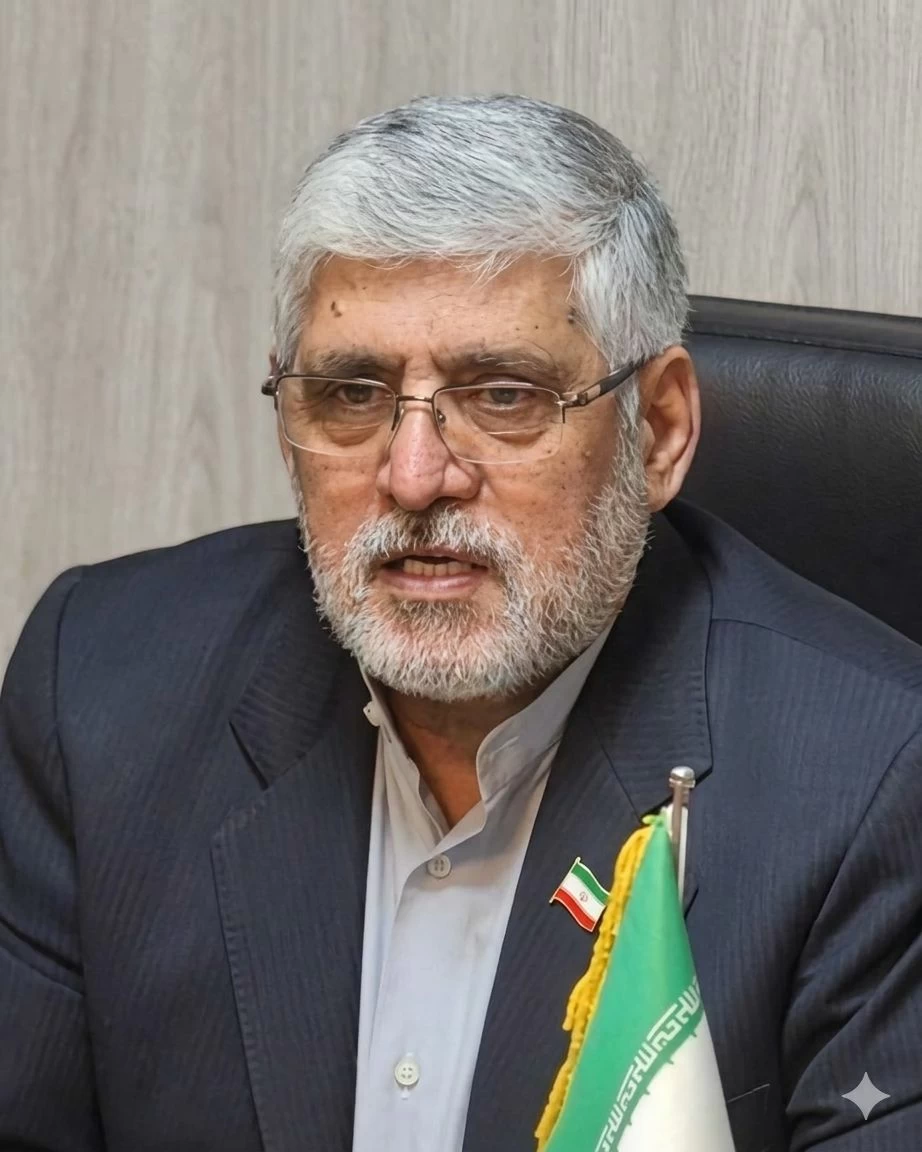
The deadline set by the Lebanese Foreign Ministry for Iranian Ambassador Mohammad Reza Shibani to leave expires in just hours, following the decision to withdraw his accreditation and declare him a persona non grata. This decision comes against the backdrop of what the Lebanese government deemed a "violation" by Tehran of diplomatic norms and protocols observed between the two countries, placing Lebanon at a pivotal moment that could redefine the boundaries of political and security engagement within the country.
As tomorrow (Sunday) approaches, the ambassador faces two options: to leave or to stay, which effectively means the collapse of his diplomatic immunity. Herein lies the real problem, as dealing with an ambassador who has lost his immunity is not merely an administrative procedure but a step with high political and security costs, potentially placing the state in direct confrontation with a politically and popularly resistant environment.
Event Details
Government sources confirmed that a reversal of the decision is "not on the table," indicating that it represents a test of what remains of state authority. Conversely, the challenge is rising on the other side, where Hezbollah and its allies categorically reject the decision, considering it a political targeting of relations with Tehran. These forces have publicly called for the ambassador not to leave, even preparing the streets for supportive movements, which increases the likelihood of friction with any executive action.
Within the government, cohesion is no longer guaranteed, as demonstrated by the action of Minister of Administrative Development Fadi Maki (a Shiite) breaking the boycott of ministers from the duo during last Thursday's cabinet session, indicating that the division is no longer just between two camps but also within the same ranks. This situation is a serious indicator of the difficulty of maintaining political rhythm in the coming hours.
Context and Background
The most sensitive element is the timing, as the deadline expires in less than 24 hours, during which Israel has conducted an airstrike near the Iranian embassy in Beirut, injecting a direct regional dimension into the crisis. The matter is no longer just a diplomatic dispute; there is now a clear intersection between external pressure and internal division.
Sources in the Lebanese Foreign Ministry clarified that Shibani can remain inside the embassy building, as security forces do not have the authority to enter it; however, outside, he is not welcomed. Regarding circulating information about the possibility of appointing a replacement for Shibani, sources confirmed that "the problem lies not with the person but is related to Iran and its policies."
Consequences and Impact
Tomorrow's scenarios are open, but the two most dangerous are: either the state implements its decision and enters into a political and possibly field confrontation, or it retreats under pressure, which would mean a severe blow to what remains of its prestige. Between these two options, Lebanon stands at a moment of true testing, and the countdown has already begun.
This situation could lead to an escalation of internal tensions and may contribute to increasing division among political forces, negatively impacting stability in the country.
Impact on the Arab Region
This crisis is part of a broader context of regional tensions, reflecting the conflicts between major powers in the region, such as Iran and Israel. Additionally, reactions to this decision may affect relations between Lebanon and other Arab countries, especially those that adopt anti-Iranian stances.
In conclusion, the scene tomorrow remains open to all possibilities, placing Lebanon at the heart of regional and international events, reflecting the significant challenges facing the state amid political and security divisions.