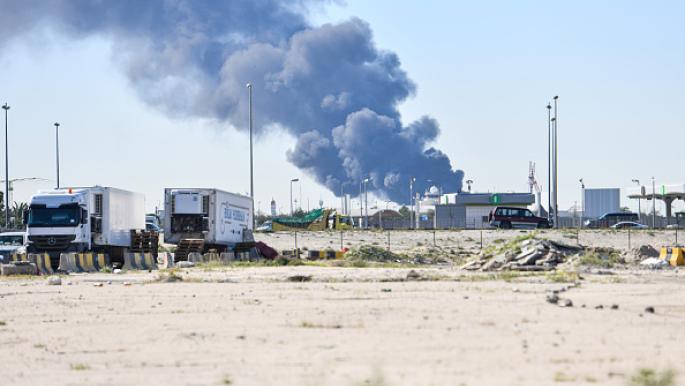
Iran launched aerial attacks on three Gulf nations early Saturday, resulting in injuries in Bahrain. These assaults are part of Iranian claims targeting American military interests, raising concerns over escalating tensions in the region.
The Iranian assaults on Gulf countries continue, with reports indicating that military and security sites were targeted, reflecting an escalation in Iran's policy towards its neighbors. While Tehran maintains that it only targets American interests, the direct impact of these attacks affects civilians and increases instability in the region.
Details of the Incident
In the early hours today, Bahrain experienced an aerial assault that resulted in civilian injuries, with areas near American military bases being targeted. Sources in Dubai also reported that an Oracle facility was attacked, raising questions about the impact of these assaults on the private sector in the region.
These attacks follow a series of hostile statements from Iranian officials, who claim that these operations are part of self-defense against American threats. However, these statements do not conceal the negative impact these assaults have on relations between Iran and its neighbors.
Background & Context
Historically, the Gulf region has witnessed increasing tensions between Iran and the Arab Gulf states, particularly after the United States withdrew from the Iranian nuclear agreement in 2018. Since then, Iranian assaults have escalated, prompting strong reactions from affected countries, including Bahrain, Saudi Arabia, and the UAE.
Bahrain is considered one of the most affected countries by Iranian policies, as it has a Shiite minority that complains of discrimination. This situation makes Bahrain vulnerable to Iranian assaults, which are often used as a means to demonstrate Iranian power and influence in the region.
Impact & Consequences
The repercussions of these assaults extend beyond the immediate effects on security and stability, as they also impact the regional economy. There is growing concern among investors and businesses due to the increasing instability, which could lead to a decline in foreign investments in the region.
Moreover, these assaults could lead to greater military escalation, as Gulf states may feel the need to bolster their defenses, further increasing tensions in the region. This escalation could drag the area into a larger conflict, affecting both regional and international security.
Regional Significance
These assaults serve as a wake-up call for countries in the region, highlighting the need to enhance security cooperation among Arab nations to confront Iranian threats. Additionally, these events may lead to a reassessment of defense and security policies in Arab countries, reflecting the importance of unity and solidarity in facing common challenges.
In conclusion, Iranian assaults on Gulf nations remain a sensitive issue that requires a coordinated response from Arab countries. Strengthening security and stability in the region necessitates joint efforts to confront increasing threats and work towards building trust-based cooperative relations.