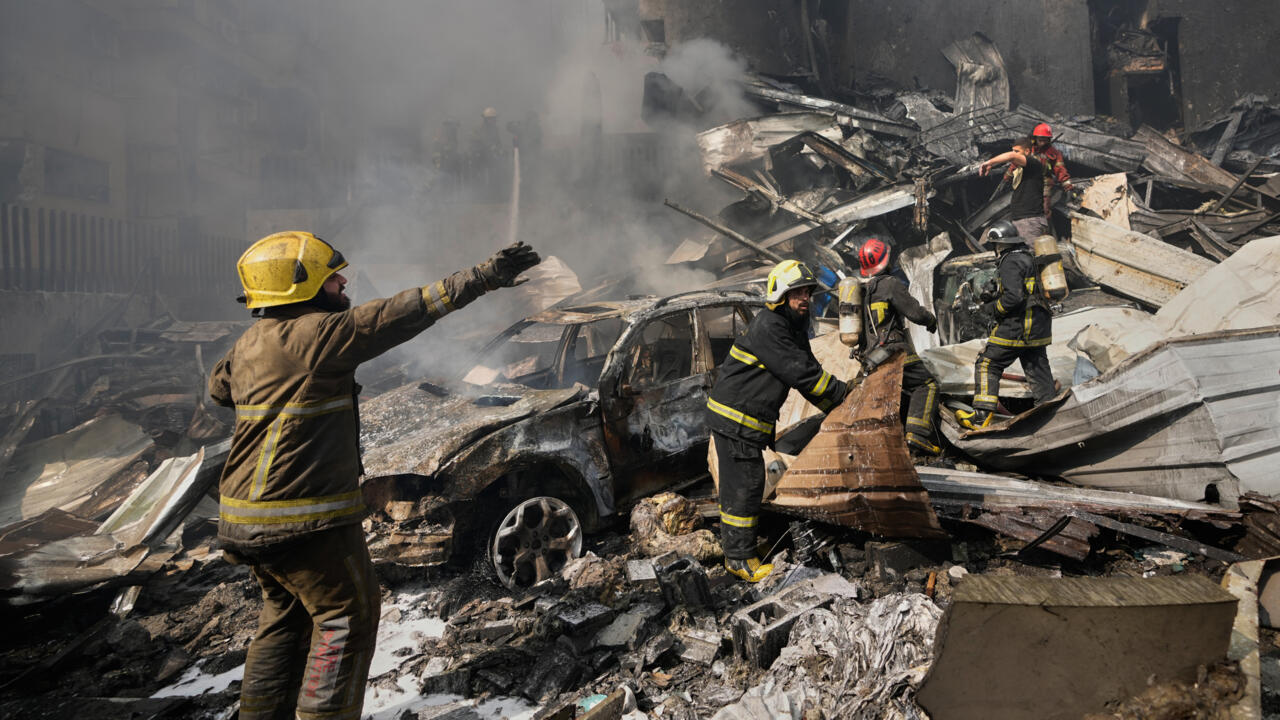
Kuwait and the United Arab Emirates have been subjected to several attacks by Iranian missiles and drones on the first day of the announced ceasefire between Iran and the United States, which the U.S. Vice President described as a "fragile ceasefire."
In Lebanon, which is not included in the ceasefire, Israel has carried out its most intense airstrikes since the beginning of the conflict, resulting in dozens of deaths and hundreds of injuries, according to local authorities.
Details of the Attacks
Reports indicate that Iran launched missiles and drones targeting sites in Kuwait and the UAE, with the UAE reporting that it was hit by 17 missiles and 35 drones. Meanwhile, Kuwait confirmed it had been subjected to Iranian attacks since the morning, while two individuals in Bahrain were injured due to a drone strike.
These attacks come just hours after the announcement of the ceasefire, which was made just before the expiration of a warning issued by former U.S. President Donald Trump to Iran, threatening to annihilate an "entire civilization" if Tehran did not open the Strait of Hormuz.
Background & Context
While Tehran declared a "great victory," the Iranian Supreme National Security Council asserted that the "enemy has suffered a crushing historical defeat." However, U.S. Vice President Jay D. Vance described the ceasefire as "fragile," urging Iranians to act in good faith.
On the other hand, the Iranian Revolutionary Guard confirmed its readiness to respond to any aggression, indicating that "the finger is on the trigger." These statements reflect the ongoing tension between the two sides despite the announcement of the ceasefire.
Impact & Consequences
These events demonstrate that the ceasefire between Iran and the United States may be unstable, as attacks and aggressions continue from both sides. Additionally, international pressure on Iran may increase, especially with calls from the international community for restraint.
Simultaneously, Israel continues to conduct airstrikes against targets in Lebanon, complicating the security situation in the region. These developments suggest that the conflict may escalate again, threatening peace efforts.
Regional Significance
These events directly affect security and stability in the Arab region, as fears of escalating violence grow. Moreover, tensions between Iran and Arab states could exacerbate humanitarian and economic crises.
In conclusion, the situation in the region remains complex, with political and military interests overlapping, making it difficult to predict the future of relations between the involved parties.