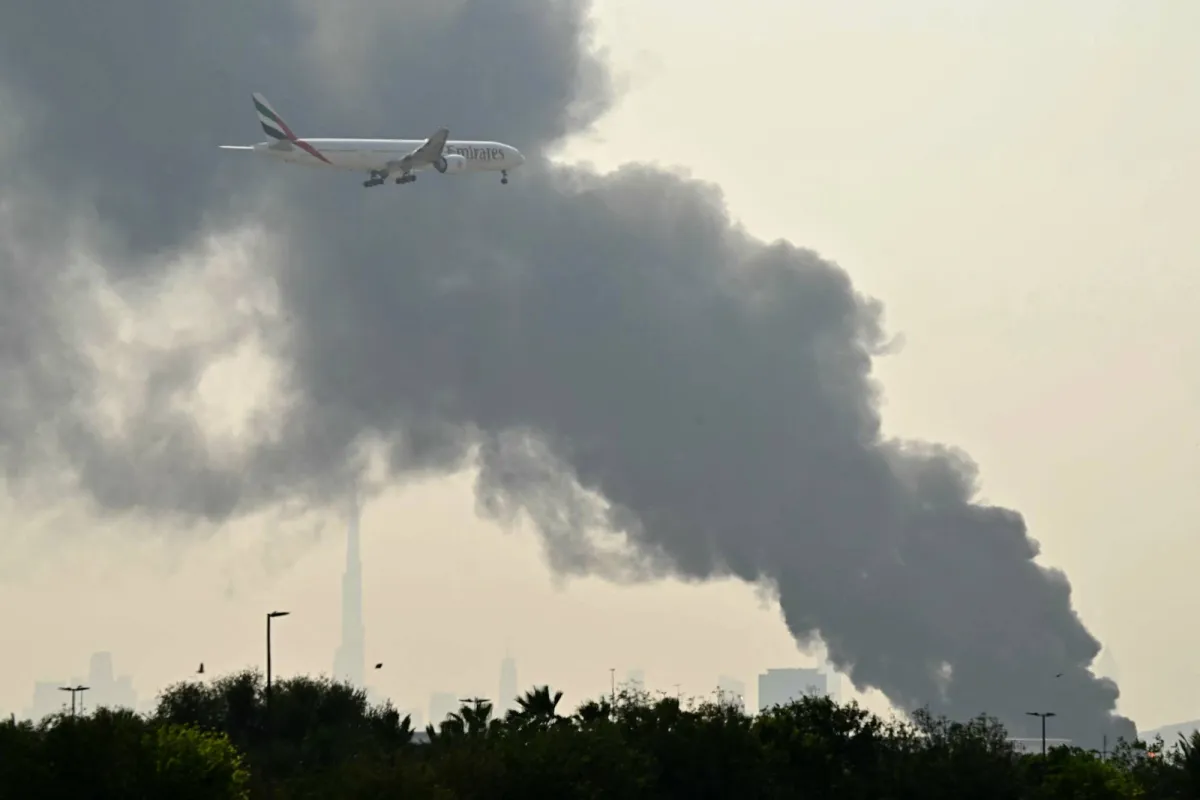
On Wednesday, Kuwait and the UAE were subjected to missile and drone attacks from Iran, despite the ceasefire announced between US President Donald Trump and Pakistani Prime Minister Muhammad Shehbaz Sharif. The attacks occurred at a sensitive time when the ceasefire was expected to help ease the tense situation in the region.
The Kuwaiti army announced that the Kuwaiti air defenses have been engaged since 8 AM on Wednesday in responding to a wave of intense Iranian attacks, where 28 drones targeting the country were intercepted. The Kuwaiti armed forces managed to intercept a significant number of these drones, which targeted vital oil facilities and power stations in the south of the country, resulting in substantial damage to the infrastructure.
Details of the Incident
The Iranian attacks on Kuwait and the UAE come at a critical time, as the ceasefire was supposed to contribute to calming the situation. The General Staff of the Kuwaiti army confirmed that it is making every effort to monitor and counter these brutal attacks. In contrast, the UAE Ministry of Defense announced that it is dealing with missile and drone assaults coming from Iran, further complicating the security situation in the region.
These developments come at a time when the concerned countries are striving for lasting stability. The Saudi Foreign Ministry expressed its welcome to the announcement of the ceasefire, praising the efforts made by the Pakistani Prime Minister in this context. The ministry emphasized the importance of keeping the Strait of Hormuz open for navigation in accordance with international laws.
Context and Background
Historically, the region has witnessed increasing tensions between Iran and the Gulf states, where repeated attacks are seen as part of a broader regional conflict. These tensions escalated after the US withdrawal from the nuclear agreement with Iran, leading to a surge in hostilities. In this context, the ceasefire is considered an important step, but the recent attacks demonstrate that challenges remain.
Moreover, relations between the Gulf states and Iran have significantly deteriorated in recent years, with escalating mutual accusations of interference in internal affairs. These events reflect the complexity of the security situation in the region, where any new escalation is viewed as a threat to regional and international security.
Consequences and Impact
The Iranian attacks on Kuwait and the UAE could lead to a new escalation in tensions, reflecting the instability of the security situation in the region. These events are expected to affect relations between the Gulf states and Iran, potentially prompting the concerned countries to reassess their security strategies. Additionally, these developments may impact global markets, particularly in the oil sector, where regional stability is vital.
At the same time, these attacks may enhance security cooperation among Gulf states, as they will seek to bolster their defensive capabilities in response to increasing threats. Furthermore, these events could prompt the international community to take more effective steps to reduce tensions in the region.
Impact on the Arab Region
These events serve as a wake-up call for Arab countries, highlighting that regional tensions continue to affect security and stability. It is crucial for Arab nations to cooperate in addressing common challenges and to promote dialogue to resolve conflicts. These events underscore the need for effective strategies to achieve regional security.
In conclusion, the situation in the region remains tense, with the ceasefire being a positive step, but the recent attacks indicate that the path to peace is still long. The concerned countries must work together to achieve lasting stability and avoid any new escalation that could threaten regional security.