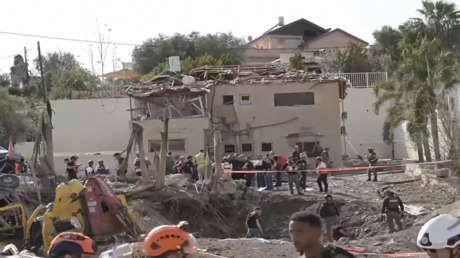
An Iranian missile attack targeted the area of Ishtaoal near Jerusalem, injuring 11 people and causing significant damage to homes, including a deep crater in the ground. The attack, which occurred early this morning, has raised widespread concern in Israeli circles, marking a notable escalation in tensions between Iran and Israel.
The Israeli Red Star of David organization confirmed that the injured were transported to hospitals for treatment, while rescue teams rushed to the attack site to provide assistance and clear debris. The deep crater left by the attack indicates the power of the missile used, raising questions about Iran's capability to accurately target Israeli territory.
Details of the Event
The missile attack came at a sensitive time, as the region is experiencing increasing tensions between Iran and Israel, particularly in light of the exchanged statements between both sides. The attack is believed to be part of an Iranian strategy to expand its influence in the region, as Tehran seeks to demonstrate its military strength and ability to target its adversaries.
Israeli authorities quickly convened emergency meetings to discuss the implications of this attack, enhancing security measures in areas surrounding Jerusalem. Air defense systems were also deployed in an attempt to counter any future attacks.
Background & Context
Historically, Iranian-Israeli relations have seen a continuous escalation, with Israel considering Iran an existential threat. In recent years, Iran has increased its support for armed groups in the region, heightening Israeli concerns. Missile attacks by Iran or its allies are seen as part of a larger strategy aimed at destabilizing the region.
The recent attack comes at a sensitive time, as discussions were ongoing regarding the possibility of a new nuclear agreement between Iran and global powers. These talks could impact regional dynamics, and the attack may serve as a message from Iran that it will not back down from its position amid international pressures.
Impact & Consequences
The missile attack could lead to greater military escalation between Iran and Israel, threatening regional stability. If attacks continue, Israel may find itself compelled to respond militarily, potentially leading to a new cycle of violence. This escalation could also affect relations between Arab states and Iran, as Arab nations may feel concerned about the increasing Iranian influence in the region.
Furthermore, the attack could impact financial markets, as it may lead to heightened tensions in the region, consequently affecting oil and gas prices. Under these circumstances, countries may seek to bolster their military alliances to confront the rising threats.
Regional Significance
The Iranian attack on the Ishtaoal area carries significant implications for the Arab region, reflecting the rising tensions between Iran and neighboring countries. Arab states, particularly those bordering Iran, may feel anxious about the escalation of Iranian military activities in the region.
This escalation could lead to a reassessment of national security strategies among Arab states, as they may need to enhance their defensive capabilities to counter potential threats. Additionally, the situation may affect relations between Arab countries and Israel, as some nations may find themselves in a difficult position between supporting Palestinian rights and addressing Iranian threats.
In conclusion, the Iranian missile attack on Ishtaoal represents a turning point in regional relations, indicating that tensions in the area may continue to escalate, necessitating proactive measures from Arab states to protect their interests and security.