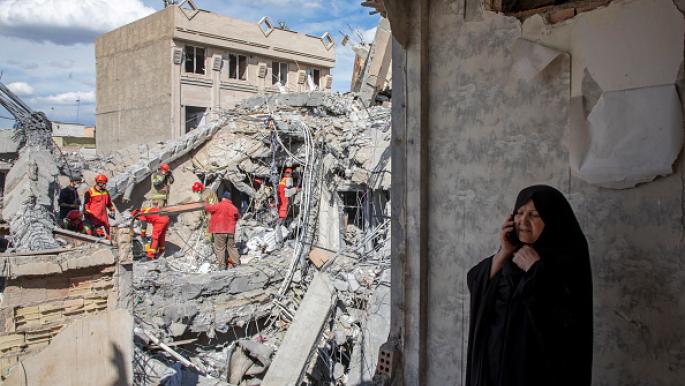
An Israeli was killed as a result of missiles launched by Iran targeting several locations in Tel Aviv and its vicinity during the night from Friday to Saturday. The incident occurred just hours after Iranian industrial sites were attacked, further intensifying tensions in the region.
The Iranian missile strikes come at a time when relations between Iran and Israel have significantly escalated, with both countries exchanging accusations and continuing military operations against each other. Reports also indicate that several American soldiers were injured in Saudi Arabia, reflecting the widening scope of the conflict and its impact on American interests in the region.
Details of the Incident
According to reports, the Iranian missiles targeted military sites and vital centers in Tel Aviv, resulting in one death and several injuries. The Israeli missile defense system was activated, but some missiles managed to breach the defenses. This incident occurs at a sensitive time as tensions rise following reciprocal attacks between Iran and Israel.
At the same time, reports suggest that the attacks on Iranian industrial sites may be linked to Israel's attempts to curb Iranian military capabilities. This dynamic reflects the escalating conflict in the region, with growing fears of an outbreak of a full-scale war.
Background & Context
Historically, relations between Iran and Israel have been marked by increasing tensions, especially after Iran became a significant regional power. For years, Israel has sought to counter Iranian influence in the region, leading to a series of reciprocal attacks. The recent strikes reflect an escalation in this dynamic, as Iran seeks to bolster its military capabilities in response to Israeli threats.
The United States also plays a pivotal role in this conflict, supporting Israel in its efforts to confront Iran. However, with American soldiers present in the region, any escalation could directly impact U.S. interests.
Impact & Consequences
The recent escalation in Tel Aviv could have serious repercussions for regional security. Israel is expected to respond to the Iranian attacks, which could lead to further escalation of the conflict. Additionally, the injury of American soldiers may complicate the situation, as the United States may be compelled to take military action to protect its forces.
This escalation could also affect global markets, potentially leading to increased oil prices and heightened tensions in financial markets. Furthermore, the situation may impact relations between Arab states and Iran, as some countries may find themselves forced to choose between supporting Iran or maintaining traditional alliances with the United States and Israel.
Regional Significance
The Arab region is already suffering from multiple conflicts, and the tensions between Iran and Israel could complicate the situation further. Arab countries may find themselves in a difficult position, needing to navigate the consequences of any potential escalation. These events could also lead to increased divisions among Arab states, as positions toward Iran and Israel vary.
In conclusion, the recent events in Tel Aviv reflect a serious escalation in the regional conflict, necessitating urgent action from the international community to reduce tensions and prevent the outbreak of a full-scale war in the region.