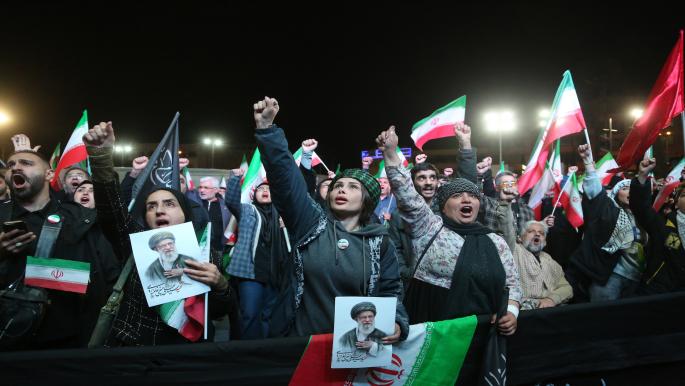
Protests in Iran are noticeably escalating as the Iranian people strive for liberation from the constraints of the theocratic system imposed by the clerical regime. These efforts, however, face significant challenges, not only due to the violent repression exercised by the regime but also due to external crises affecting the country.
Historically, Iran has witnessed numerous popular protests reflecting citizens' desire for change. Yet, the Iranian regime, which relies on tools of repression and brutality, has so far managed to thwart these attempts. As tensions rise in the region, pressures on the regime increase, raising questions about its future.
Details of the Protests
Recently, Iranian cities have witnessed massive demonstrations demanding political and social reforms. These protests reflect deep dissatisfaction with economic and social policies that have led to a decline in living standards. However, the regime responds forcefully, employing excessive force to disperse protesters, resulting in injuries and widespread arrests.
At the same time, Iran is facing external pressures due to regional conflicts, further complicating the internal situation. The ongoing aggressive war in the region casts a shadow over the protests, as the regime exploits these circumstances to justify its repression of demonstrators.
Background & Context
The Iranian regime was established after the Islamic Revolution in 1979, replacing the monarchy with a theocratic system based on Islamic law. Since then, the country has experienced a series of popular protests, but the regime has always managed to control them through force.
In recent years, economic and social crises have worsened, leading to increased dissatisfaction among citizens. Additionally, international sanctions imposed on Iran due to its nuclear program and foreign policy have contributed to the deterioration of the economic situation, intensifying the protests.
Impact & Consequences
The protests in Iran affect regional stability, as they could lead to political changes that may impact relations with neighboring countries. If the protests continue, the country may witness a shift in power, potentially altering the nature of governance in Iran.
Moreover, the ongoing repression could exacerbate humanitarian crises, as citizens suffer from human rights violations. This situation may attract the attention of the international community, potentially leading to additional pressures on the Iranian regime.
Regional Significance
The Iranian protests hold particular significance for Arab countries, as any changes in Iran could affect the balance of power in the region. Arab nations are closely monitoring the developments, as Iran's stability has a direct impact on regional security.
Furthermore, political transformations in Iran may inspire protest movements in other countries, complicating the political landscape in the region. Under these circumstances, the question of how the Iranian regime will address these challenges remains open.
In light of the current circumstances, it appears that the Iranian regime is facing unprecedented challenges. While the Iranian people seek liberation from the regime's constraints, external crises may complicate these efforts. The future remains uncertain, but current indicators suggest that protests may continue to escalate.