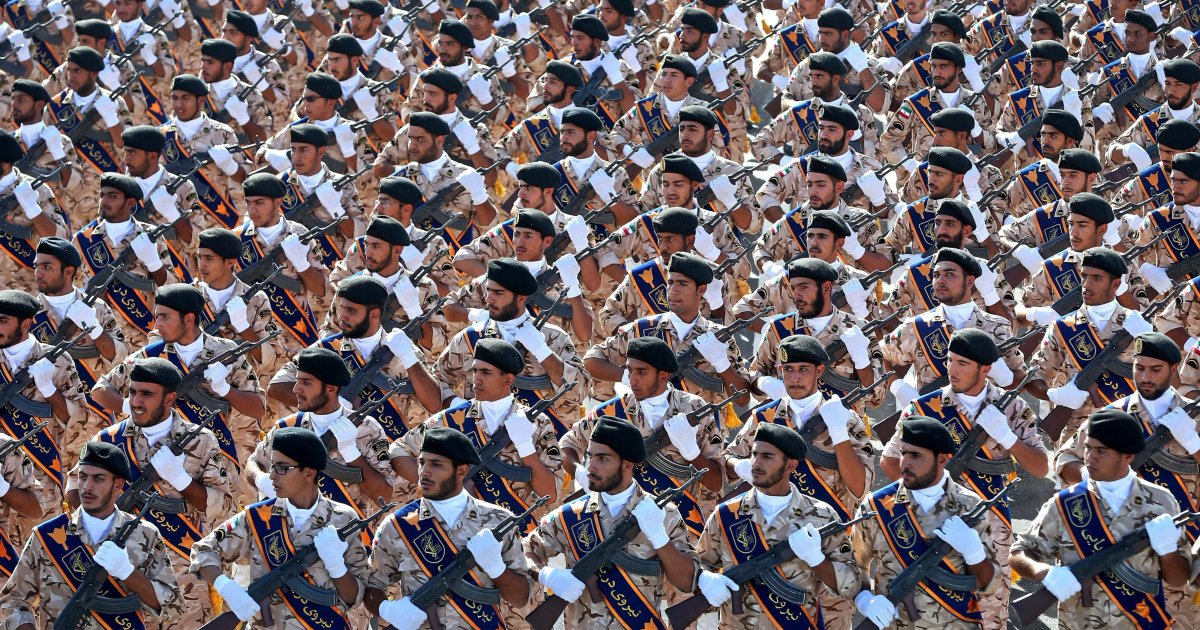
The Iranian Revolutionary Guard announced the execution of four rapid operations targeting a secret command center housing approximately 200 leaders and officers. These operations are part of the Guard's efforts to strengthen its control over security situations in the region and to affirm its capability to carry out complex operations at the right time.
According to official statements, these operations targeted sensitive sites considered to be centers for command and control, reflecting the Revolutionary Guard's strategy in confronting potential threats. The operations were executed simultaneously, demonstrating high coordination among the various units within the Revolutionary Guard.
Details of the Operations
The Revolutionary Guard reported that the four operations were successfully carried out, with the location accurately identified prior to the attacks. The spokesperson for the Guard indicated that these operations are part of the response to threats facing Iran, both from within and outside the country. It was also confirmed that these operations did not result in any casualties among Iranian forces.
These operations are seen as part of the Revolutionary Guard's strategy to enhance its influence in the region, especially amid increasing tensions with certain Western countries. Advanced techniques were employed in the execution of the operations, reflecting the technological advancements achieved by Iranian forces in recent years.
Background & Context
Historically, the Iranian Revolutionary Guard is known as one of the main military arms of the country, established after the Islamic Revolution in 1979. Since then, it has played a pivotal role in enhancing Iranian influence in the region by supporting armed groups in countries such as Iraq, Syria, and Lebanon.
In recent years, tensions between Iran and the United States have escalated, with the latter imposing strict economic sanctions on Tehran. Additionally, the conflict in Syria and the presence of American forces in the region complicate the security situation, prompting the Revolutionary Guard to take proactive steps to protect Iran's interests.
Impact & Consequences
These operations serve as a clear message from the Revolutionary Guard to Iran's adversaries, indicating that Tehran is capable of executing complex operations at any time. This could lead to an escalation of tensions in the region, as the concerned countries may respond with similar actions.
Moreover, the success of these operations may bolster the Revolutionary Guard's position domestically, potentially increasing popular support for it in the face of external challenges. However, military escalation could negatively impact regional security and increase the likelihood of new conflicts.
Regional Significance
These developments directly affect neighboring Arab countries, where concerns are rising over the increasing Iranian influence in the region. Many Arab nations view the Revolutionary Guard as a threat to their national security, especially given Iran's support for armed groups in Iraq, Syria, and Lebanon.
Additionally, these operations may lead to heightened tensions between Iran and Arab countries, necessitating dialogue and understanding to avoid escalation. At the same time, the international community is closely monitoring these developments, as they could impact stability in the region as a whole.
In conclusion, the situation in the region remains tense, and the Iranian Revolutionary Guard appears determined to enhance its influence, prompting Arab countries to take proactive measures to protect their interests.