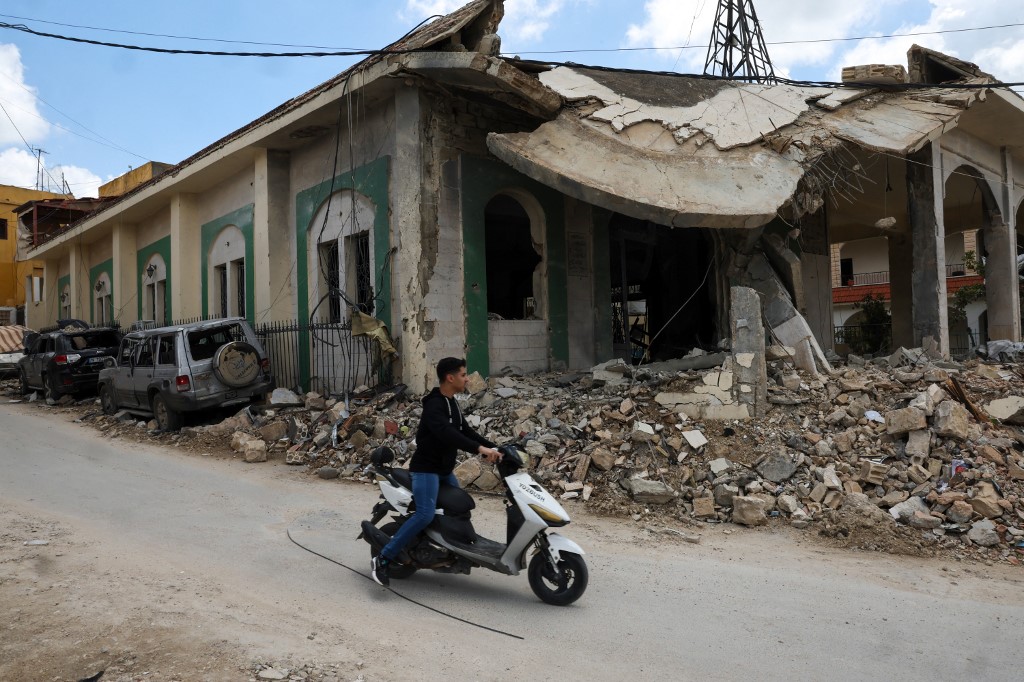
In recent statements, Ismail Qaani, the commander of the Quds Force of the Iranian Revolutionary Guard, affirmed that Iran's support for Lebanese Hezbollah will persist under the current circumstances. He explained that the unity among the factions of the 'Resistance Front' in the region has become stronger than ever, reflecting Iran's commitment to supporting its allies in the face of challenges.
Qaani, in remarks reported by Tasnim News Agency, indicated that the focus will be on supporting Hezbollah and its allied groups, demonstrating Iran's ongoing strategy to enhance its influence in the region. He noted that history proves that the Zionist entity has not achieved any objectives in the wars it has fought over the past decades, pointing out that its defeat in southern Lebanon is part of this historical fate.
Details of the Statements
These statements come at a sensitive time for the region, where tensions between Iran and the Zionist entity are escalating. The Iranian Revolutionary Guard, considered one of the military arms of the Iranian regime, plays a pivotal role in supporting armed groups in the region, including Hezbollah. Revolutionary Guard leaders view their support for Hezbollah as part of a broader strategy to confront the threats faced by the Resistance Axis.
Historically, Hezbollah has played a prominent role in resisting Israeli occupation, especially during the 2006 war, where it achieved victories against Israeli forces. The Iranian Revolutionary Guard considers Hezbollah a strategic ally, providing it with weapons and logistical support, thereby enhancing its military capabilities.
Background & Context
Hezbollah was established in 1982 in response to the Israeli occupation of Lebanon, and since then it has become a significant political and military force in the region. Iranian support for Hezbollah began at its inception, with the Revolutionary Guard serving as the backbone of the party. The relationship between the two parties significantly strengthened after the Lebanese Civil War, where Iran played an important role in rebuilding the party and providing it with training and weapons.
In recent years, tensions in the region have increased due to Iranian military activities, leading to heightened international and regional pressures on Tehran. Nevertheless, Iran continues to assert its support for its allies in the region, complicating the security landscape further.
Impact & Consequences
Qaani's statements serve as a strong message to the Zionist entity and Western countries, emphasizing that Iran will not retreat from supporting its allies in the face of threats. This support may lead to an escalation of tensions in the region, especially with ongoing Israeli military operations against Iranian targets in Syria. Furthermore, the strengthening of relations between Iran and Hezbollah could impact the balance of power in the region, increasing the likelihood of new conflicts erupting.
As the situation unfolds, the implications of Iran's unwavering support for Hezbollah will likely reverberate throughout the Middle East, influencing various geopolitical dynamics and alliances.
Regional Significance
The implications of these statements highlight the increasing tensions in the region and reaffirm Iran's role as a primary supporter of Hezbollah, which could significantly affect regional stability. The ongoing support for Hezbollah not only strengthens Iran's position but also poses challenges for its adversaries, potentially leading to a more volatile security environment.
In conclusion, the Iranian Revolutionary Guard's commitment to Hezbollah underscores the complexities of the regional landscape, where alliances and enmities continue to shape the future of Middle Eastern politics.