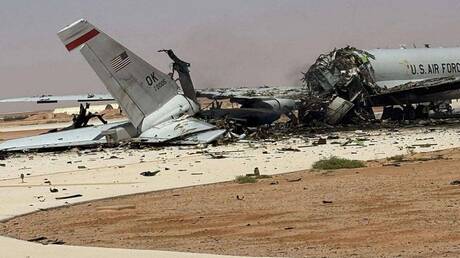
The Wall Street Journal reported that a U.S. Air Force E-3 early warning aircraft was destroyed in an Iranian strike targeting Prince Sultan Air Base in Saudi Arabia. This recent incident reflects the escalating tensions between the United States and Iran, raising concerns about regional security.
The E-3 aircraft is one of the advanced planes used for early warning and surveillance operations, playing a vital role in enhancing the defensive capabilities of U.S. forces in the region. The destruction of this aircraft is believed to impact the United States' ability to monitor Iranian military activities, complicating the security situation in the Middle East.
Details of the Incident
According to reports, the Iranian strike targeted the airbase, which is considered a strategic center for U.S. military operations in the region. The base, located near Riyadh, is used as a launch platform for air operations against armed groups in Iraq and Syria. Military sources confirmed that the strike was precise and effective, resulting in the complete destruction of the aircraft.
The exact details of how the strike was executed remain unclear, but it is believed that Iran used long-range missiles to hit the base. This attack is considered a significant escalation in the ongoing conflict between Iran and the United States, occurring at a time when tensions between the two sides are rising.
Background & Context
Historically, relations between Iran and the United States have been fraught with tension since the Islamic Revolution in 1979. These tensions have escalated in recent years, particularly after the U.S. withdrawal from the Iranian nuclear deal in 2018 and the re-imposition of economic sanctions. These events have led to an increase in military activities in the region, as Iran seeks to bolster its influence in the Middle East.
Prince Sultan Air Base, which has been used by U.S. forces since the 1990s, has become a focal point in the U.S. military strategy in the region. The base has seen numerous military operations against ISIS and other armed groups, making it a primary target for Iranian retaliation.
Impact & Consequences
The destruction of the E-3 aircraft could have significant implications for U.S. military strategy in the region. This incident may lead the United States to reassess its military presence in Saudi Arabia, potentially prompting it to bolster air defenses or even take retaliatory actions against Iran.
Furthermore, this attack may encourage Iran to carry out more military operations against U.S. targets in the region, increasing the risk of military escalation. At the same time, it could lead to strengthened alliances between the United States and Gulf Arab states to counter the growing Iranian threats.
Regional Significance
These events directly impact security and stability in the Arab region. The rising tensions between Iran and the United States could lead to escalated conflicts in Iraq, Syria, and Lebanon, where Iranian-backed armed groups are present. Additionally, these events may affect oil prices and financial markets in the region, raising concerns among investors.
Ultimately, the Arab region remains on high alert, as further developments are expected amid escalating tensions. The destruction of the U.S. E-3 aircraft may be just the beginning of further escalation, necessitating Arab states to take strategic steps to address the increasing security challenges.